ARC
A coffee ritual, shaped around a triangle.
A countertop coffee-machine concept developed through form exploration, two cardboard models, interaction studies, and internal CAD.
Explore the physical models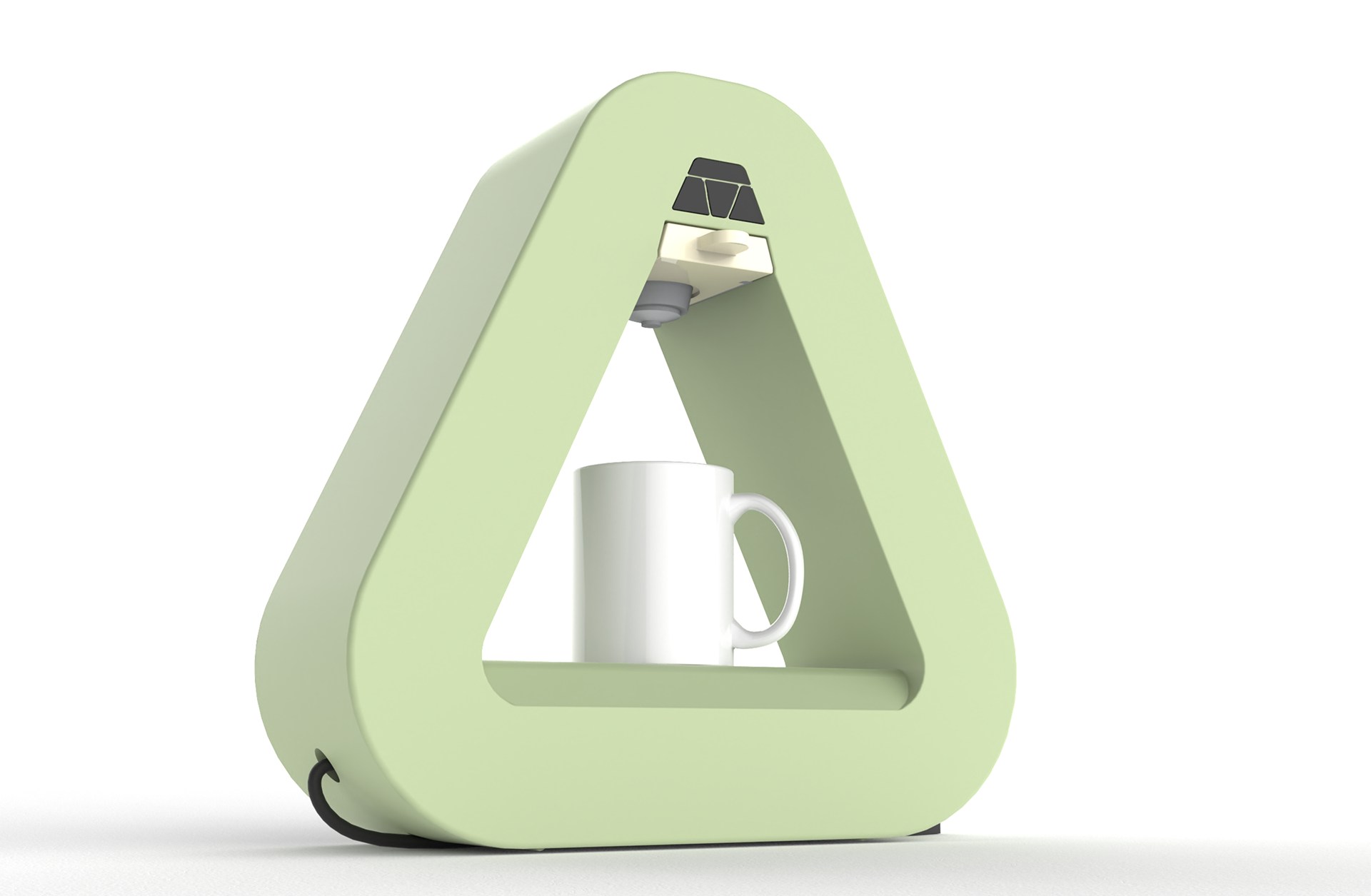
The starting point. My response.
The research brief was provided in class. My contribution is the interpretation and development shown here: sketches, physical models, interactions, CAD, and the final concept.
The brief
Design-conscious home users who value expressive countertop objects and a slower, more deliberate coffee ritual.
Many coffee machines make a quiet daily ritual feel visually busy, mechanically complicated, and emotionally impersonal.
My design response
A sculptural rounded-triangle coffee machine organized around a clear morning preparation and brewing sequence.
The rounded triangle carries through the drawings, cardboard models, and final CAD.
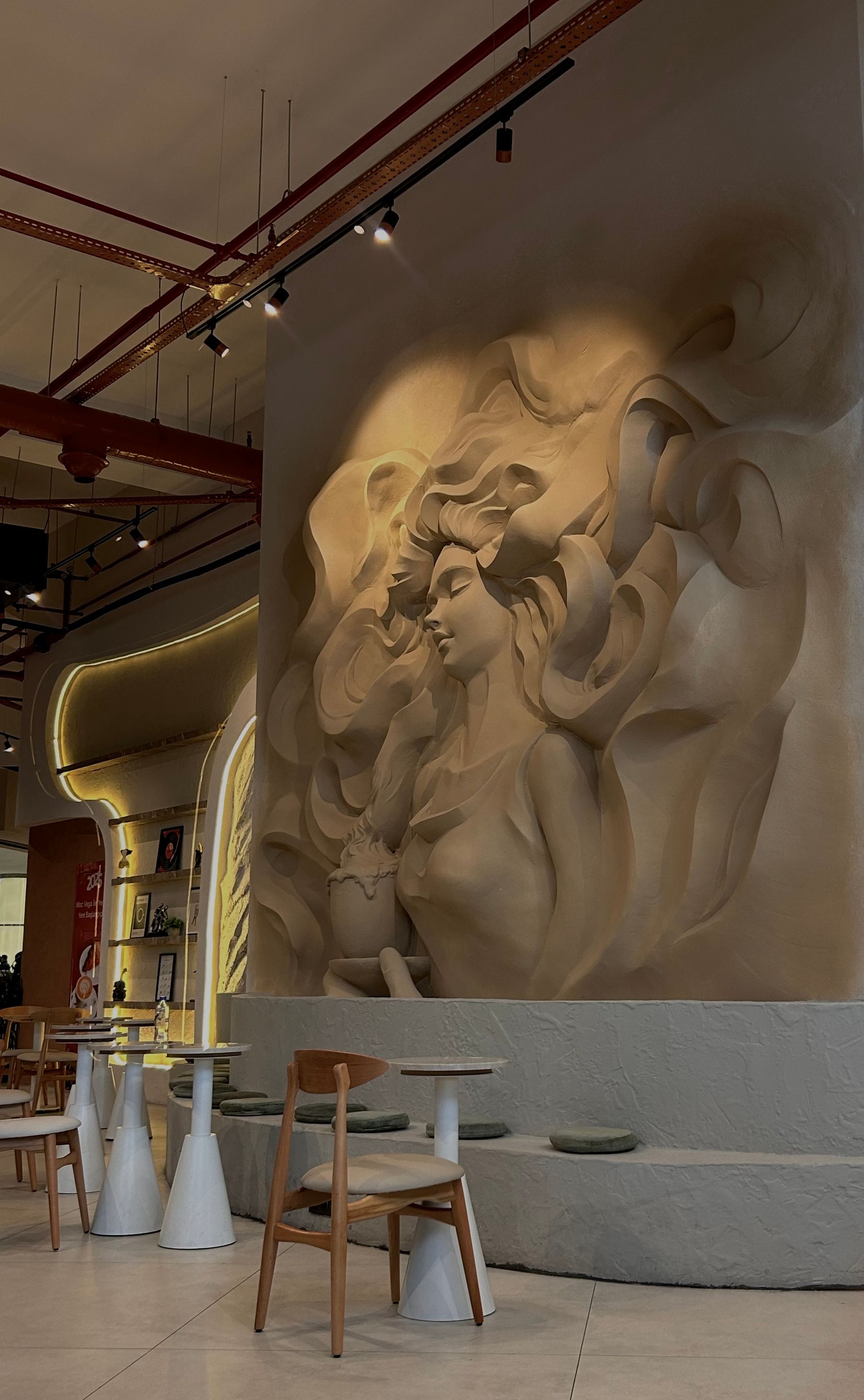
Audience and visual context
Lifestyle imagery frames the intended setting. Image credits identify the reference sources.

Exploring the space around the cup.
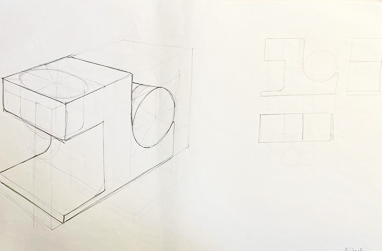
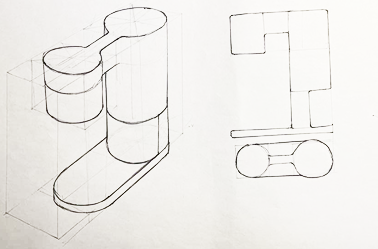
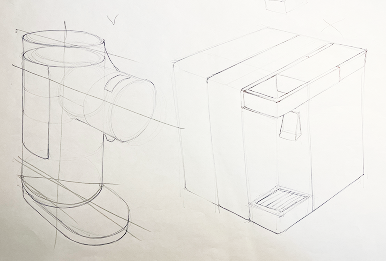
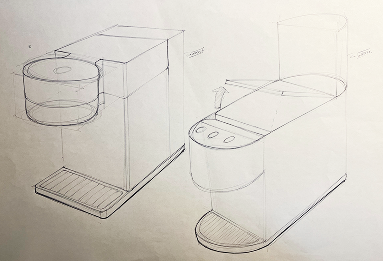
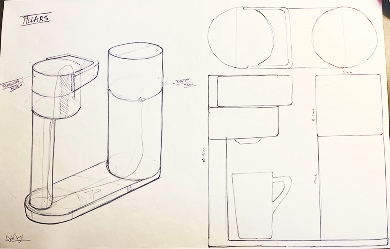
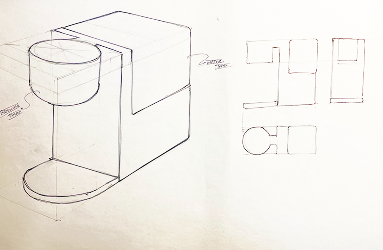
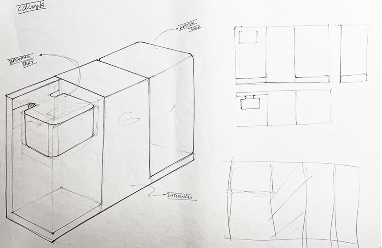
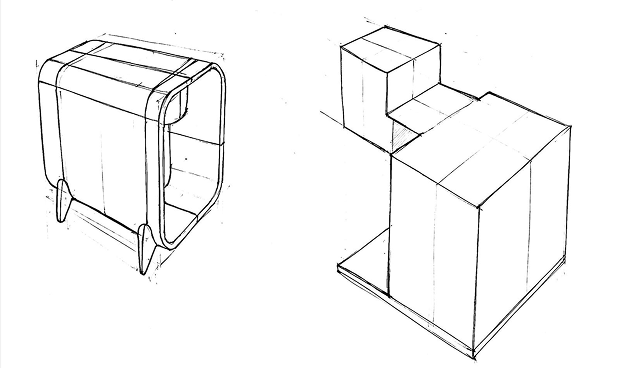
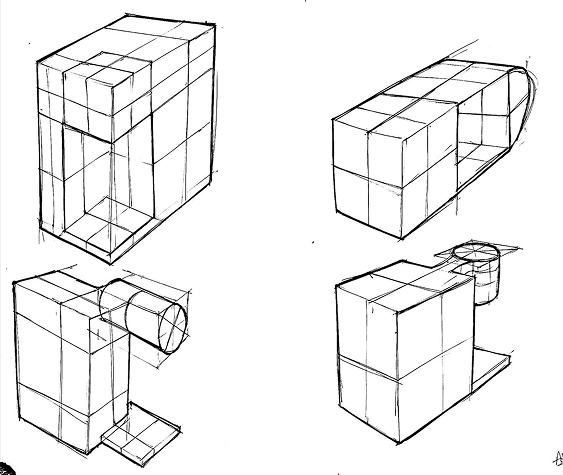
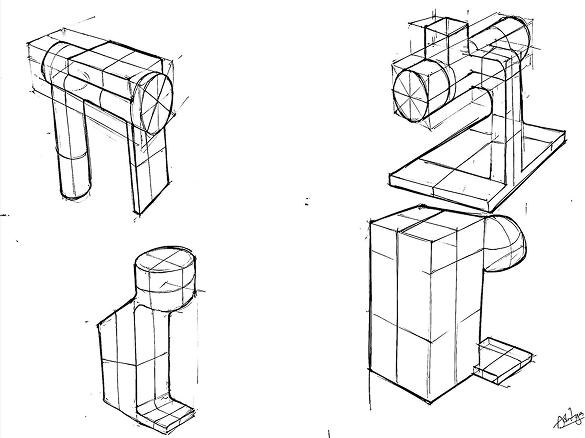
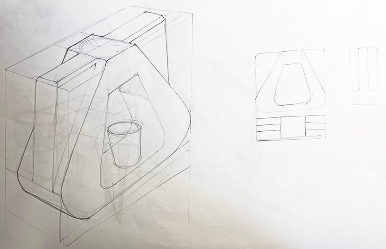
The sketchbook moves through stacked cylinders, enclosed bodies, open frames, and triangular silhouettes. The drawings below are grouped by form so the alternatives can be compared.
Rounded and stacked volumes
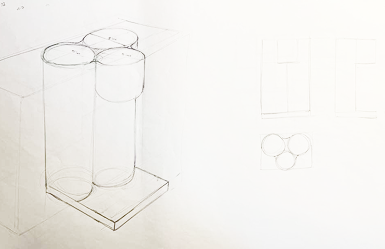
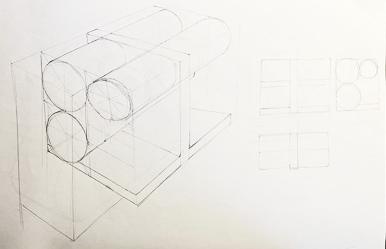
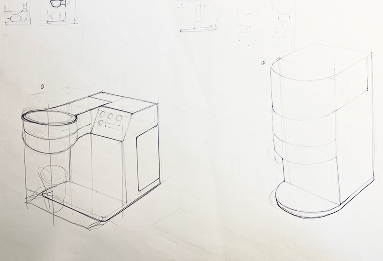
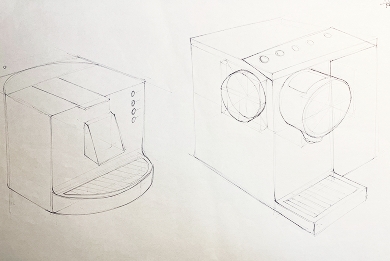
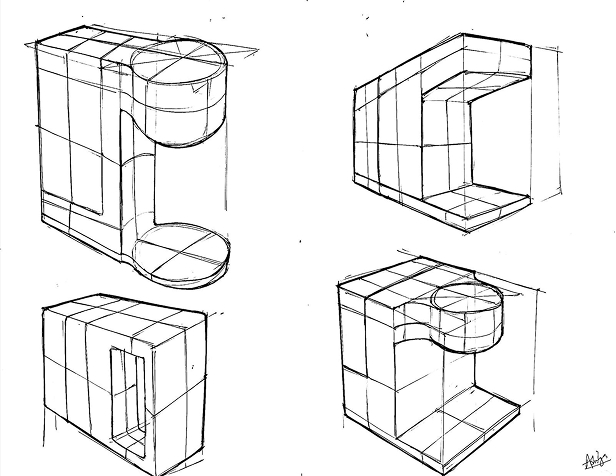
Enclosed bodies and projecting heads
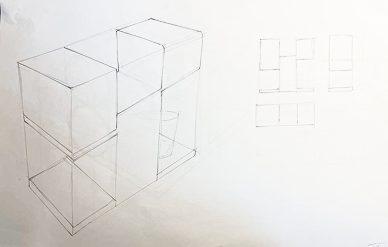
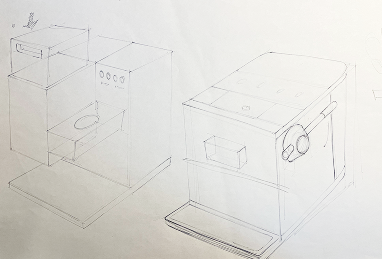
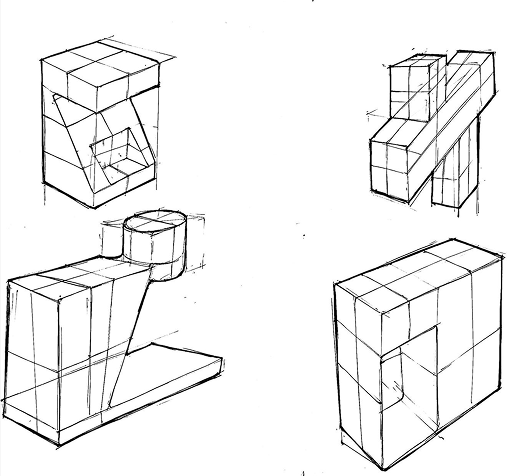
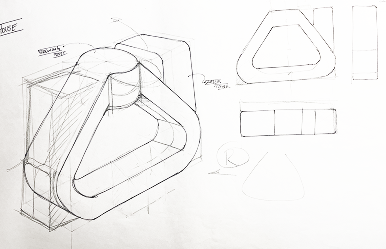
The triangular direction
I explored the triangular direction through form development, then carried it into cardboard to understand its volume as a physical object.
From understanding the form to arranging the parts.
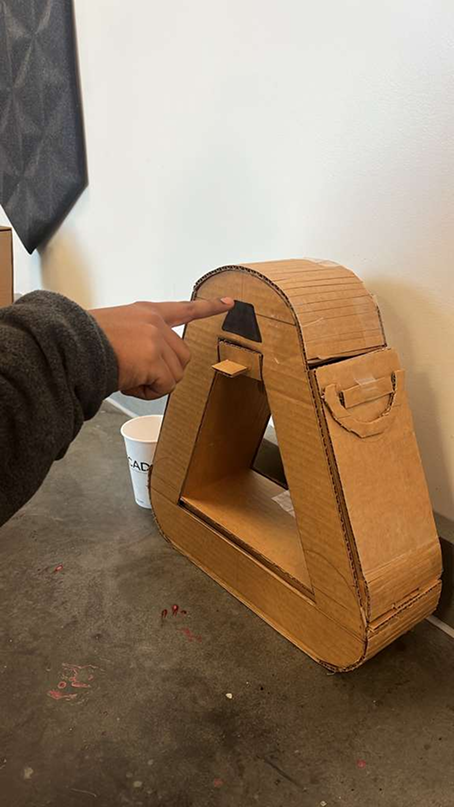
The first model helped me understand the form. Building it made me realize that the next step was to work out the internal arrangement and test the individual parts. The second model moves that exploration into component placement and access.
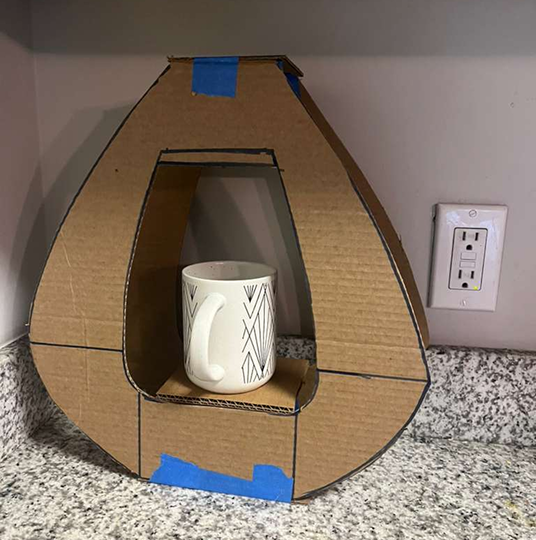
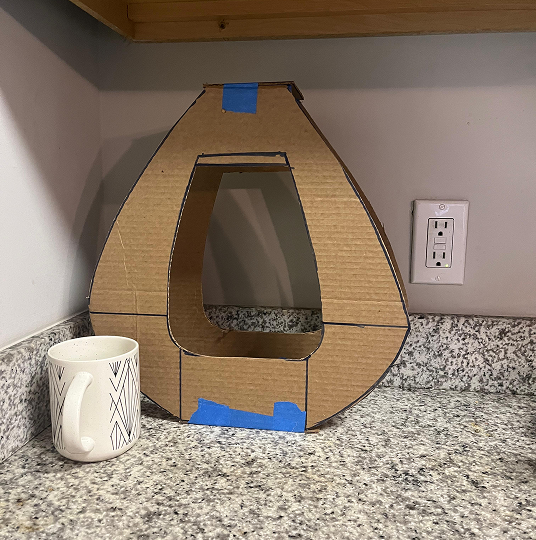
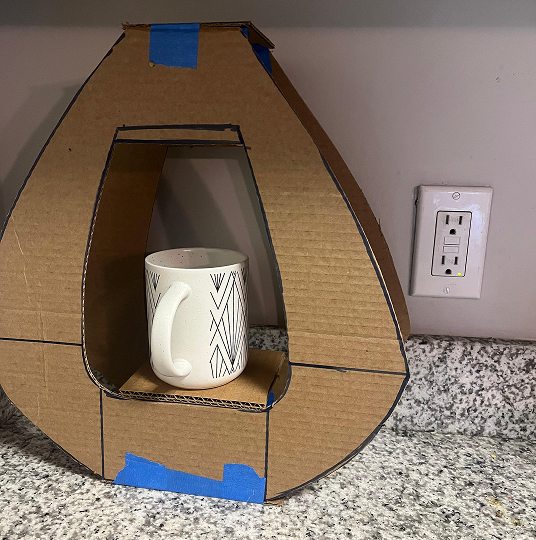
Model one · volume and scale
I used the first cardboard model to understand the overall form. The mug provides a scale reference for the central opening.
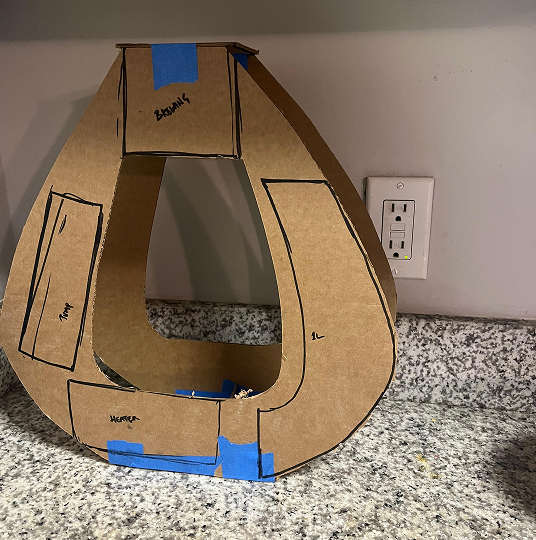
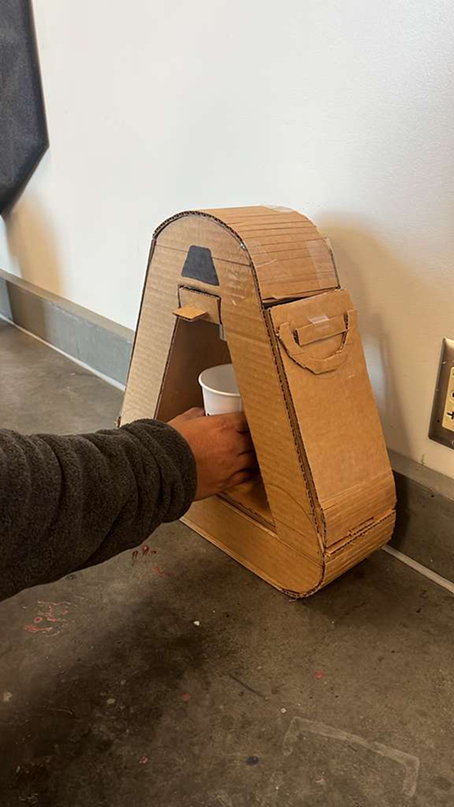
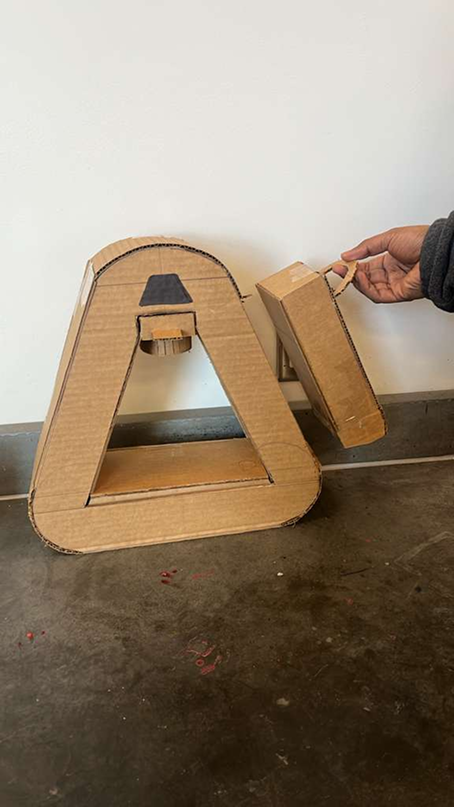
Model two · parts and access
The next build explores how the parts fit into the form and how each one can be reached, moved, or removed.
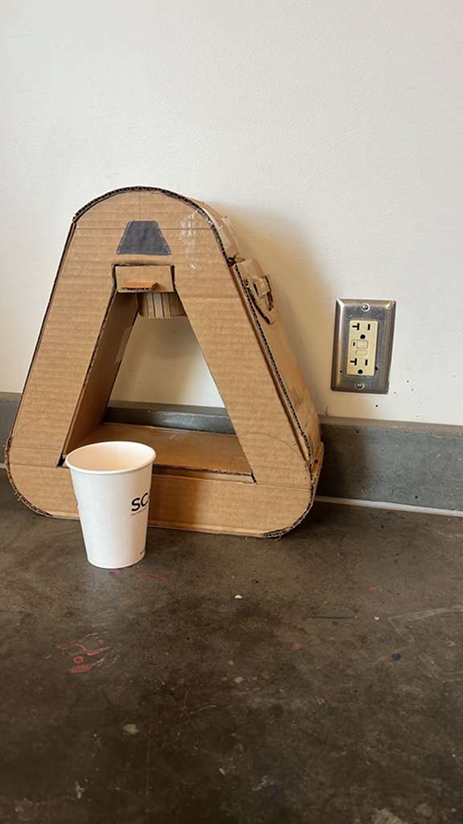
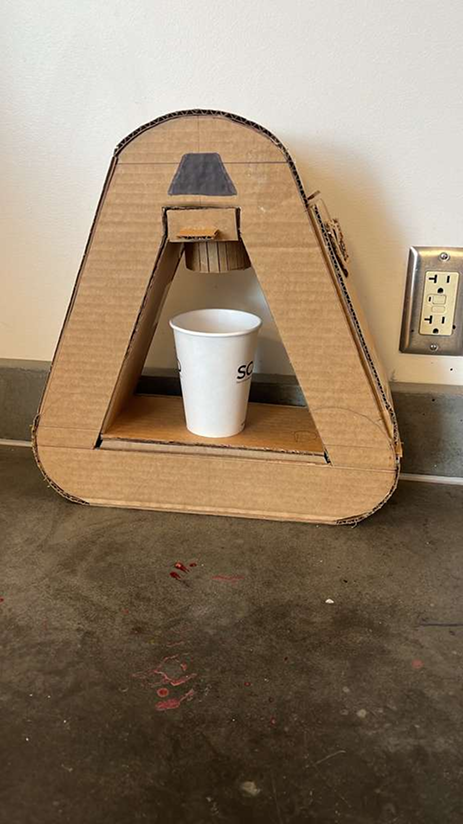
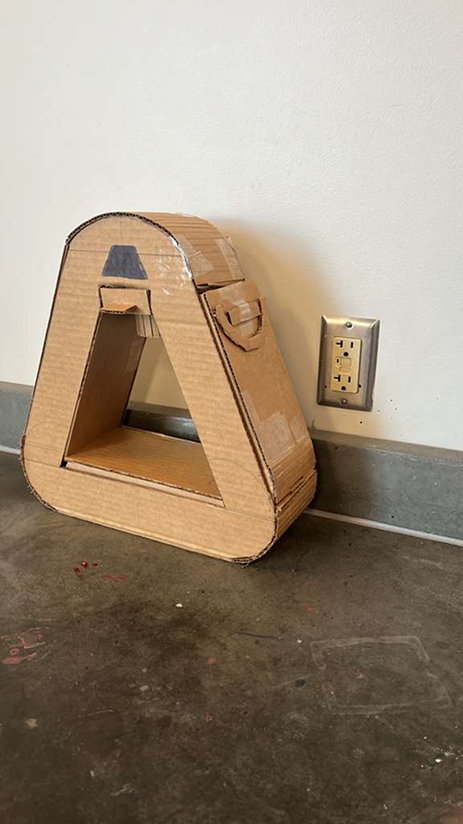
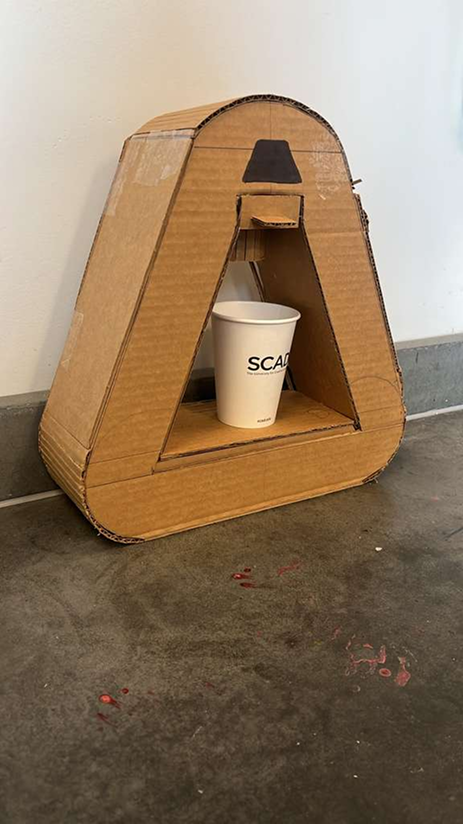
OpeningCompare the frame and cup space across the two builds.
Brewing headThe second model brings the head into the cup opening.
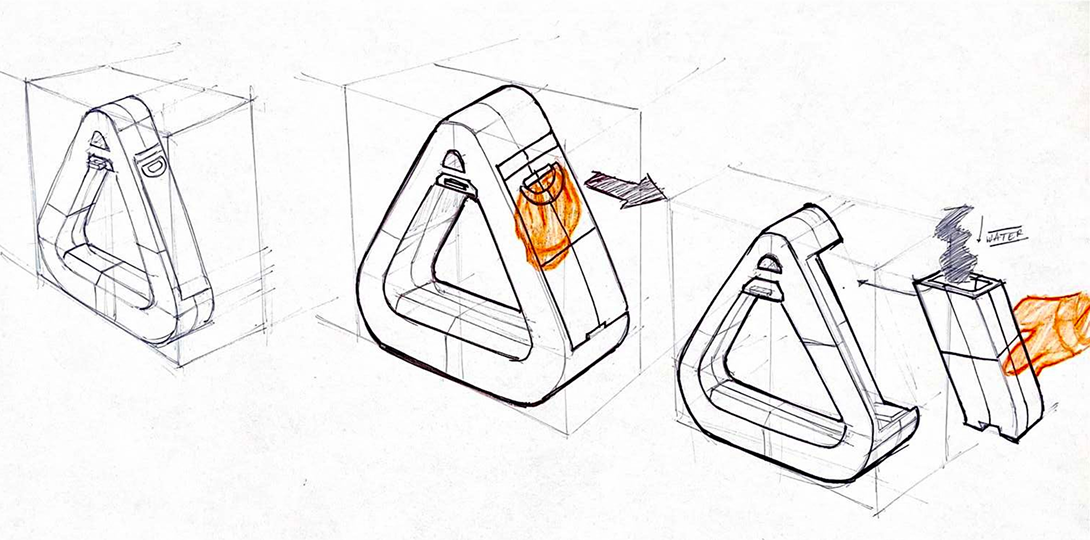
ReservoirA removable side component makes the refill action testable.
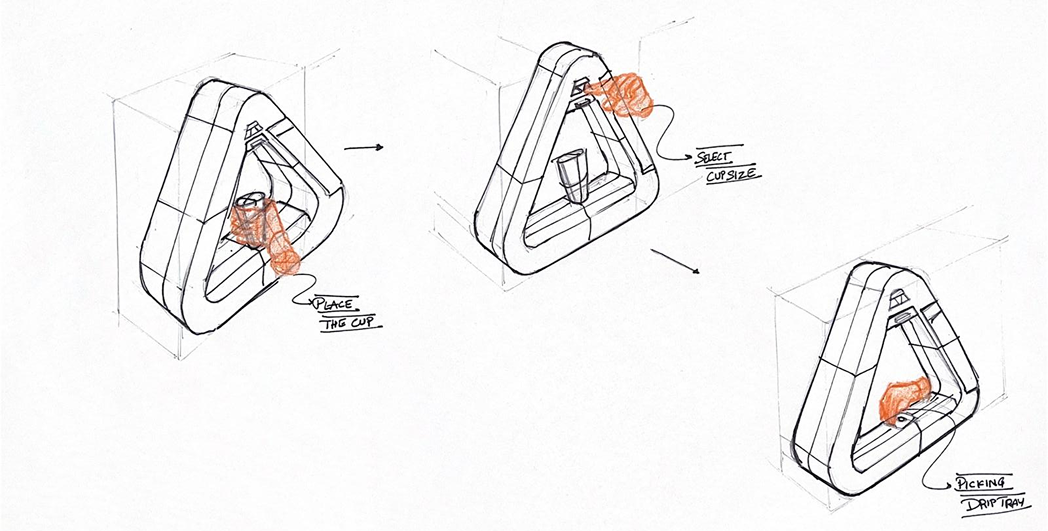
Putting the touchpoints in someone’s hands.
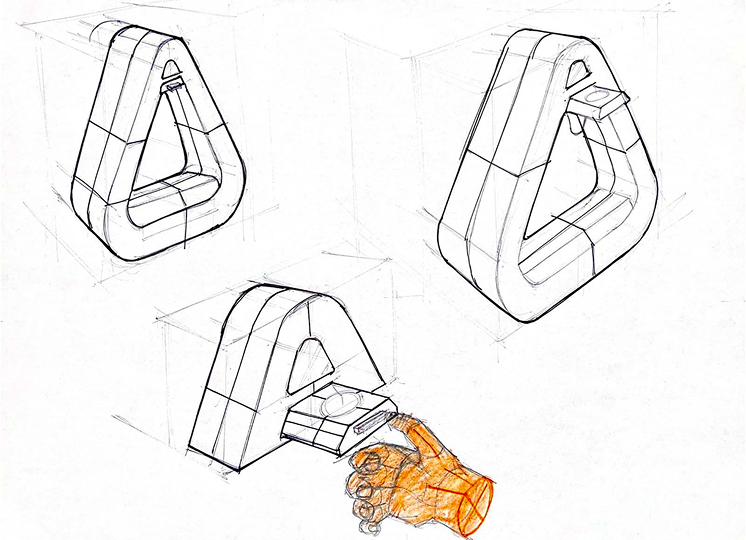
The physical study covers component removal, control reach, cup access, and refilling. The photos document these tasks; they do not establish brewing performance or a measured usability improvement.
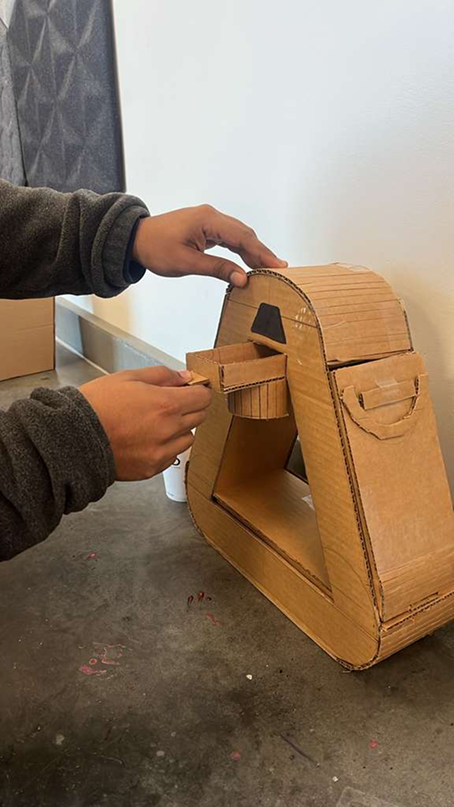
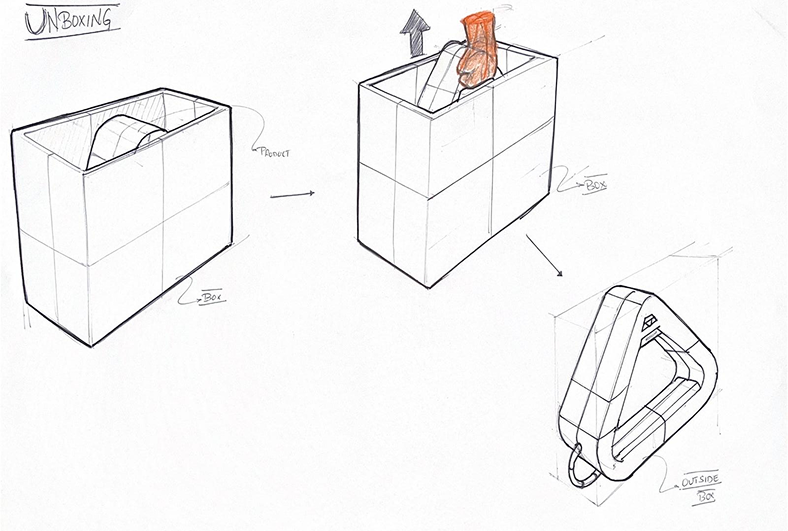
Carrying those actions into the use sequence.
From unpacking to refilling, the interaction drawings explain how the parts are approached and moved.
A silhouette with an internal layout.
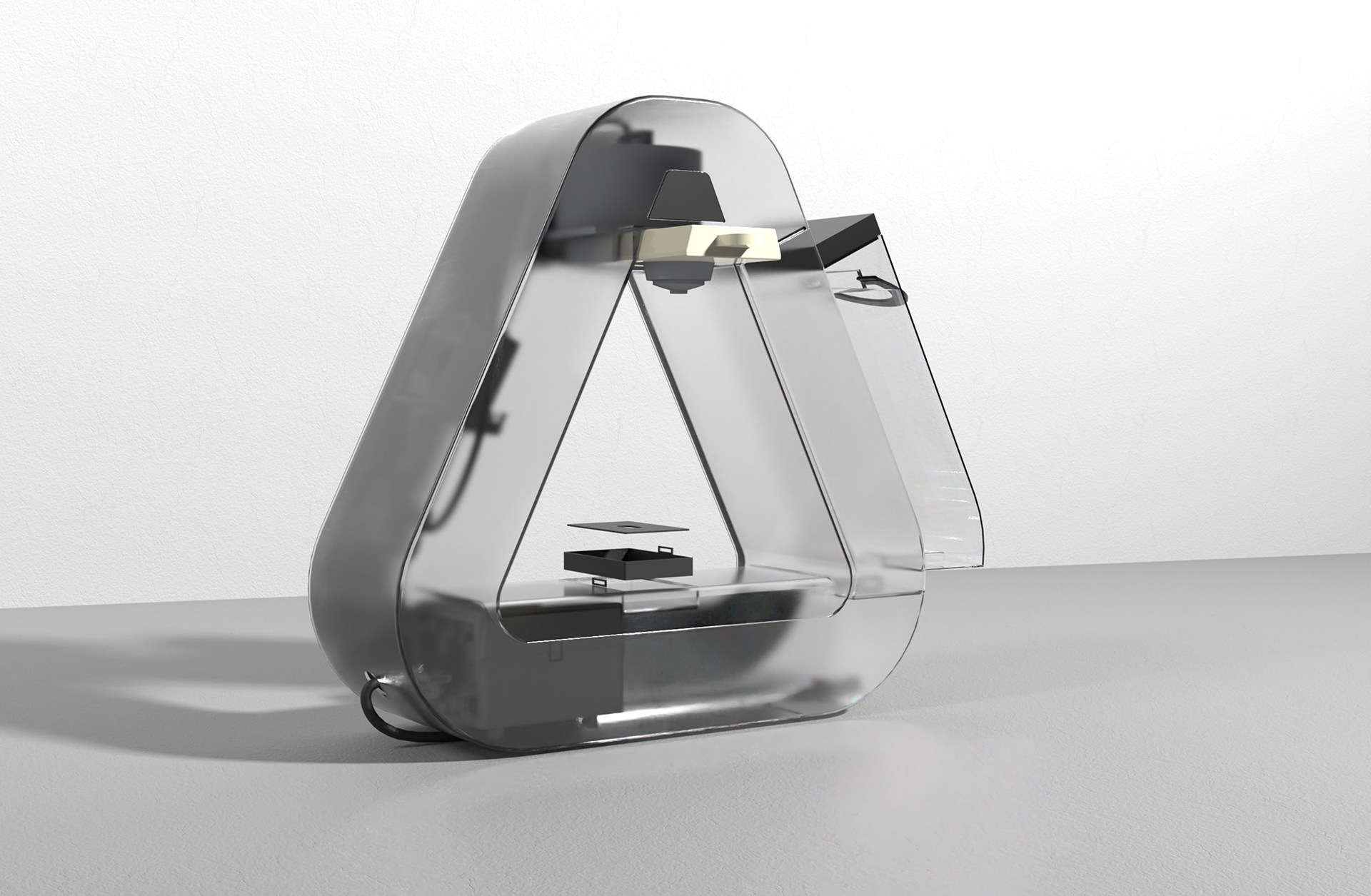
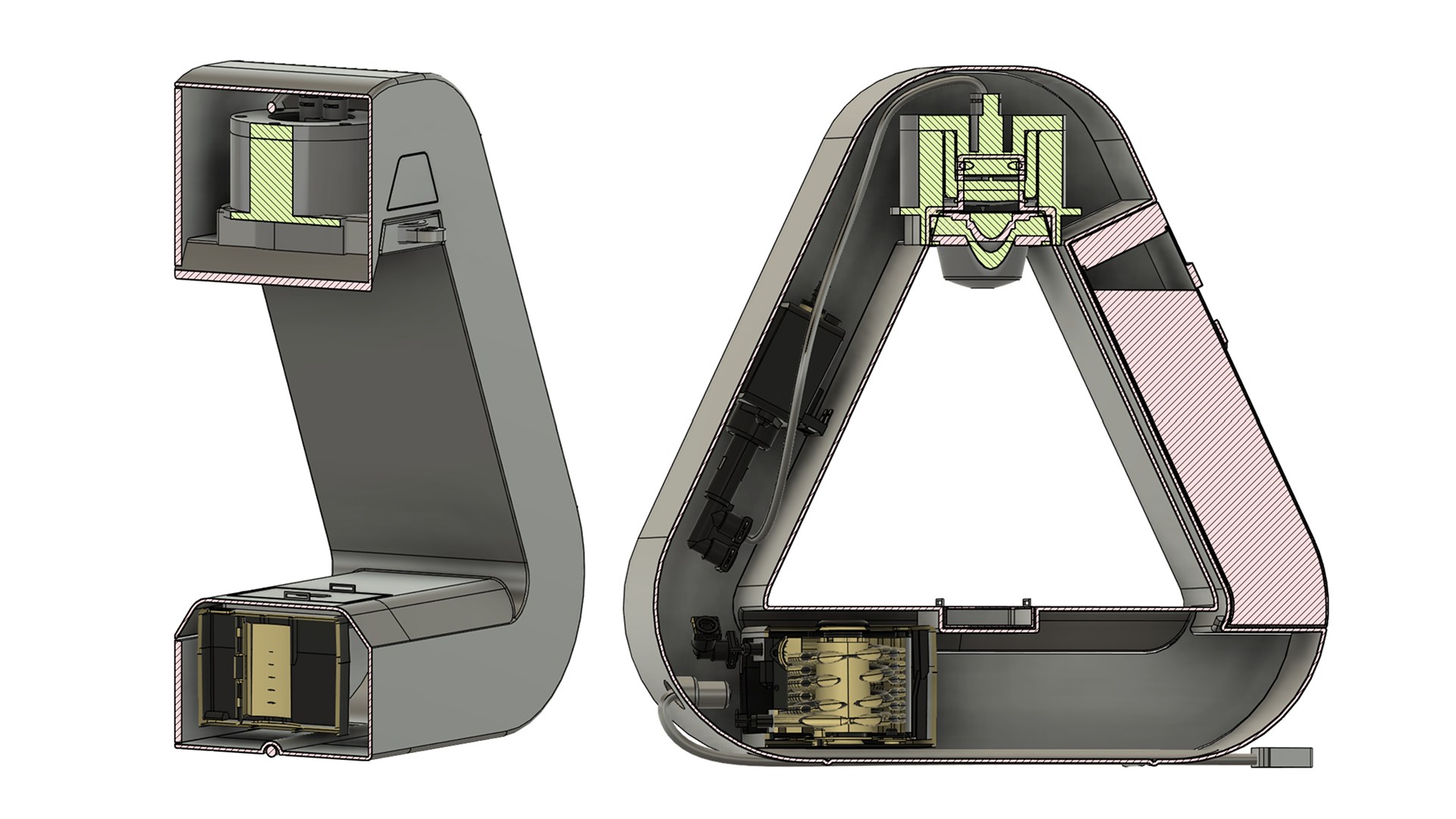
The CAD studies place the brewing assembly, pump, water tank, and controls inside the triangular envelope. They show a proposed package, with heat, sealing, and brew performance still requiring a working prototype.
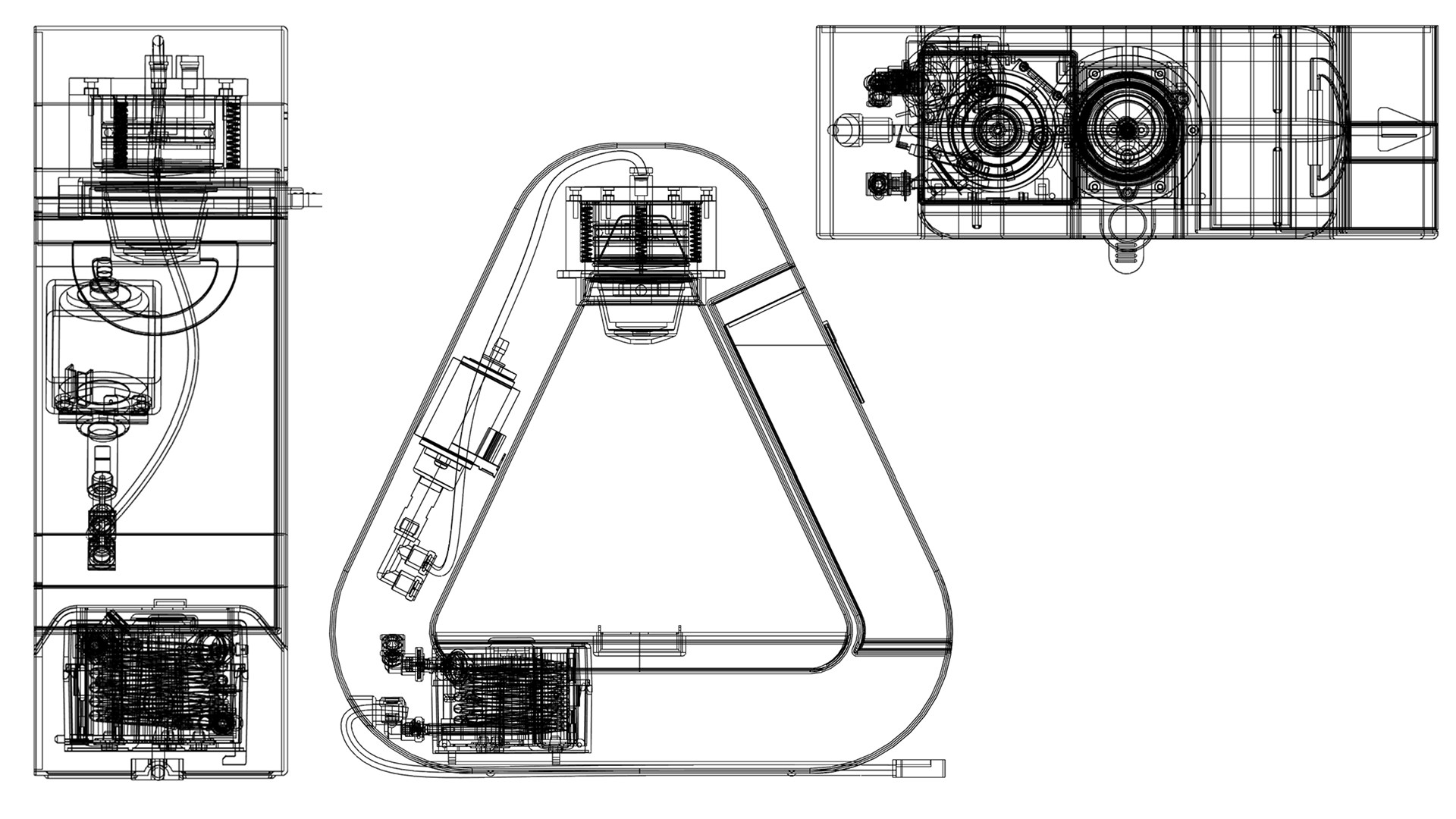
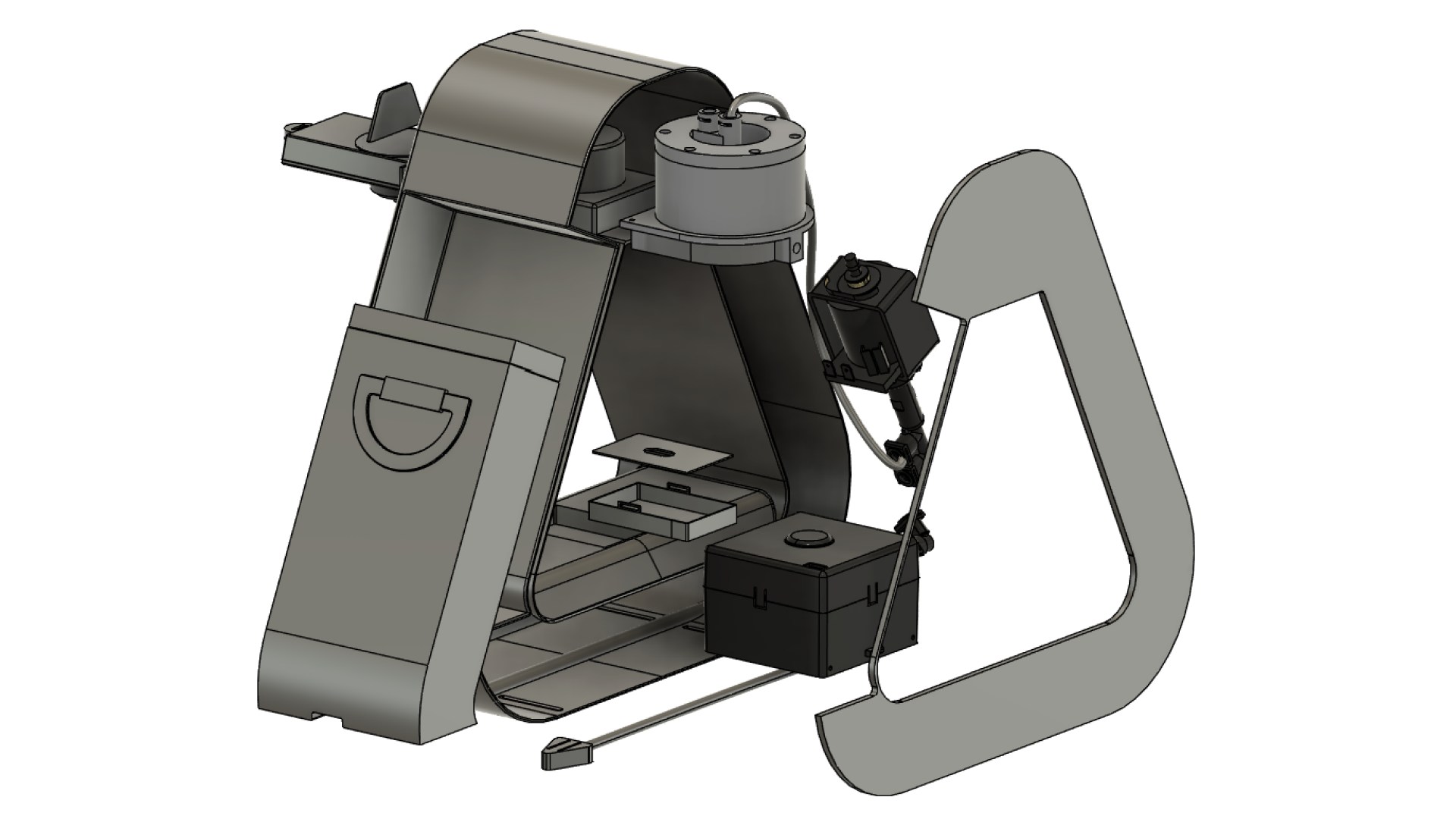
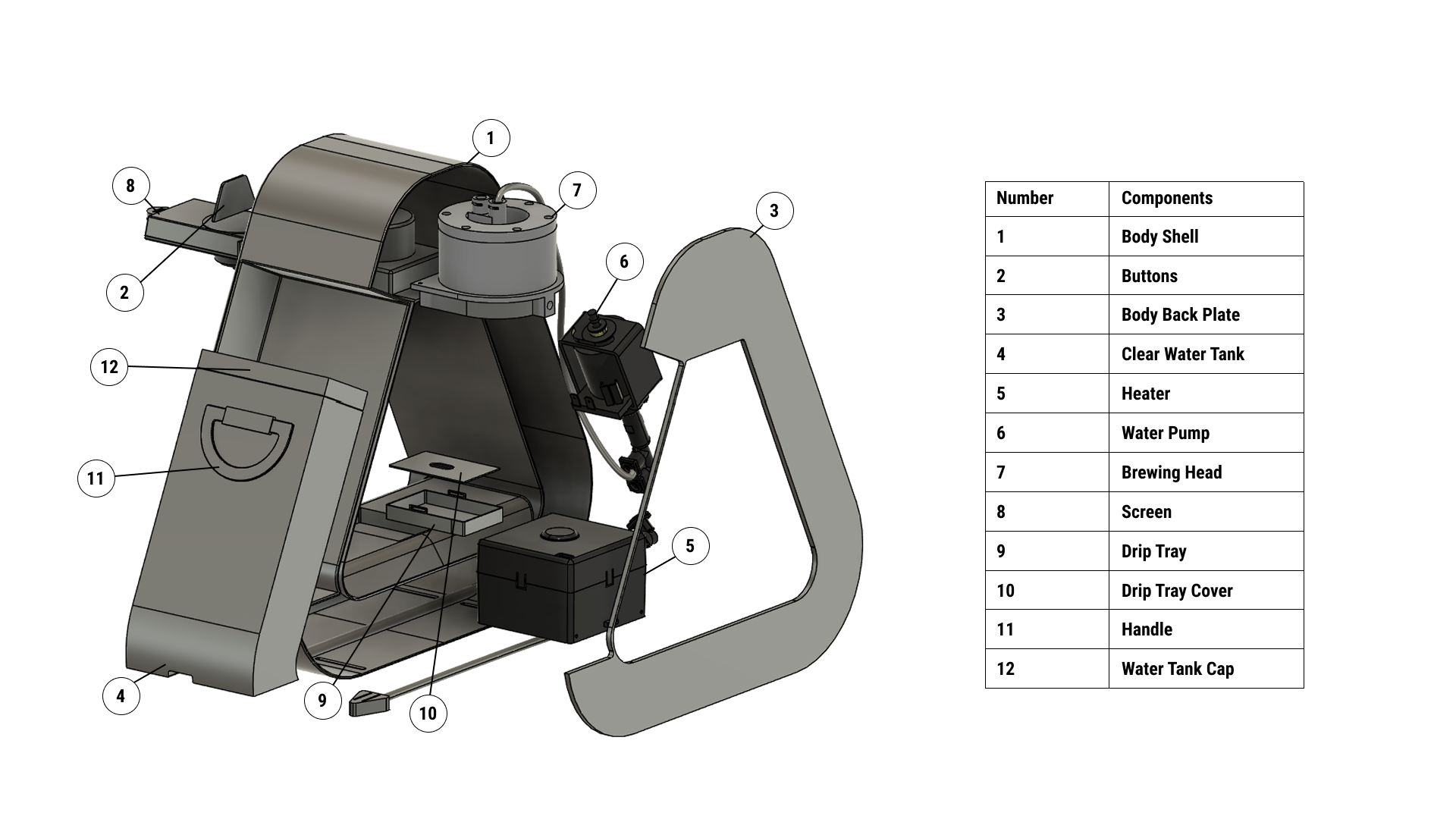
Parts, materials, and assembly.
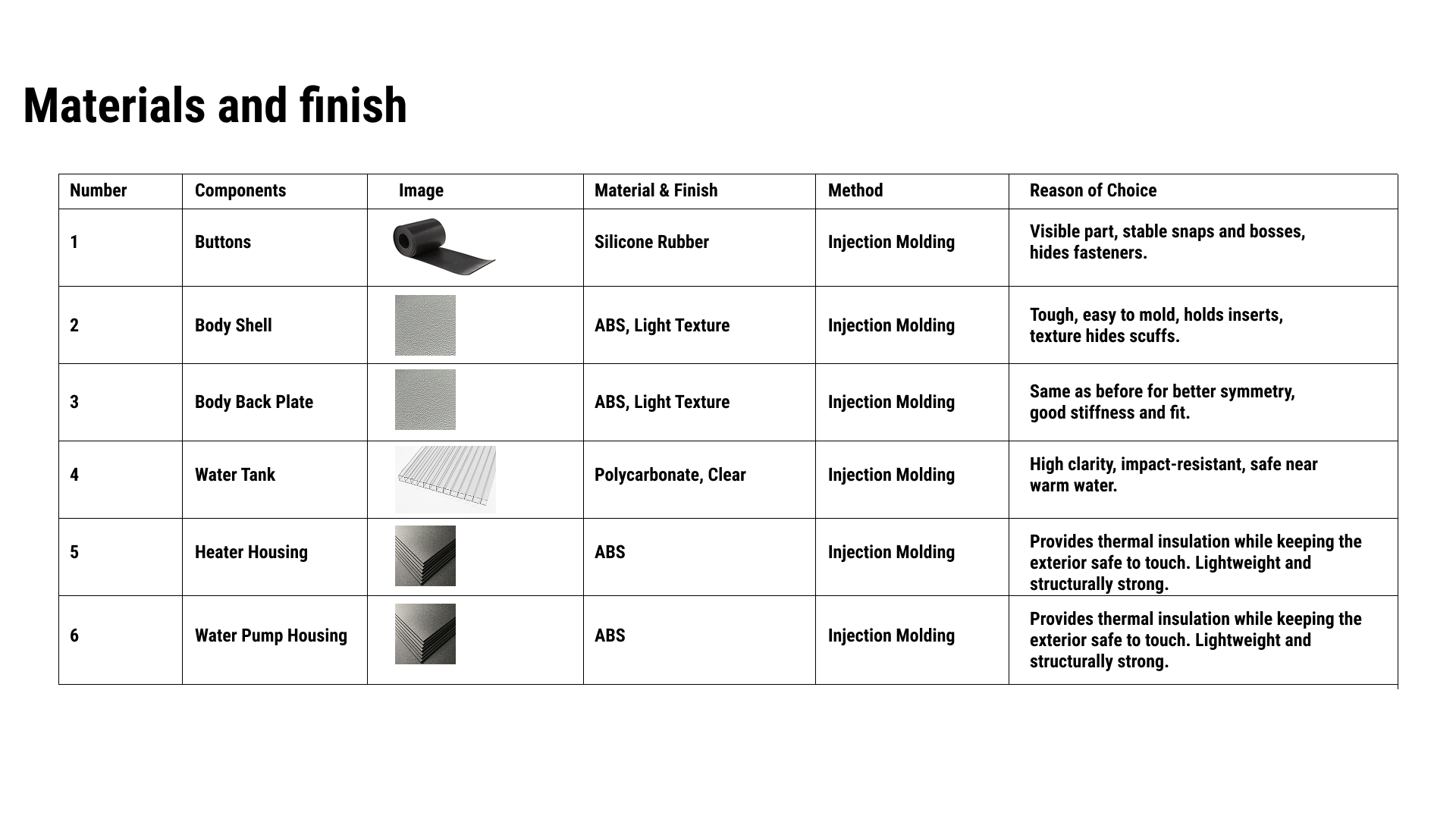
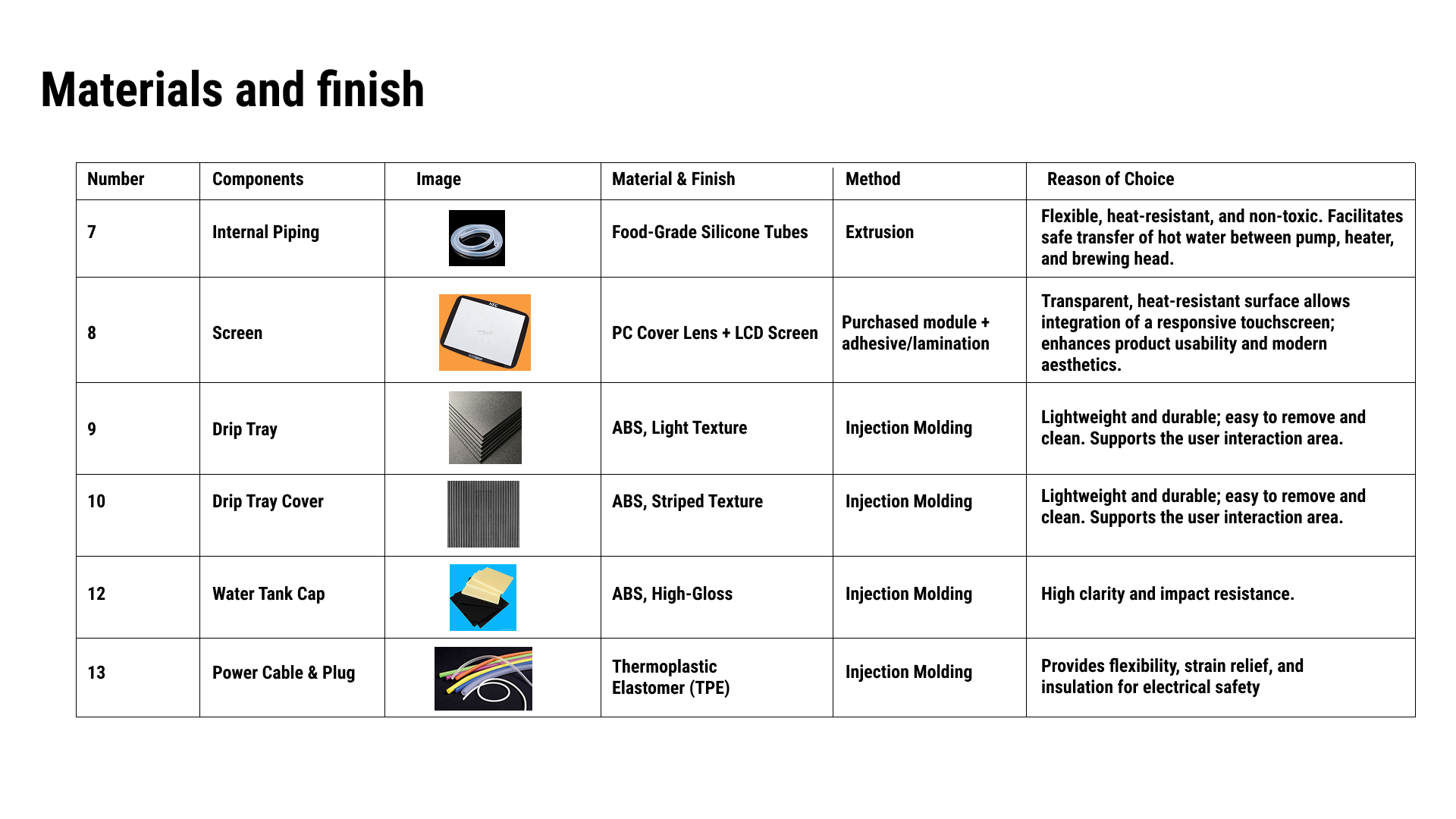
The exploded component map and material studies connect the exterior to a proposed manufacturing approach.
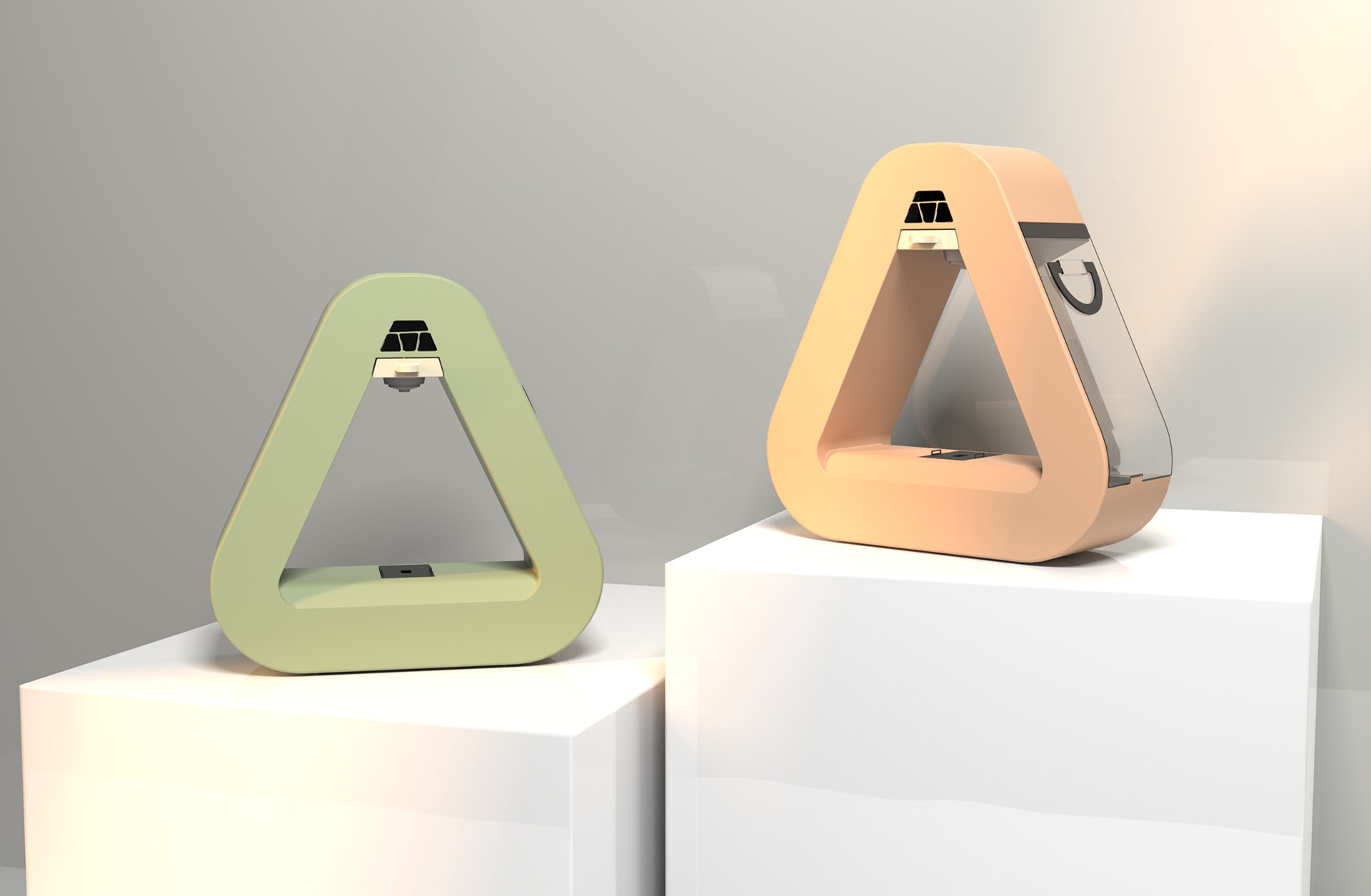
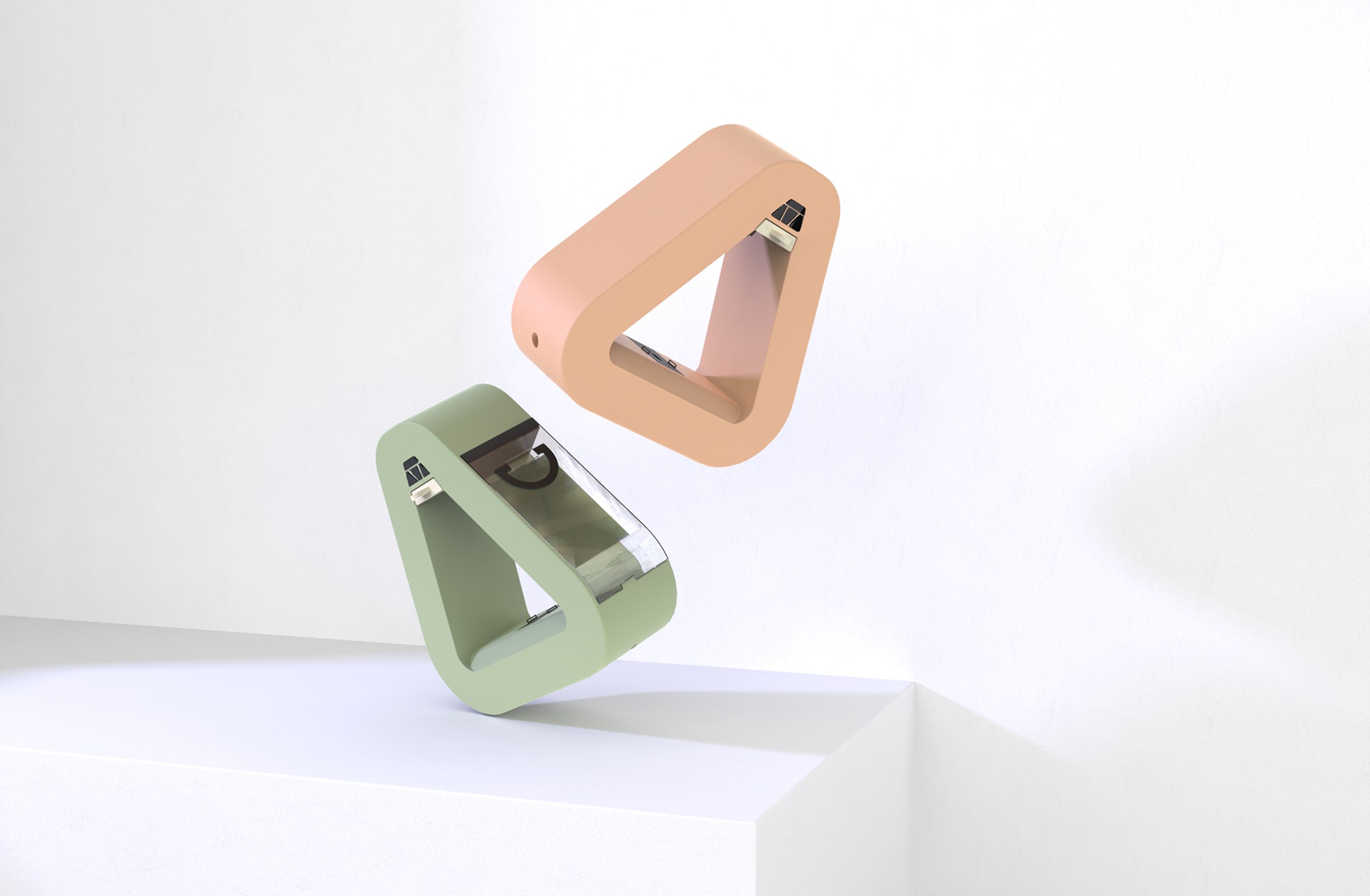
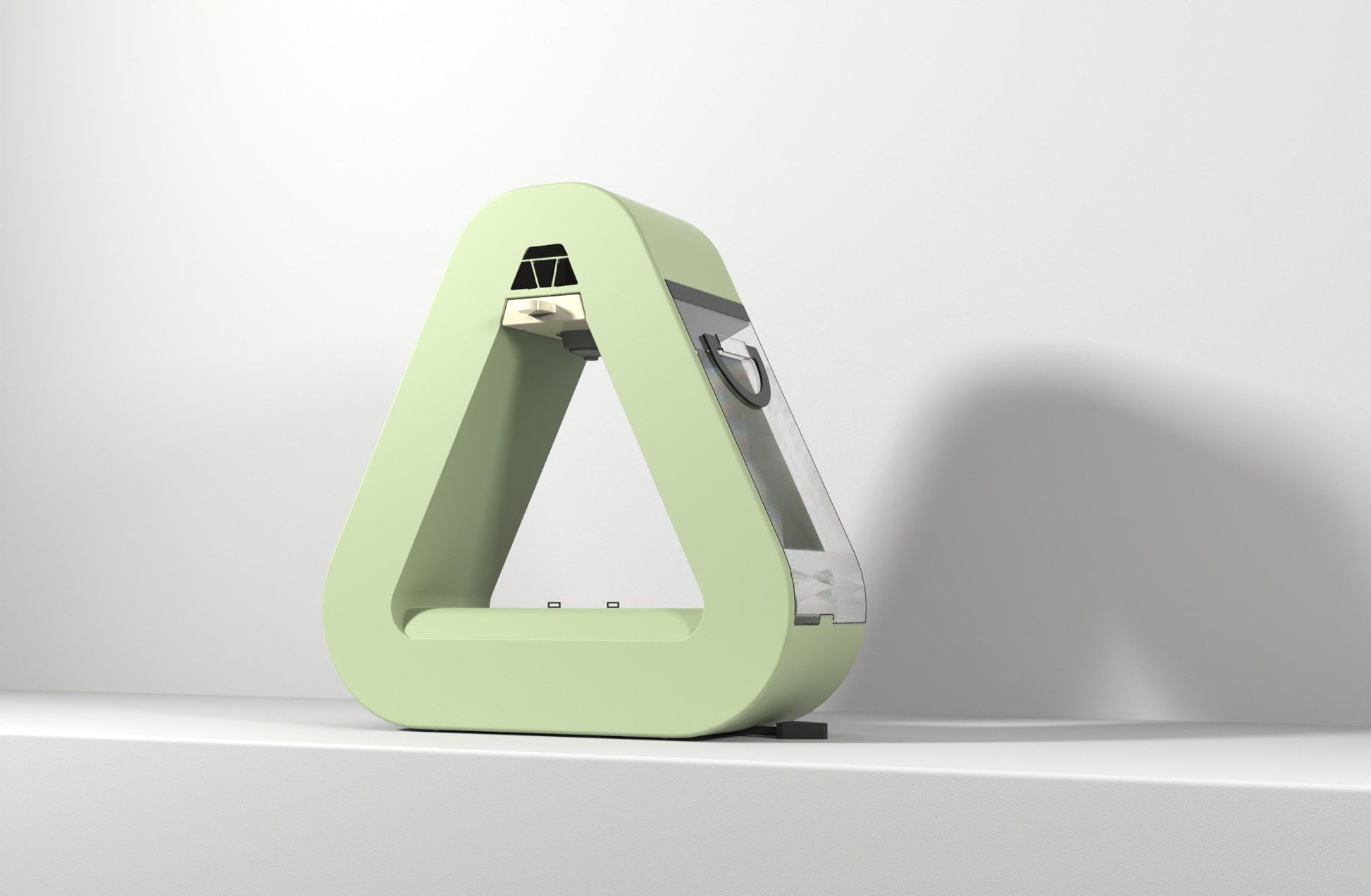
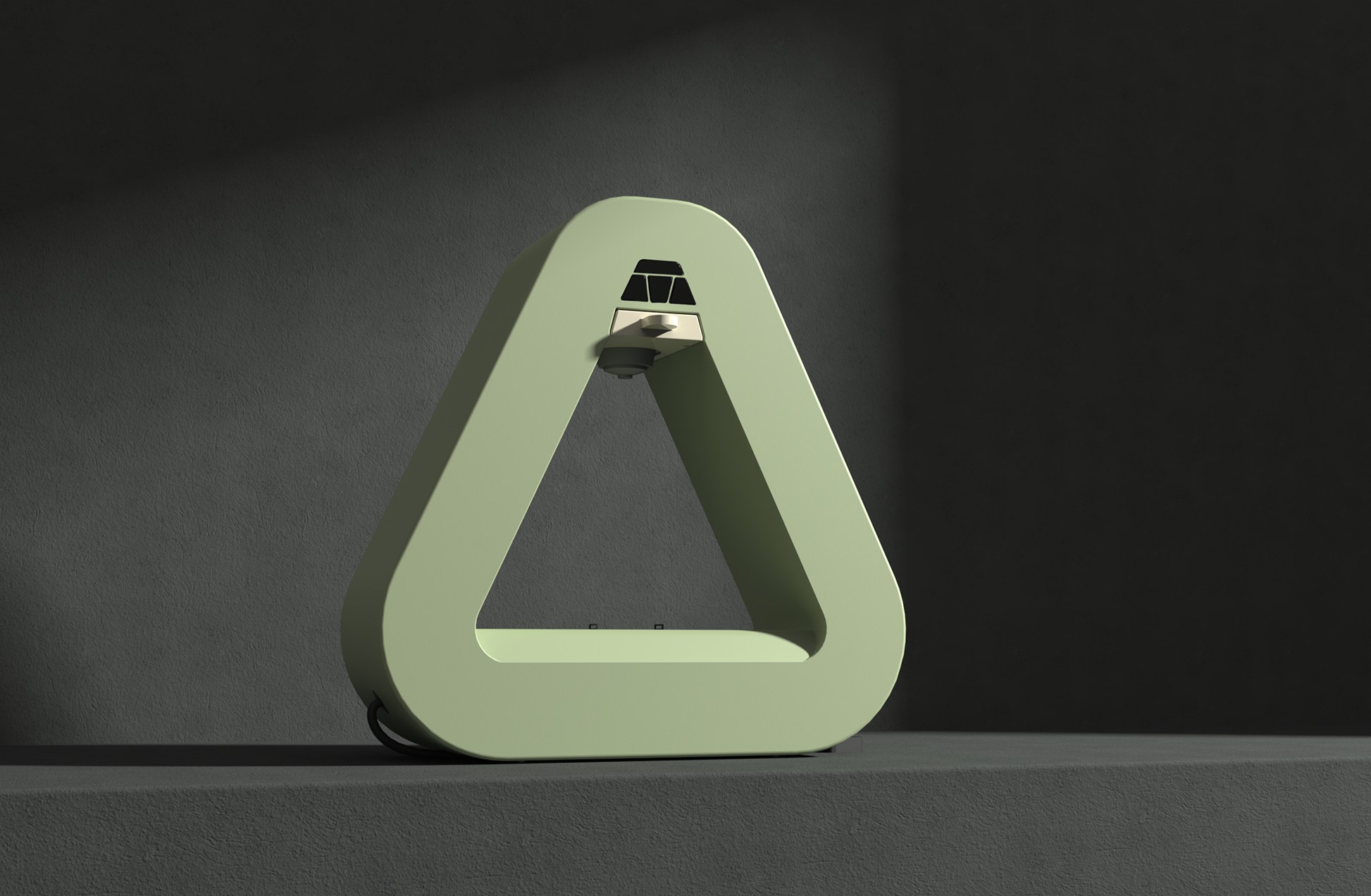
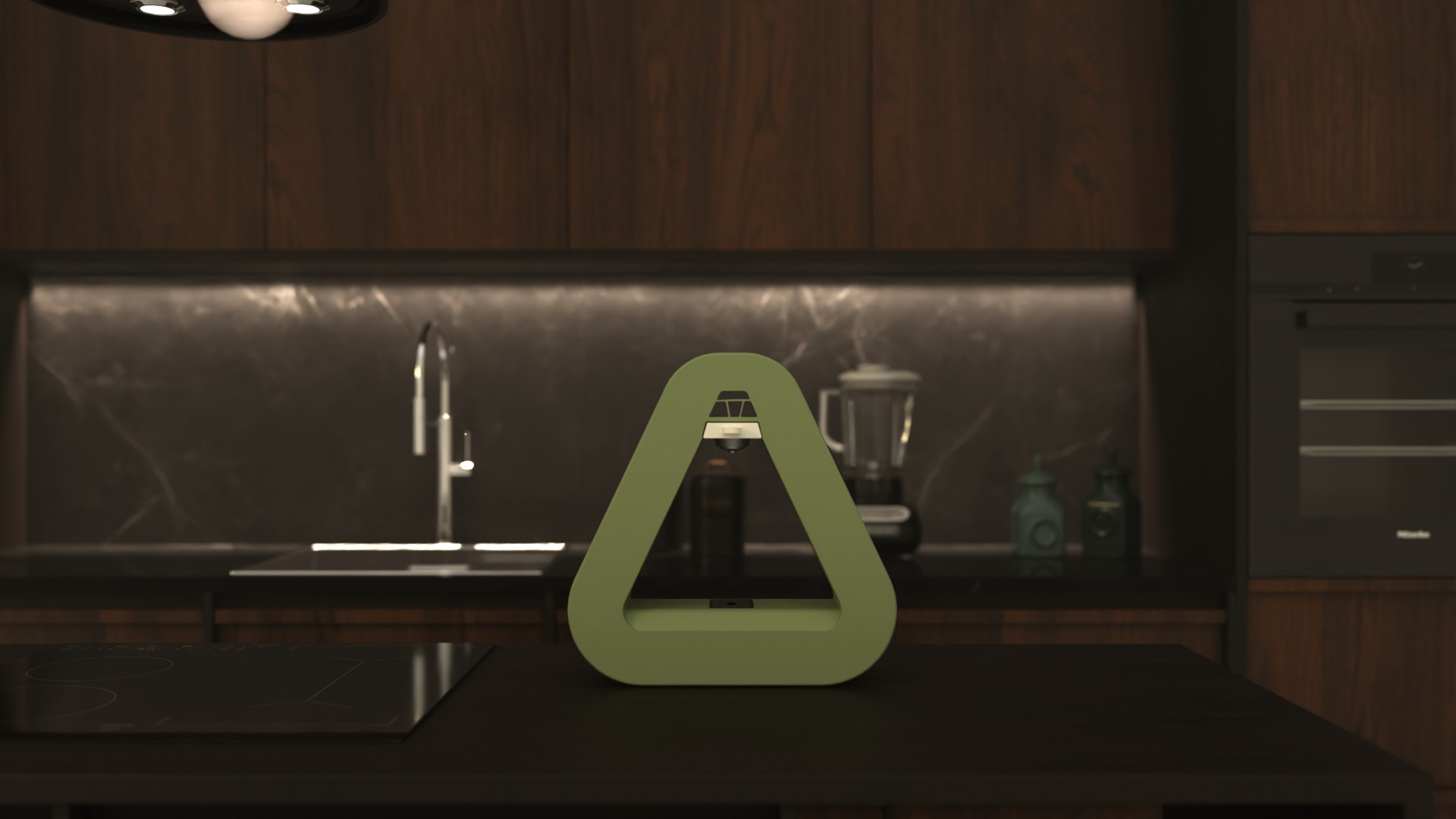
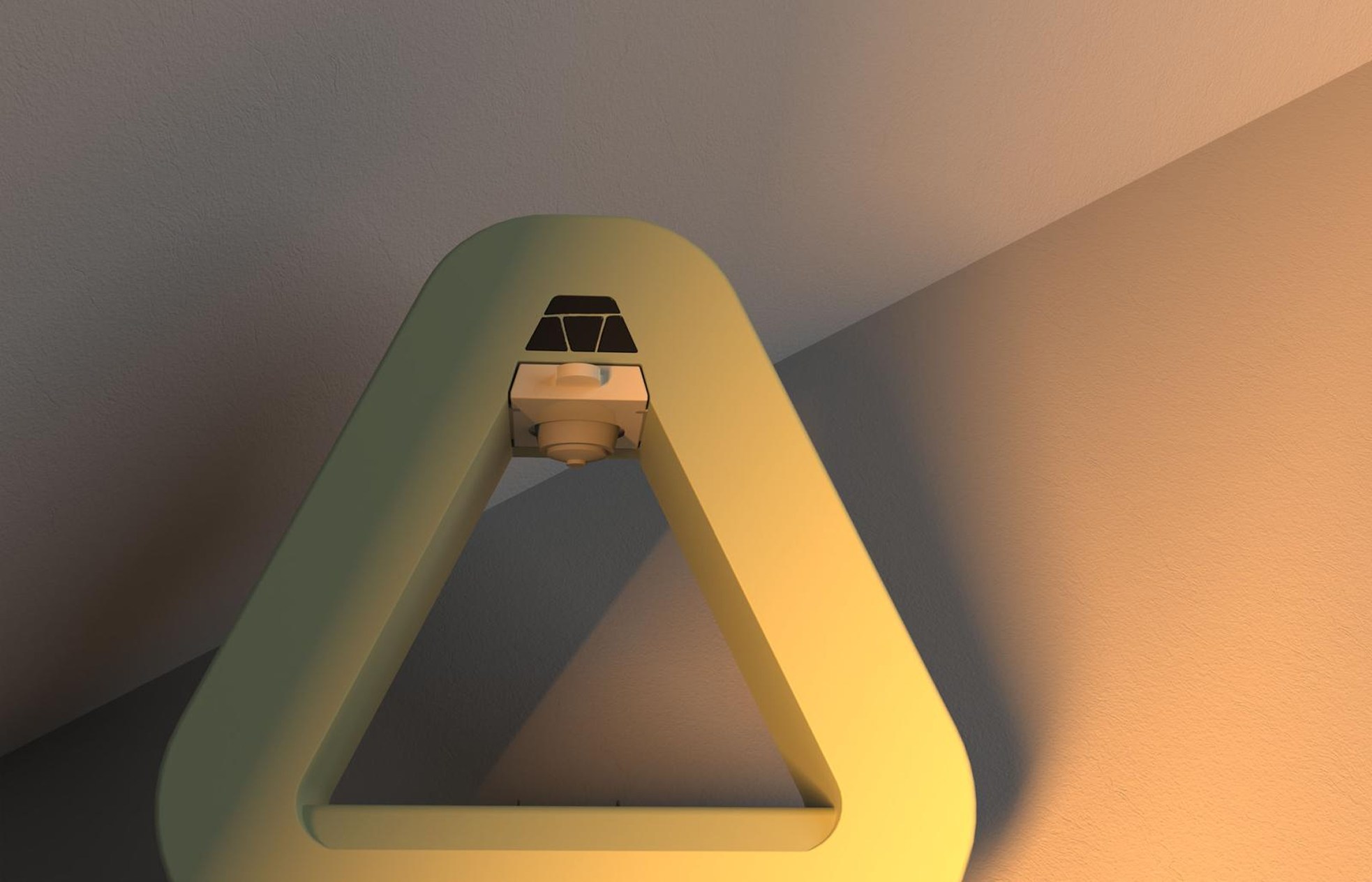
One form, two material expressions.
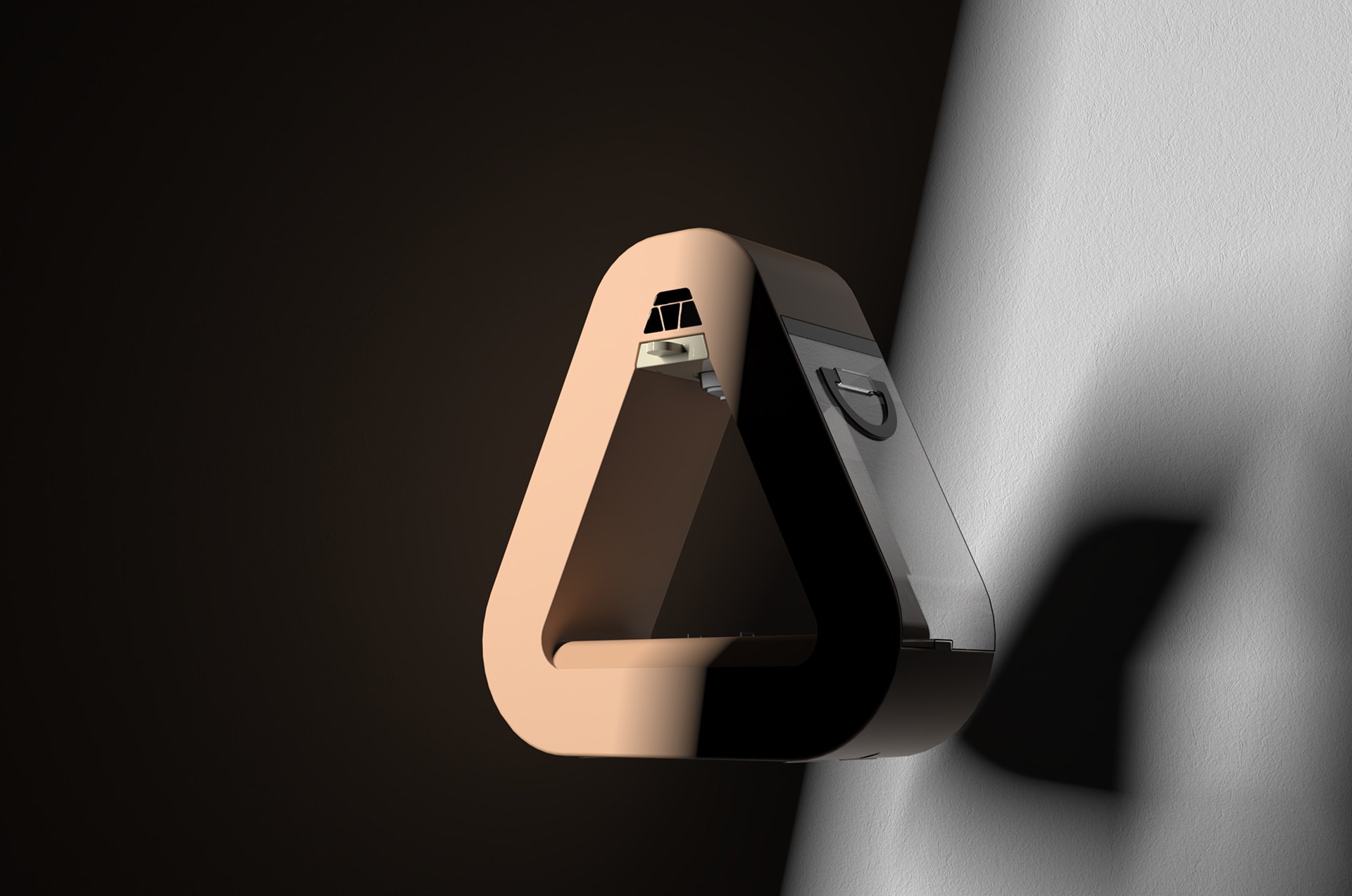
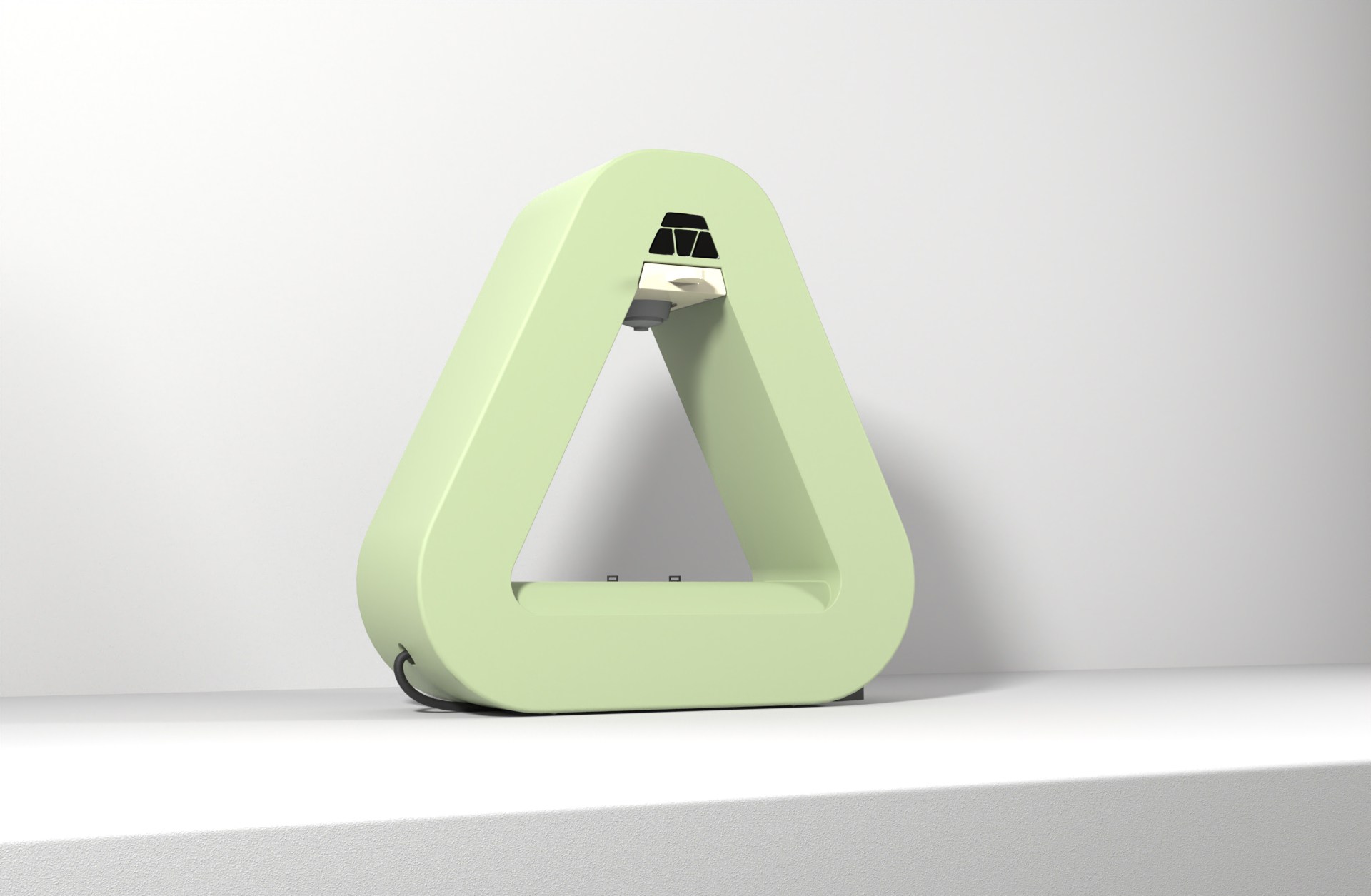
Peach and muted green share the same triangular body and darker touchpoints. Studio views describe the surfaces; the kitchen views return the object to its intended setting.
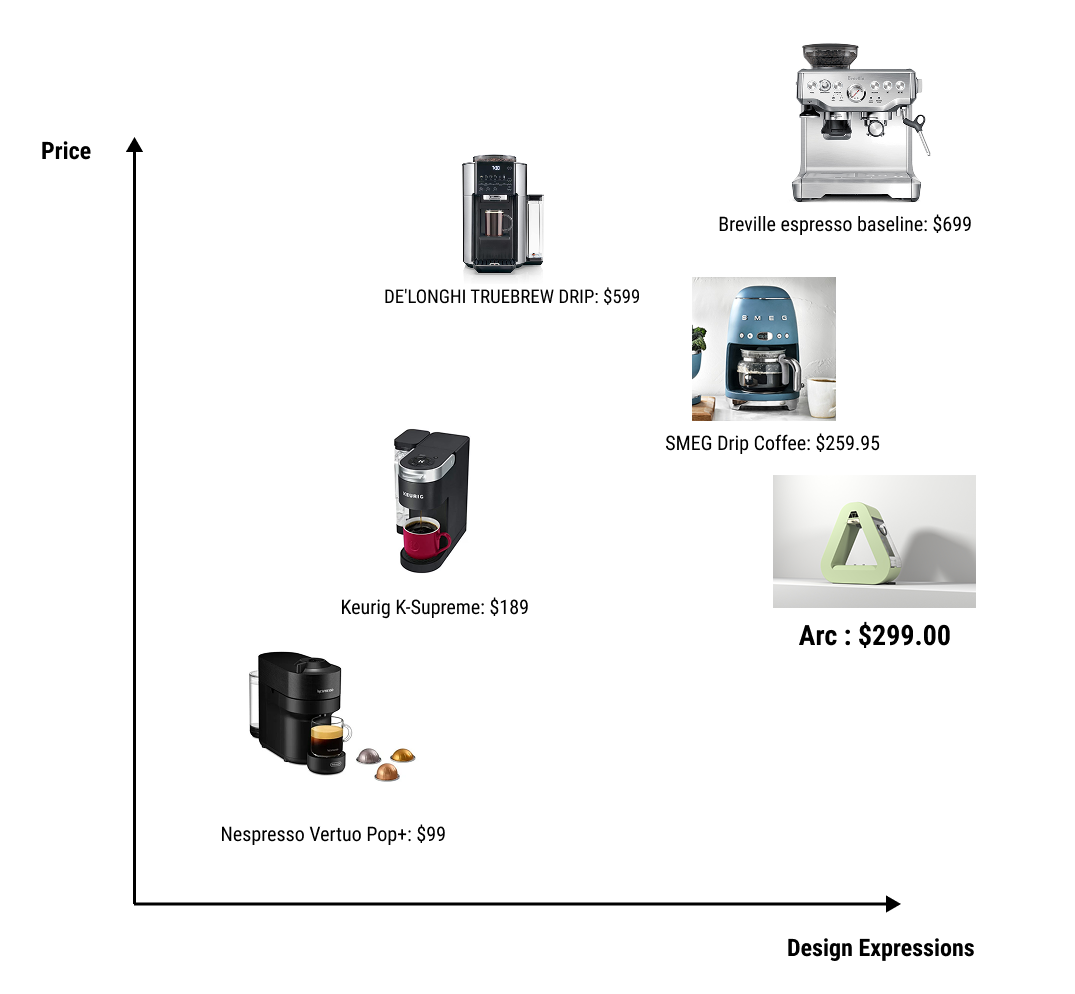
A proposed $299 position.
The positioning study compares ARC with familiar coffee-machine brands. The price is a concept target, not a validated retail price or production quote.
Resolved beyond the exterior.
Material and component choices describe the proposed construction of the concept.
What this project carries forward.
ARC carries one visual idea from moodboard and hand model through CAD, CMF, assembly, and market positioning. A working prototype would test heat, noise, cleaning, and brew performance.