Bastion
A front door with fewer separate devices.
A connected handle concept bringing access, sensing, communication, and a physical key into one front-and-rear system.
Explore the physical models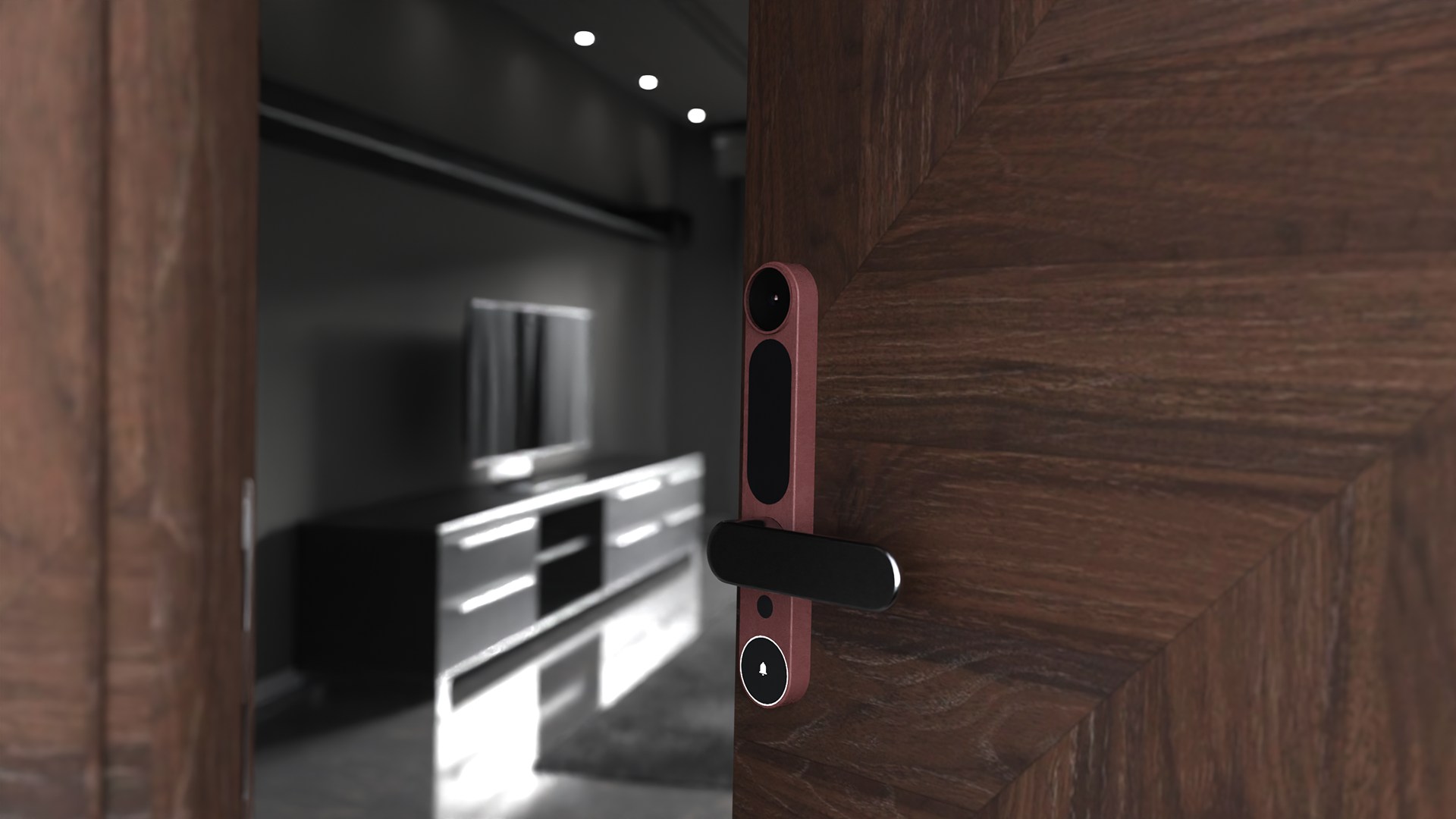
The starting point. My response.
The research brief was provided in class. My contribution is the interpretation and development shown here: sketches, physical models, interactions, CAD, and the final concept.
The brief
Residents and shared households that want convenient smart access without losing a familiar handle or dependable physical key.
The front door has become a cluttered stack of separate security devices, batteries, keys, and disconnected applications.
My design response
An integrated smart-door handle combining a camera, doorbell, motion sensing, smart lock, physical key, and companion app.
The design brings the camera, access controls, and grip into coordinated front and rear housings.
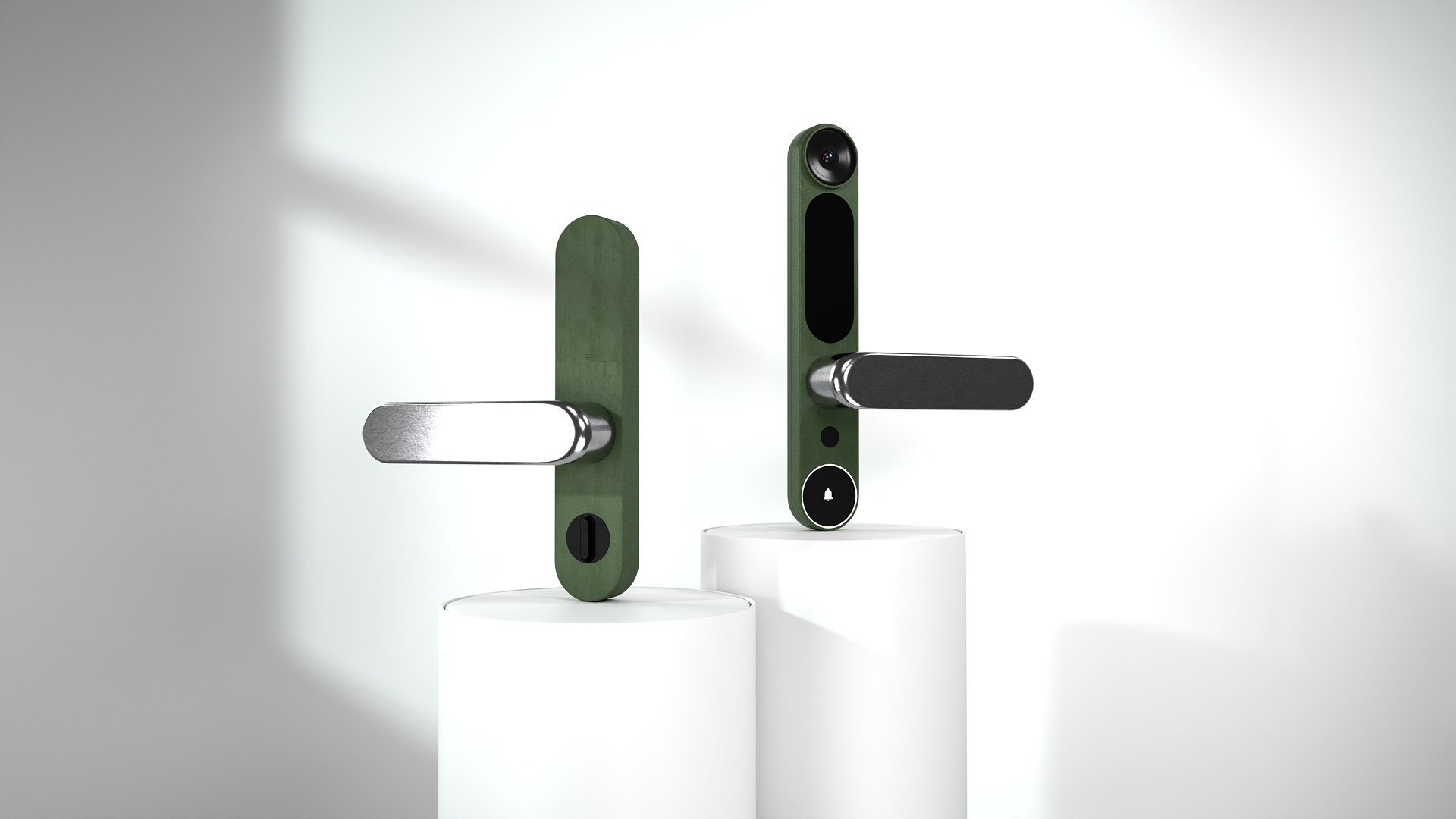
The fragmented front door
The framing board brings the separate devices into view before the integrated design proposal.
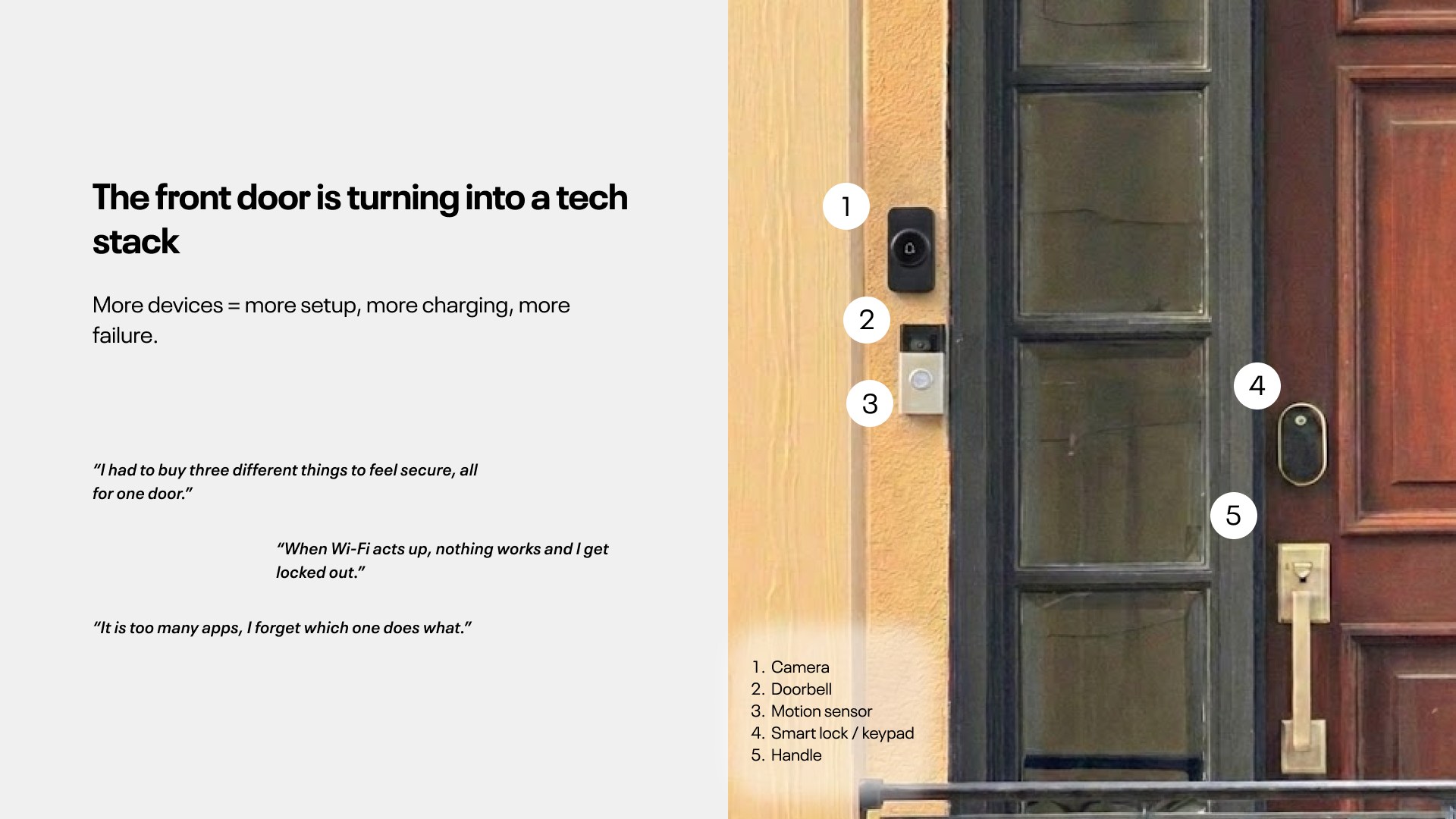
Bringing the technology back to a handle.
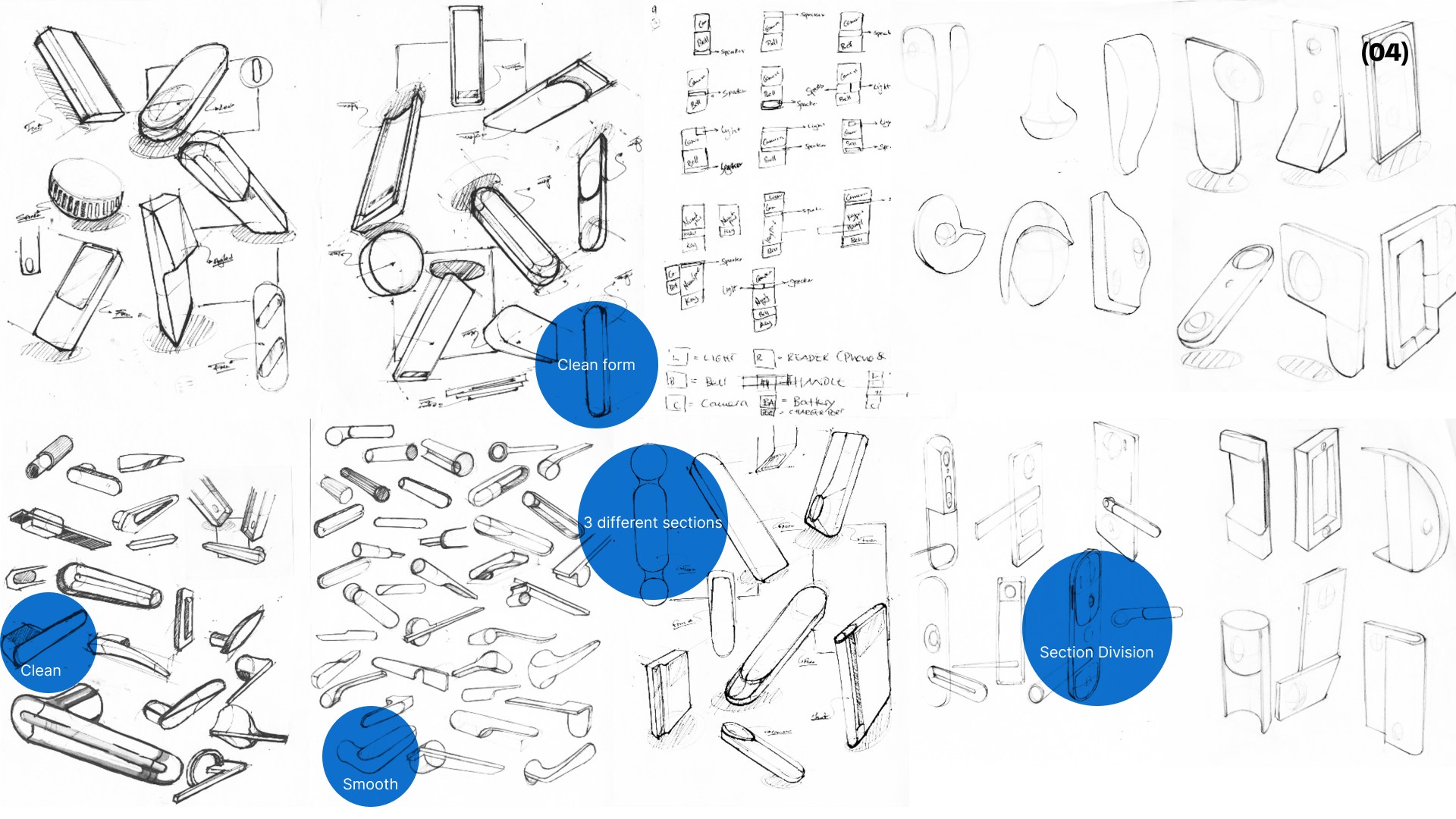
The sketch exploration combines the sensing area, access controls, and grip into one recognizable object. The annotated sheet identifies directions within the broader exploration.
Exploring the body and grip
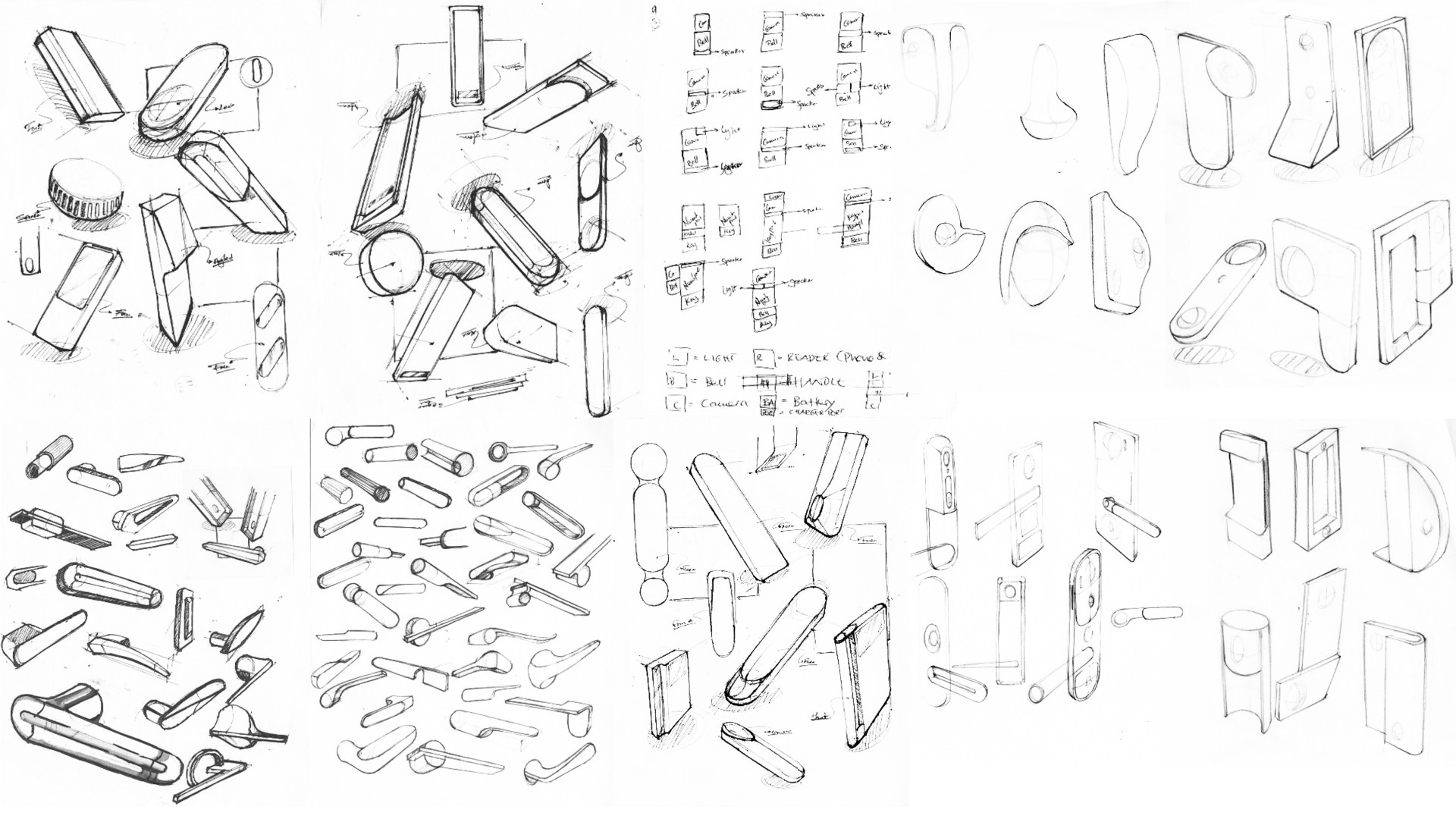
Reviewing the annotated directions
The hand sets the scale.
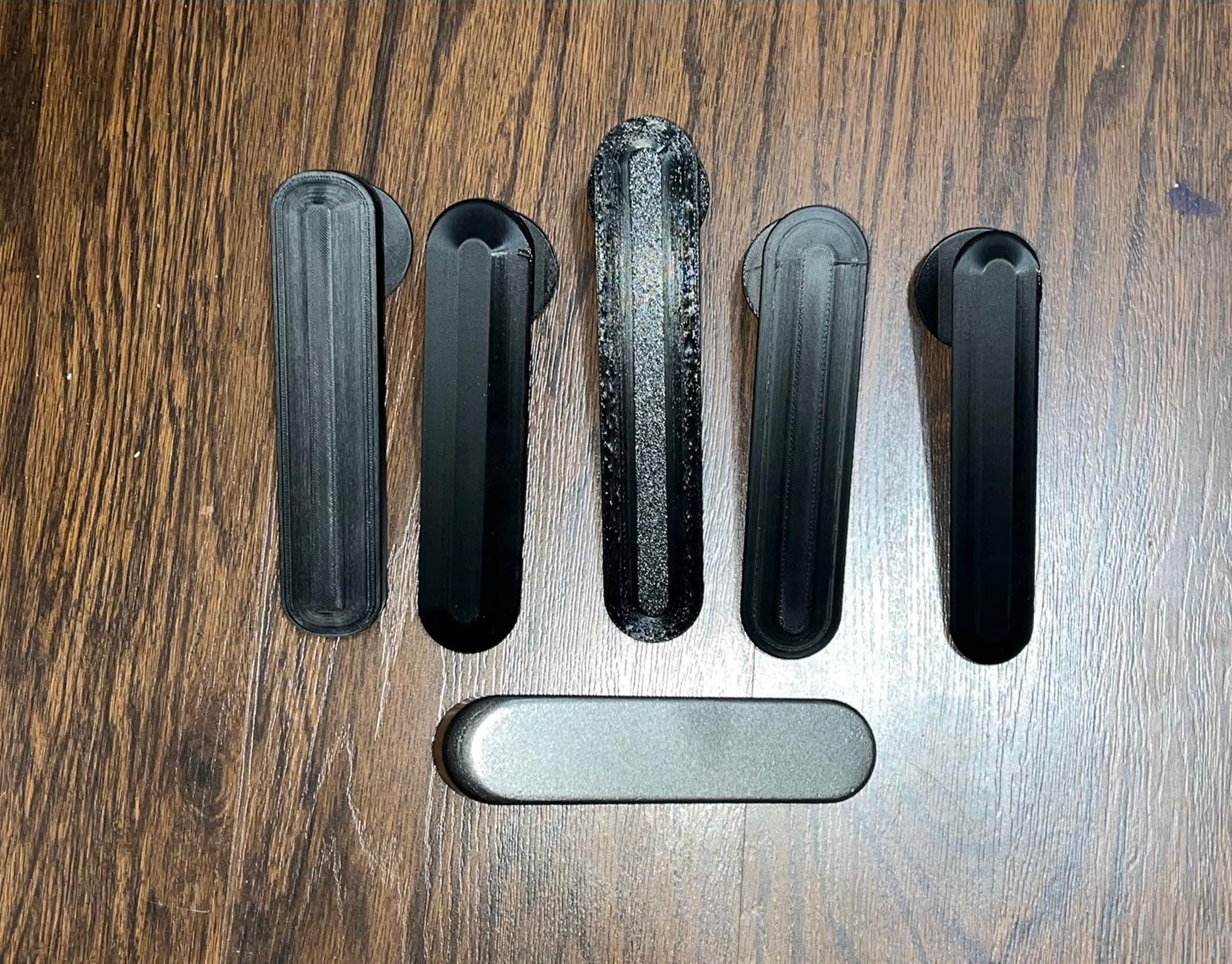
The prototype family explores the housing and grip. Mounted and hand-held studies then bring clearance, reach, and the turning action into the design process.
Form family · housing and grip
Full-scale parts make the proportions and relationship between body and handle tangible.
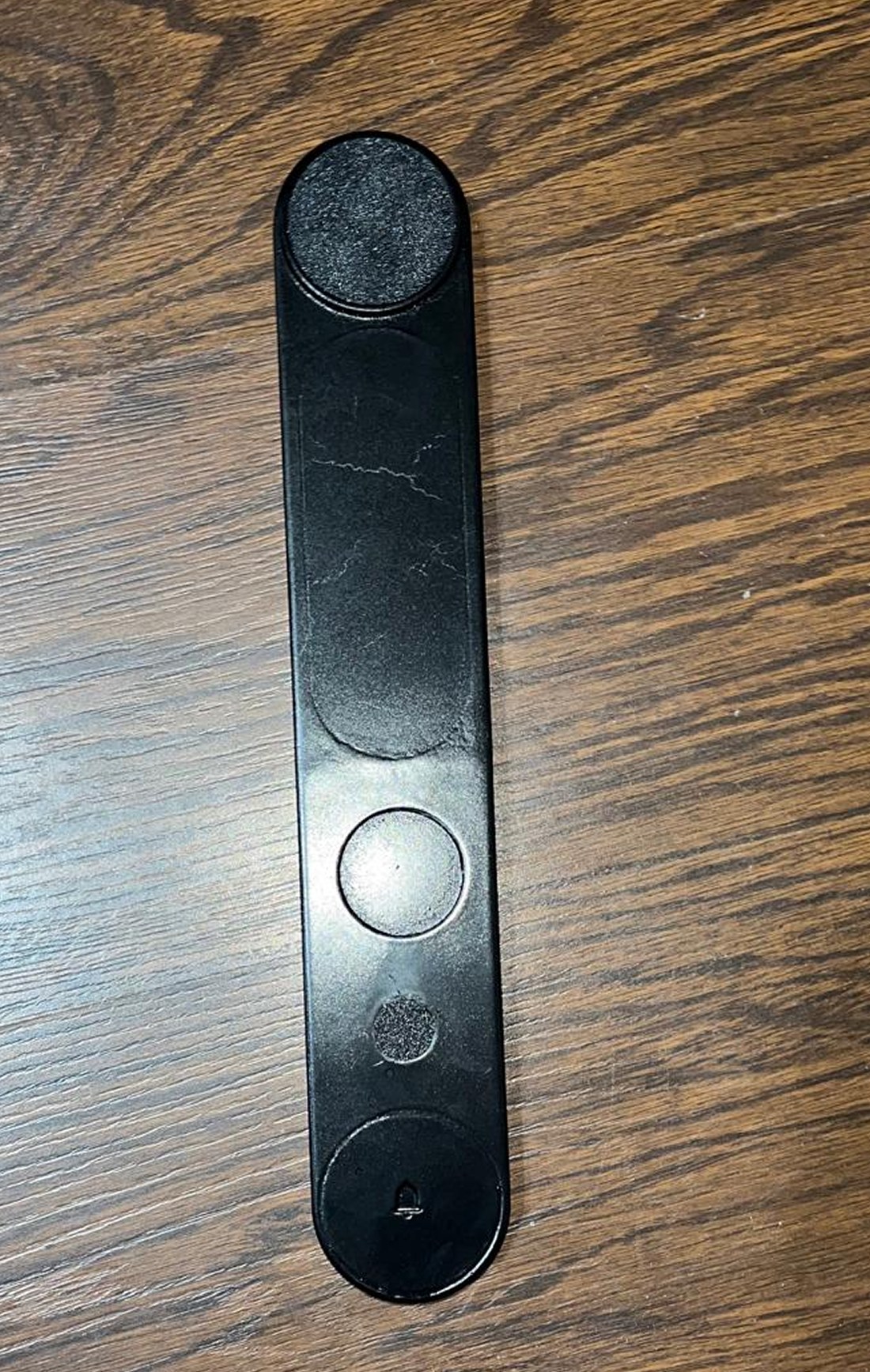
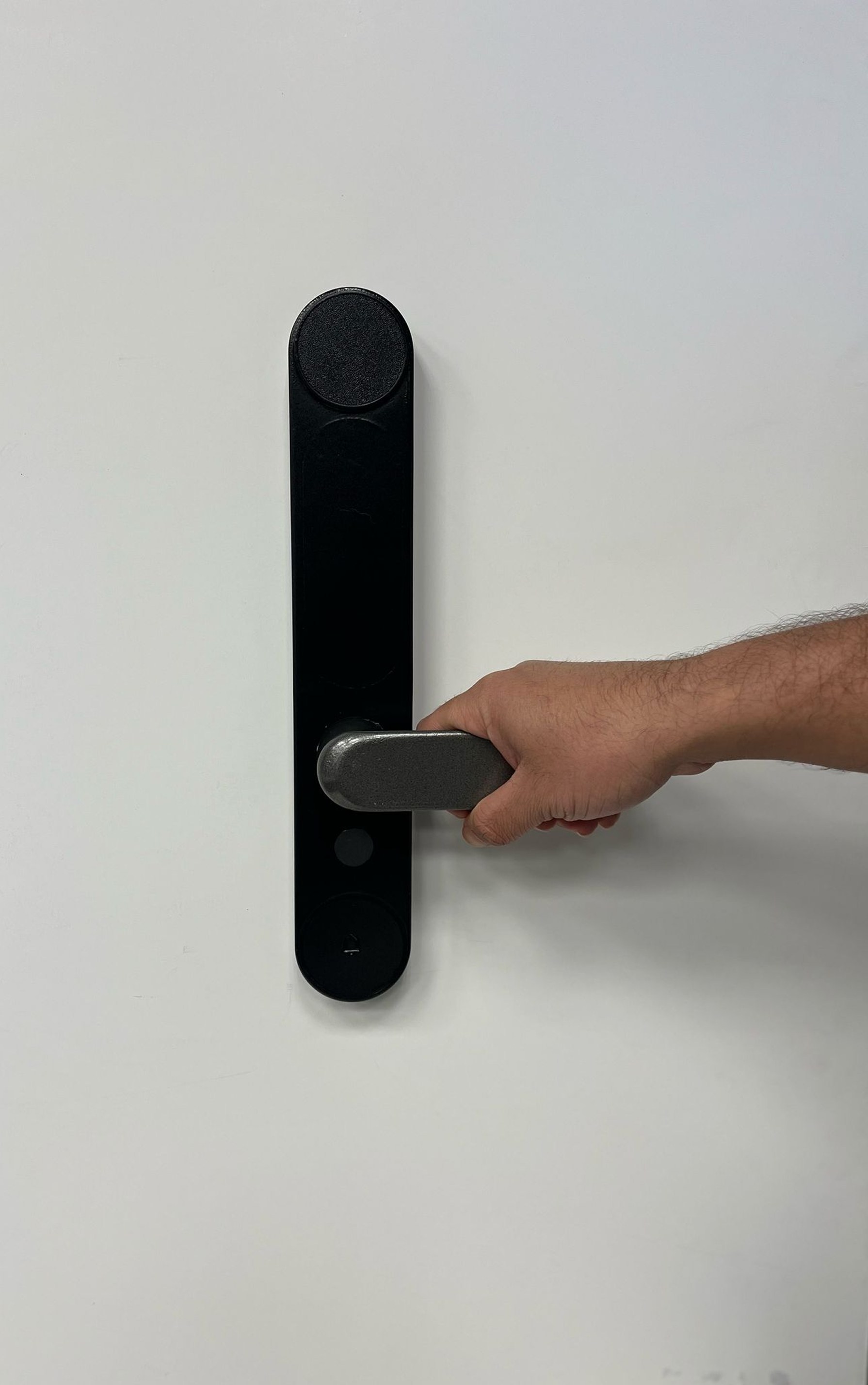
In the hand · clearance and rotation
These photographs show grip and mounted-use studies. They document exploration rather than a quantified ergonomic result.
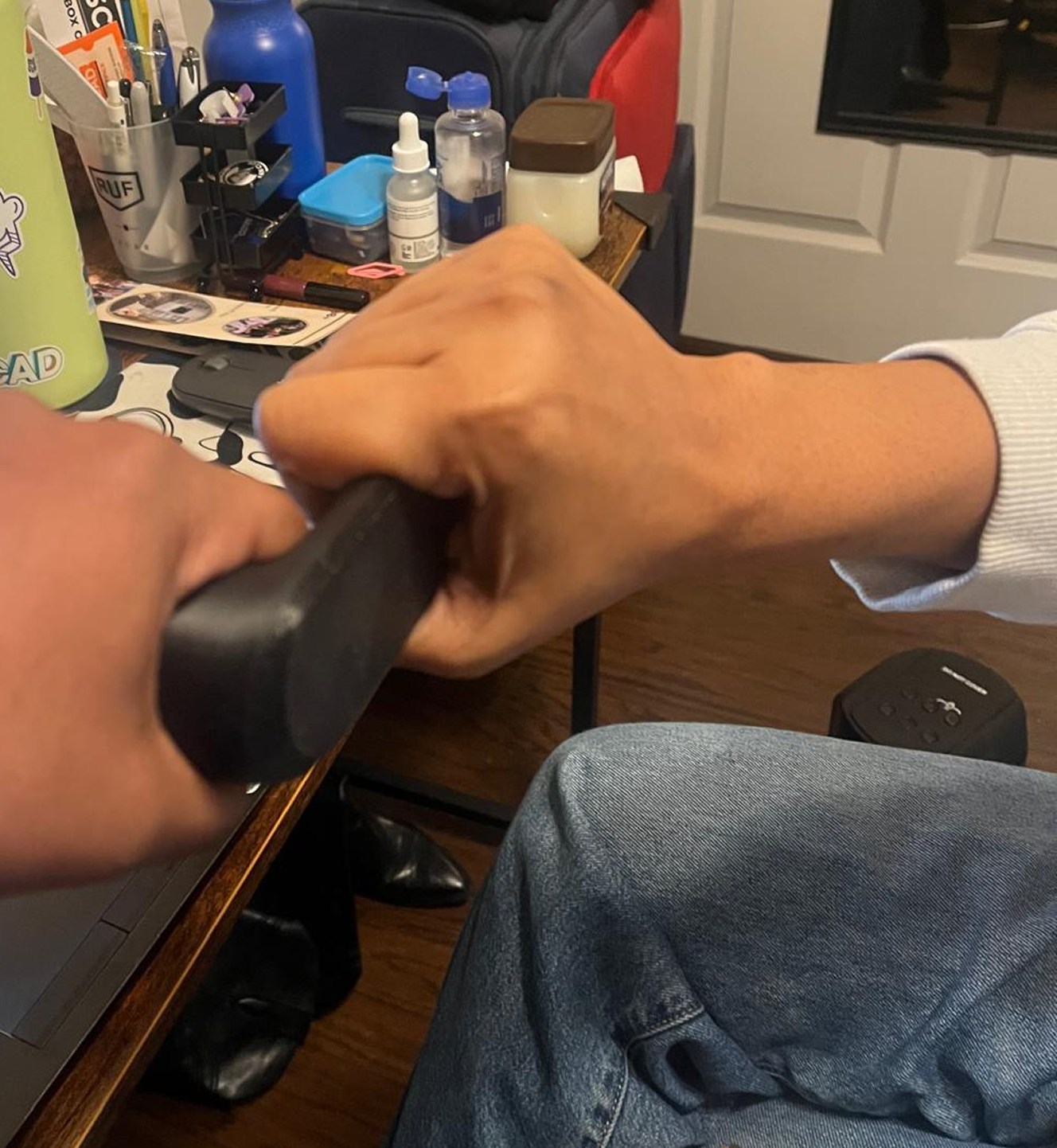
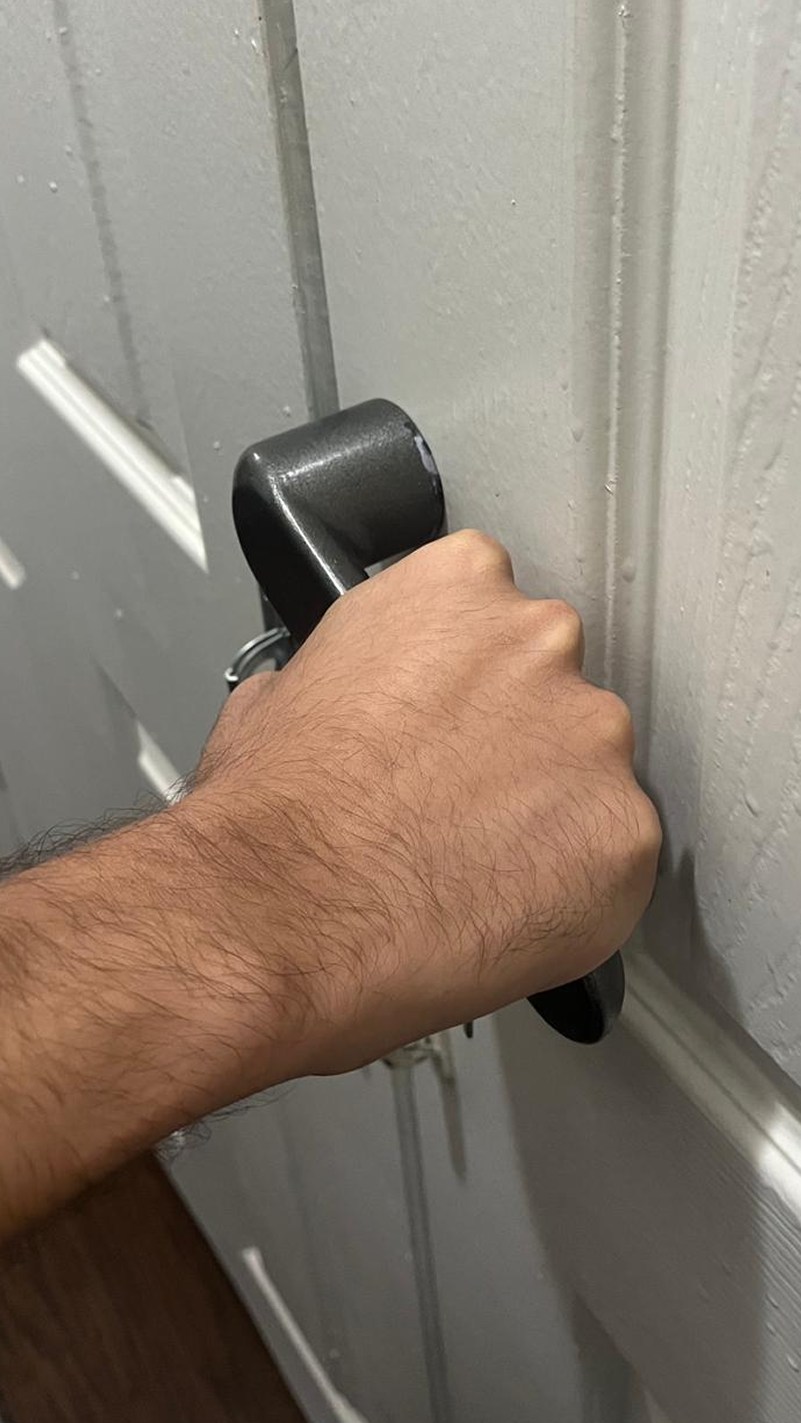
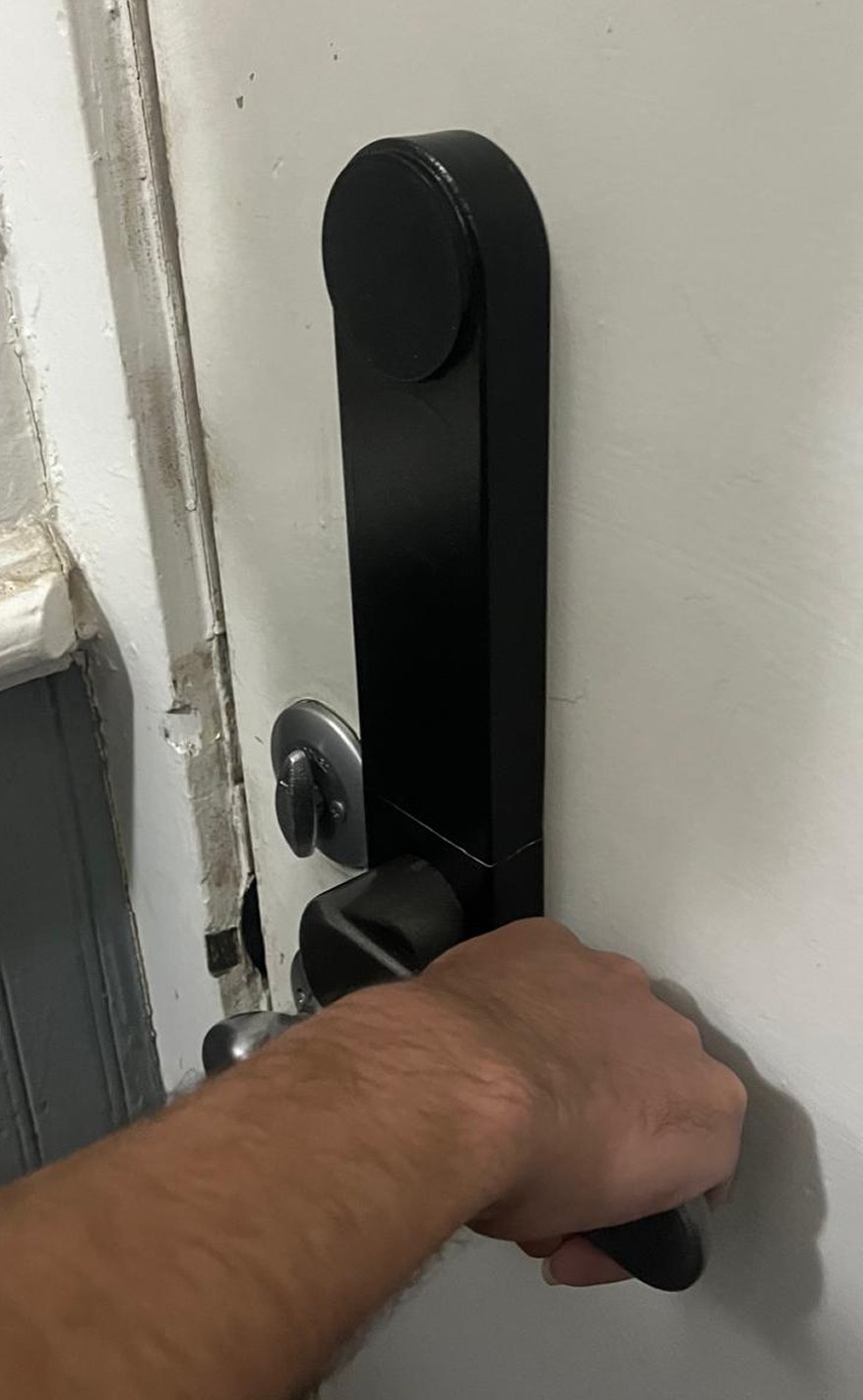
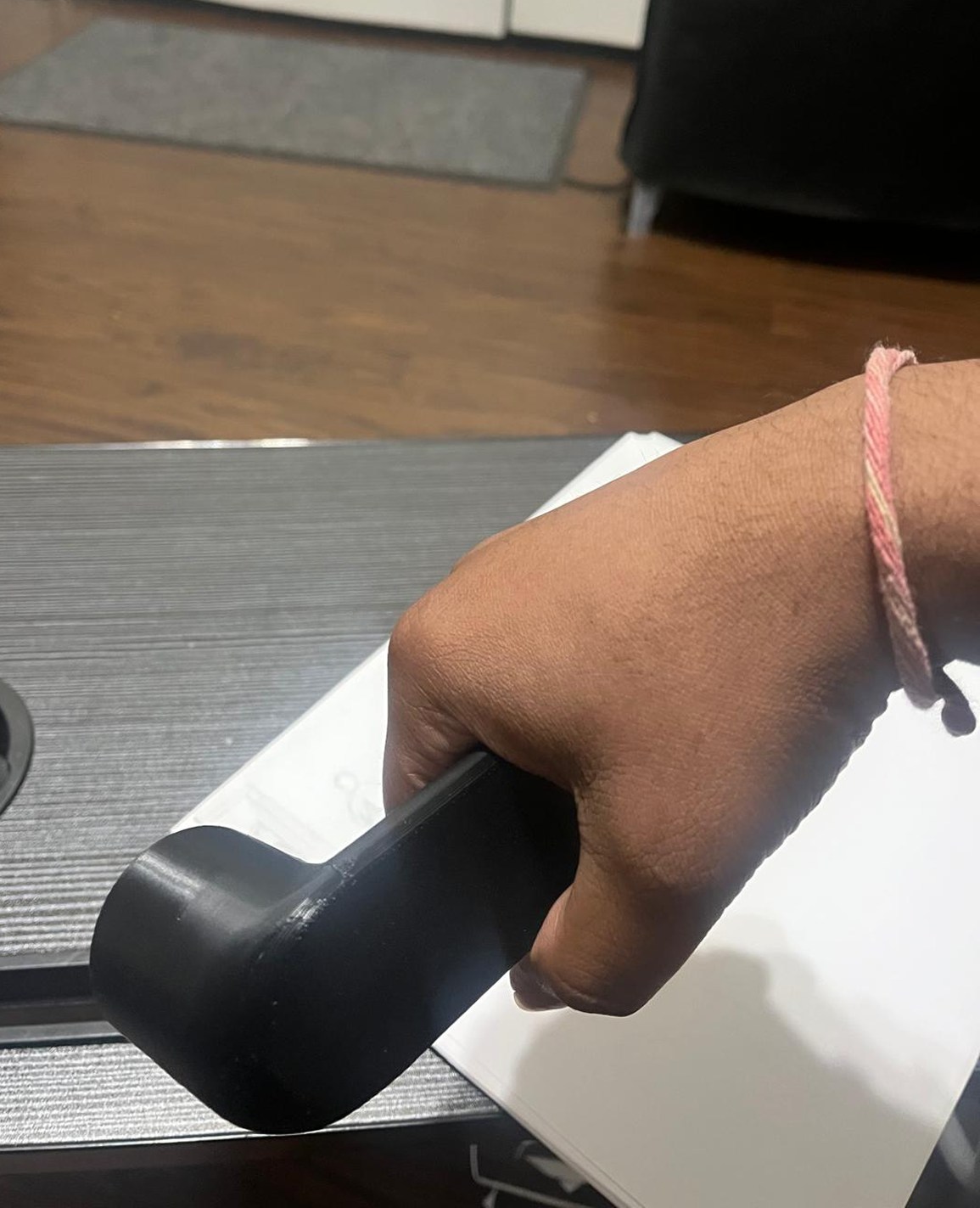
Grip profileCompare the handle shapes in the prototype family.
ClearanceThe hand studies show the space between the grip and mounting surface.
Mounted useThe door-mounted model brings reach and the turning action together.
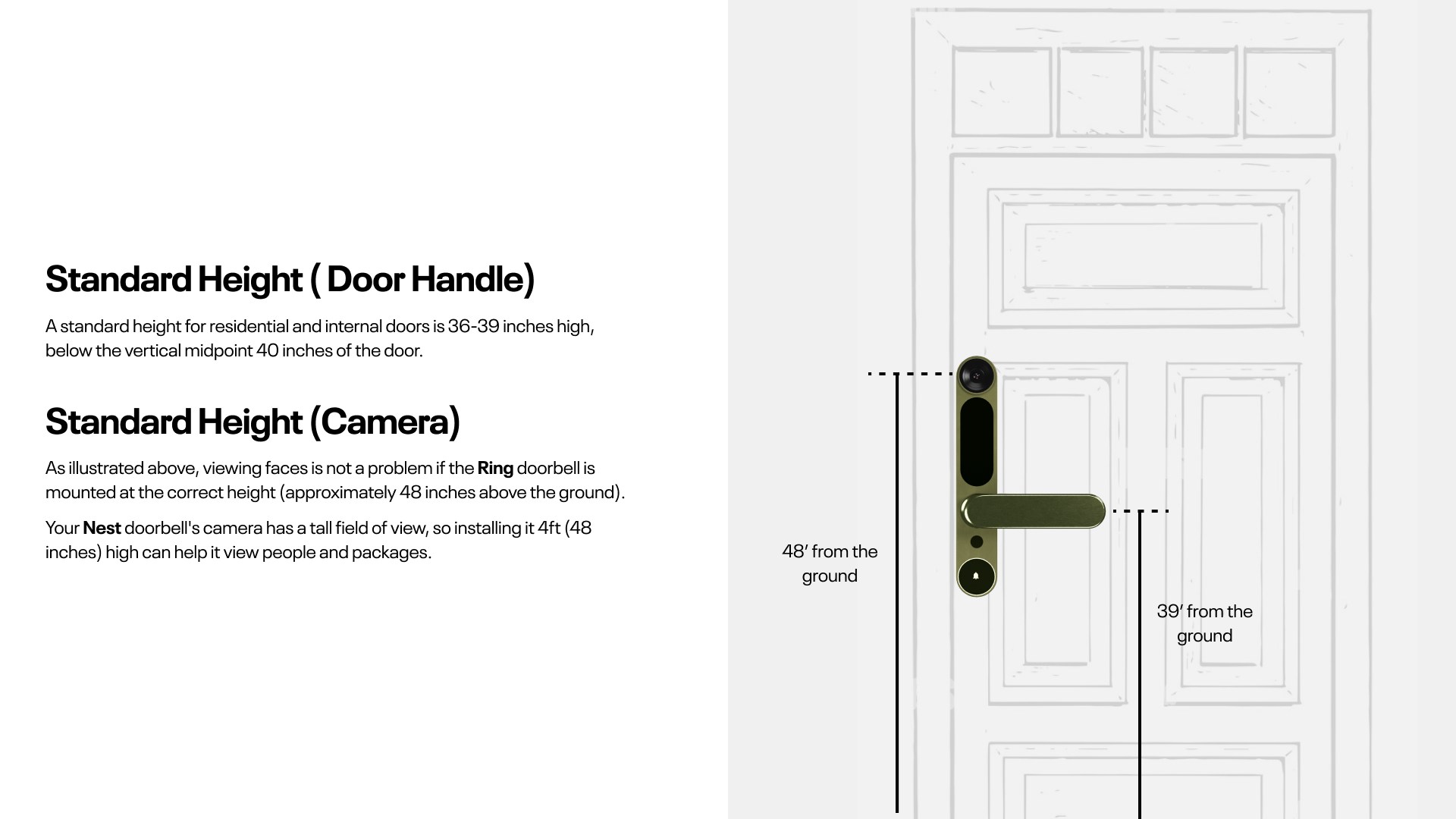
One object, two working heights.
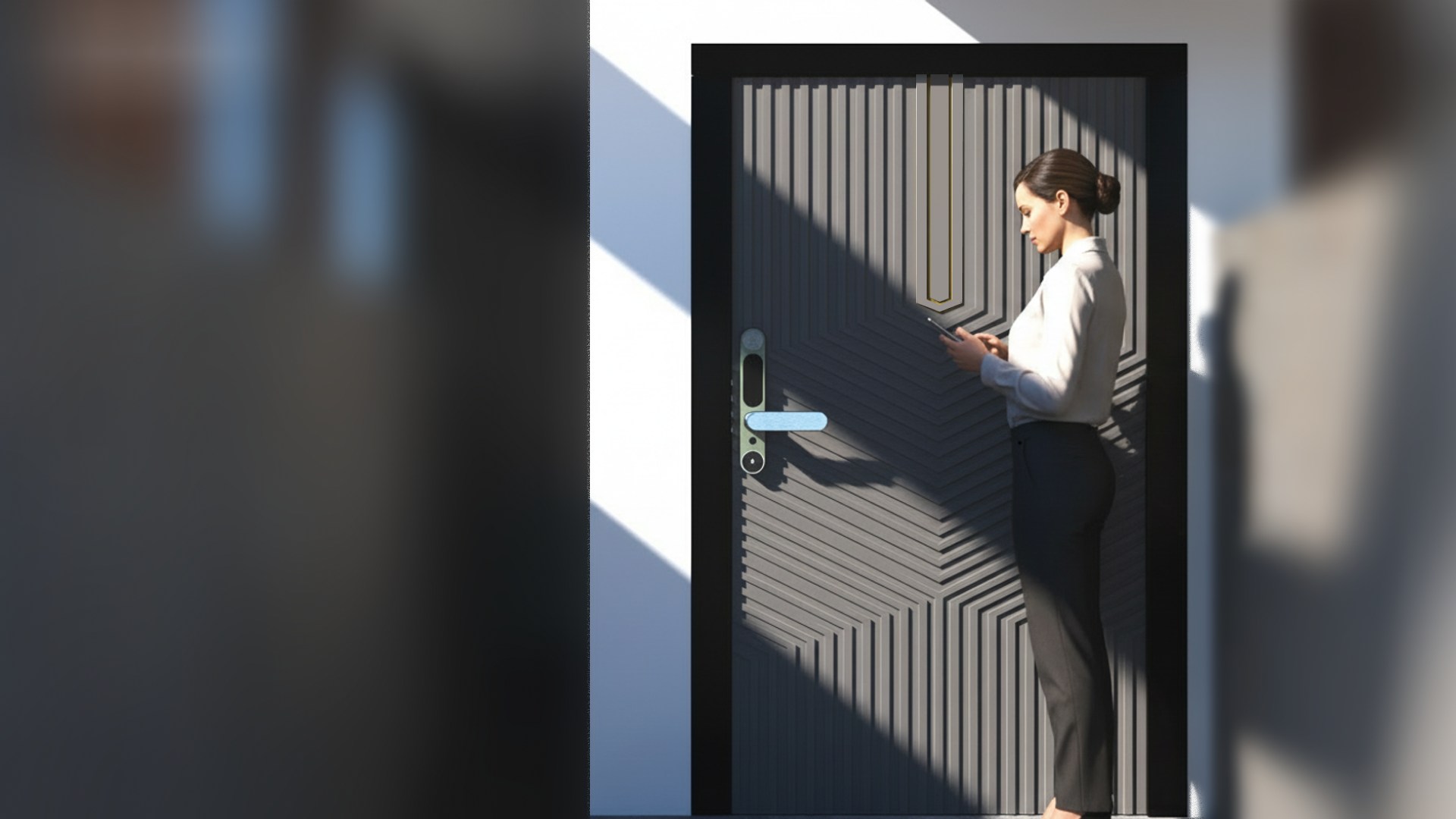
The handle and camera serve different physical needs. The installation study places the grip near 39 inches and the camera near 48 inches, making the relationship visible on a full door.
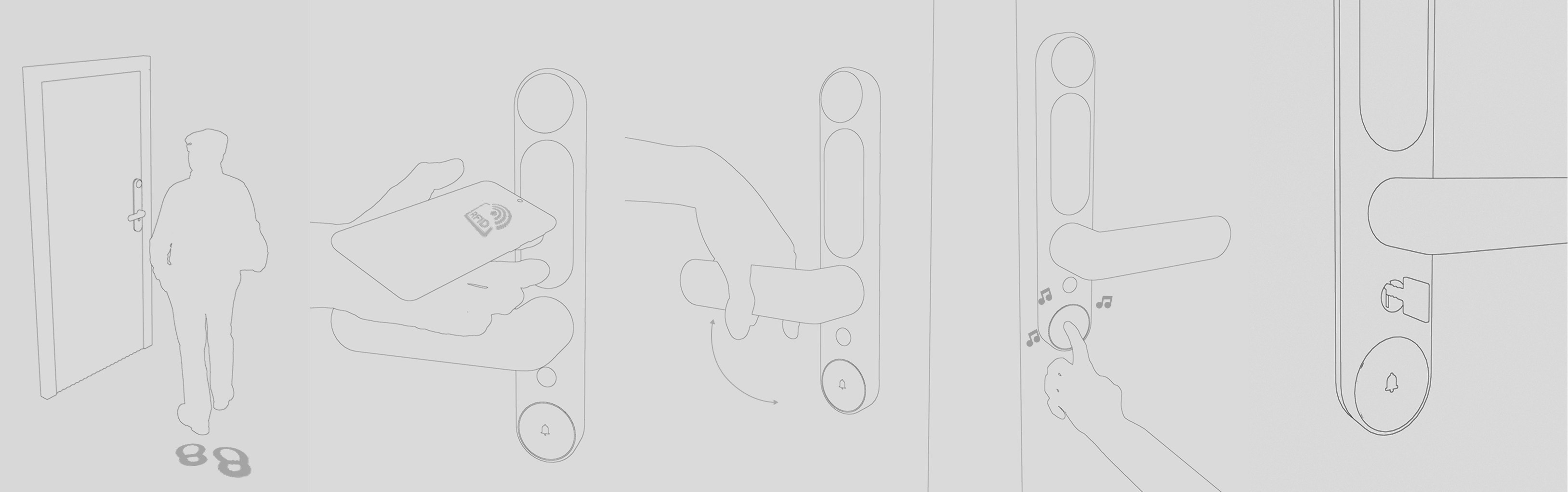
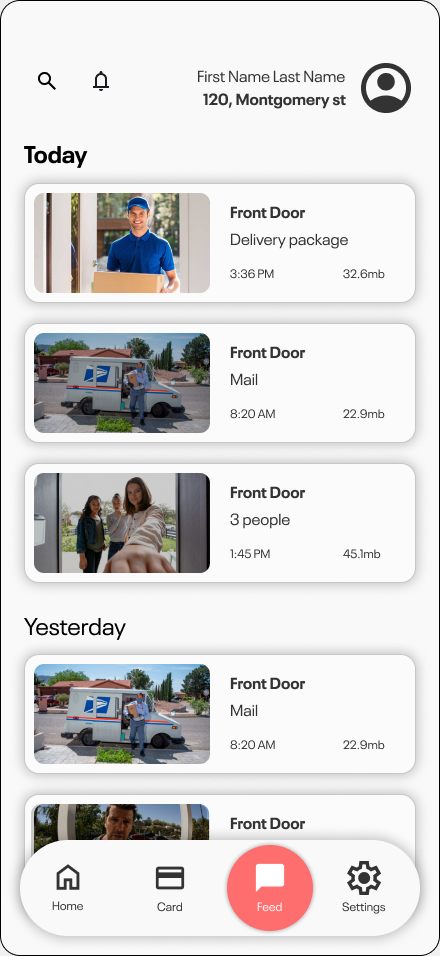
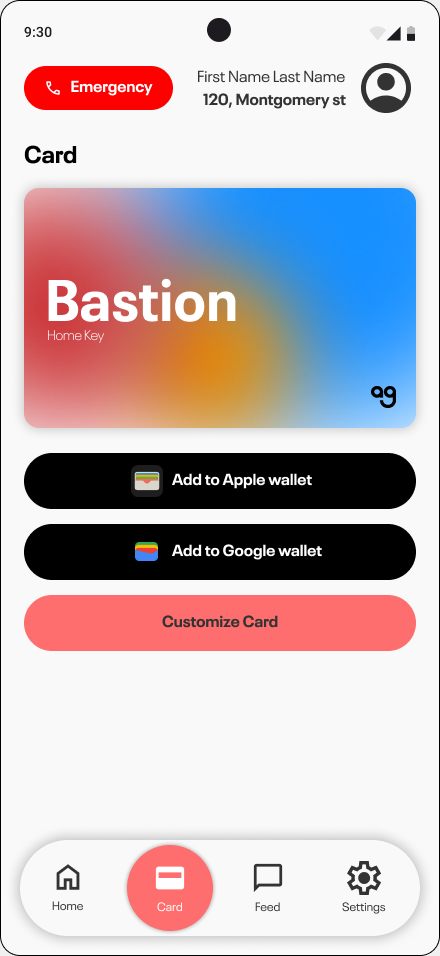
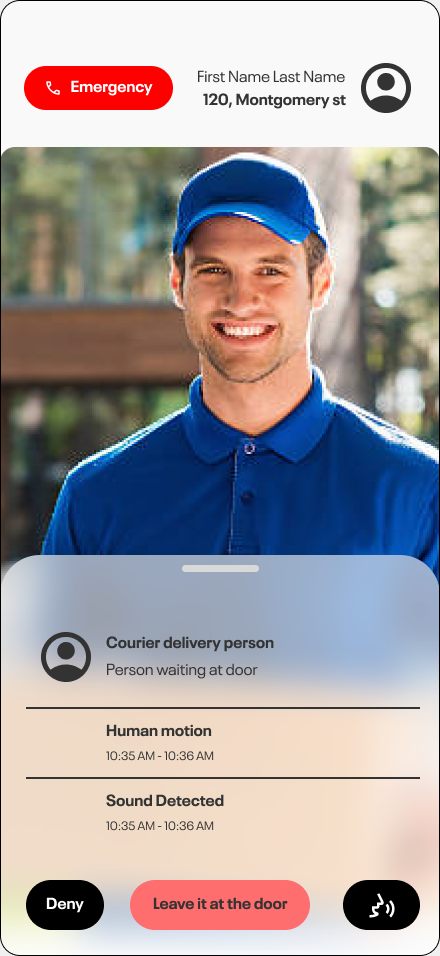
Access continues on the phone.
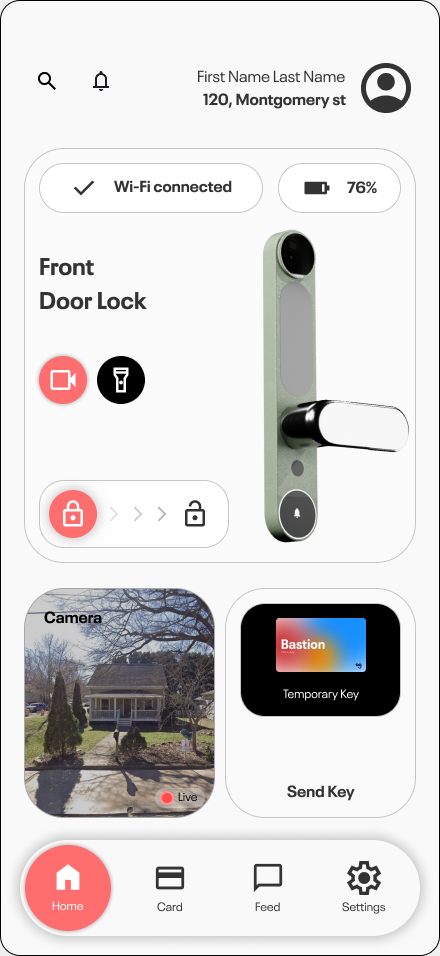
The companion concept brings lock control, event history, a digital key, and visitor response together. A physical key remains part of the hardware proposal.
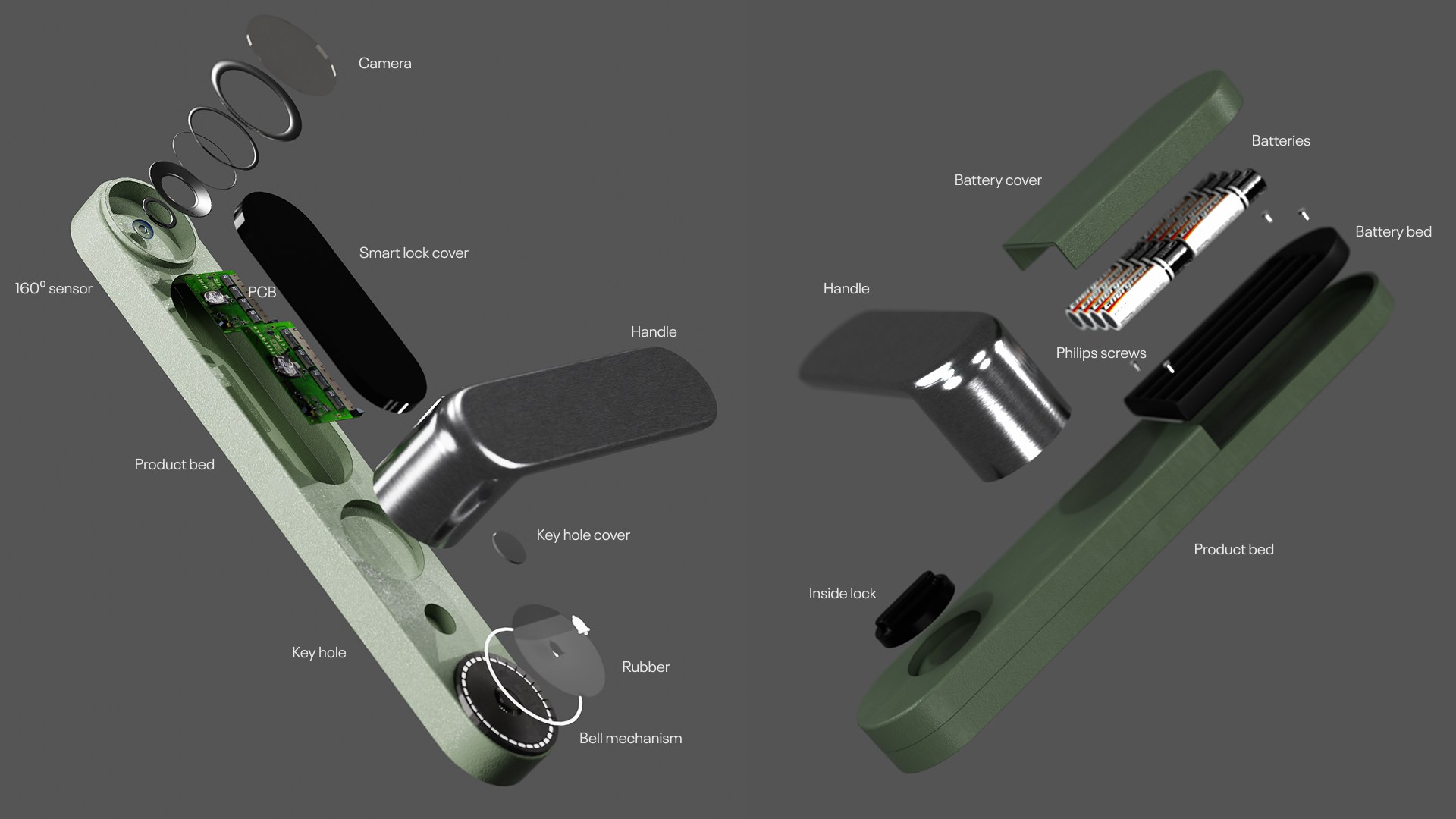
Coordinating the outside and inside.
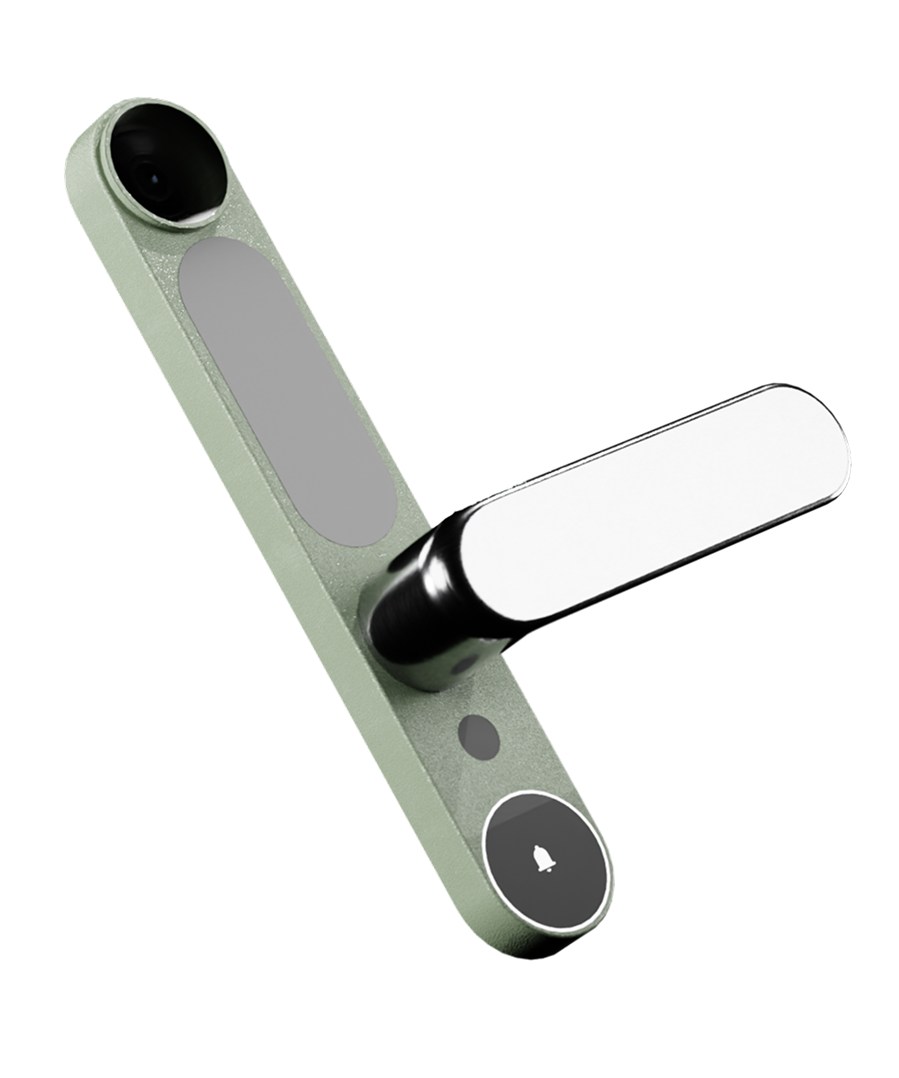
The front and rear housings organize sensing, access, grip, and power. The exploded study makes the proposed mechanical and electronic arrangement inspectable.
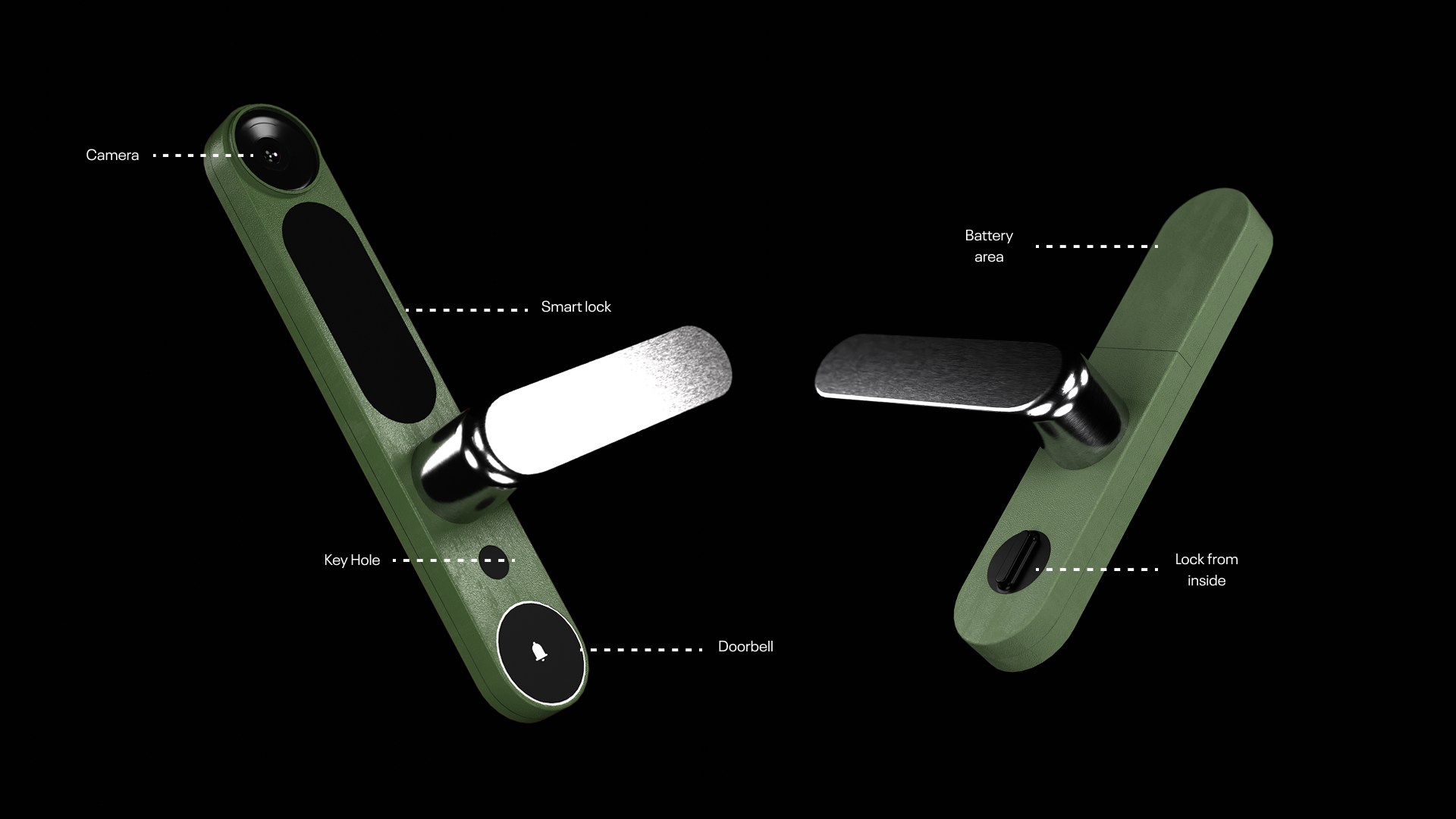
Where each function lives.
The annotated front and rear views locate the camera, sensing, access controls, key, and battery within the housings.
From housings to individual parts.
The exploded view separates the covers, handles, electronics, power components, and fasteners to explain the proposed assembly.
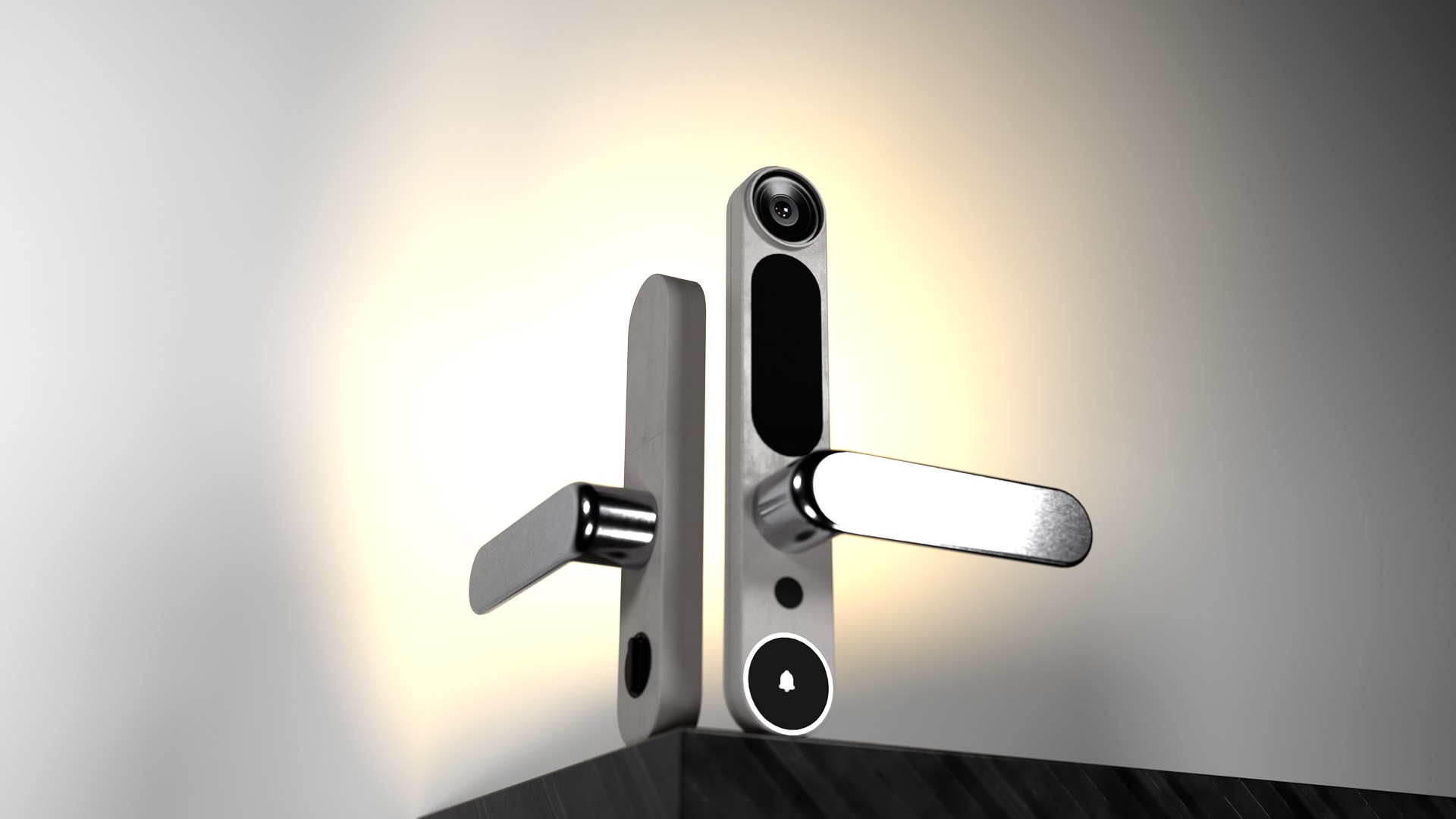
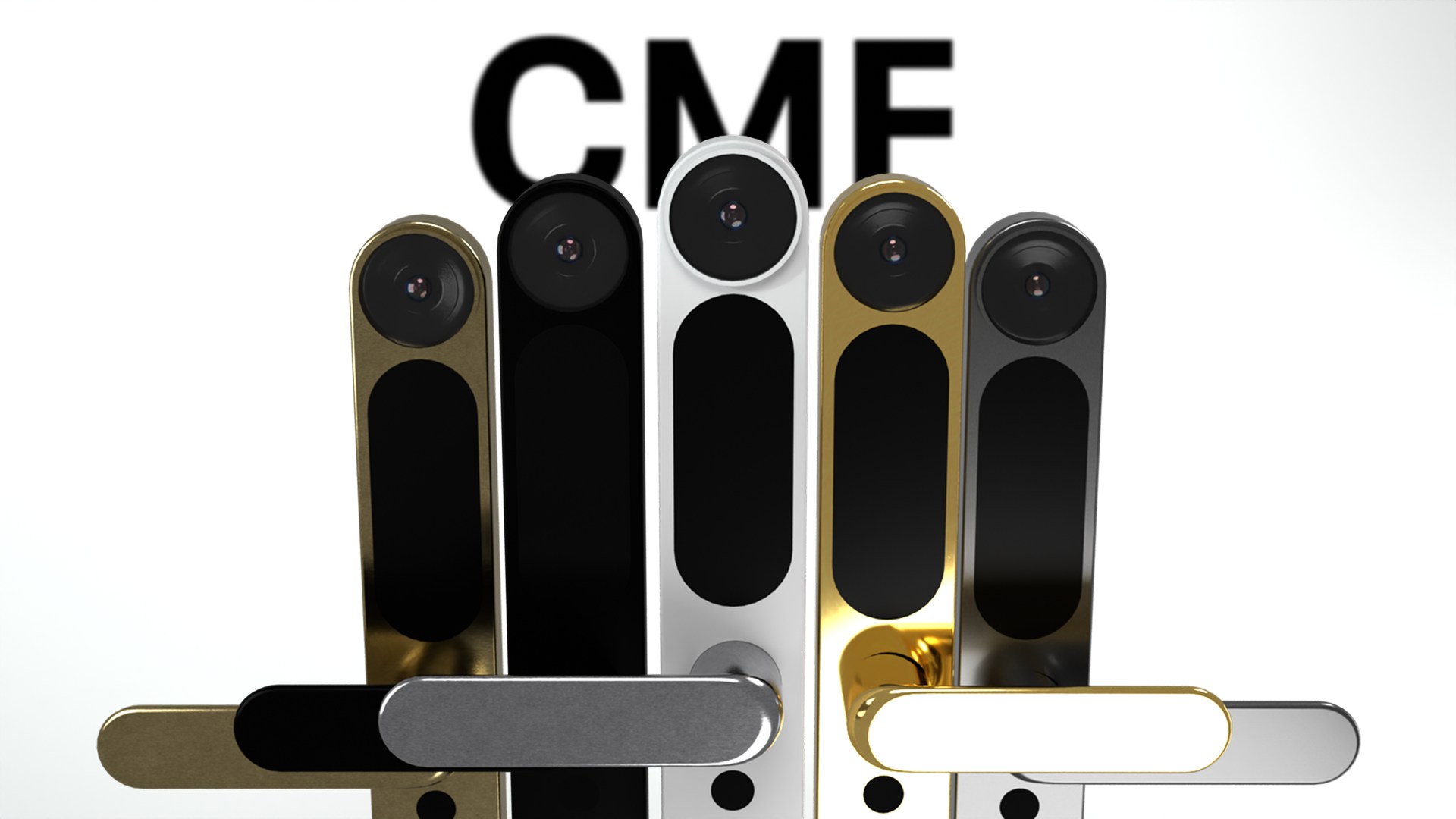
Different finishes. One family of parts.
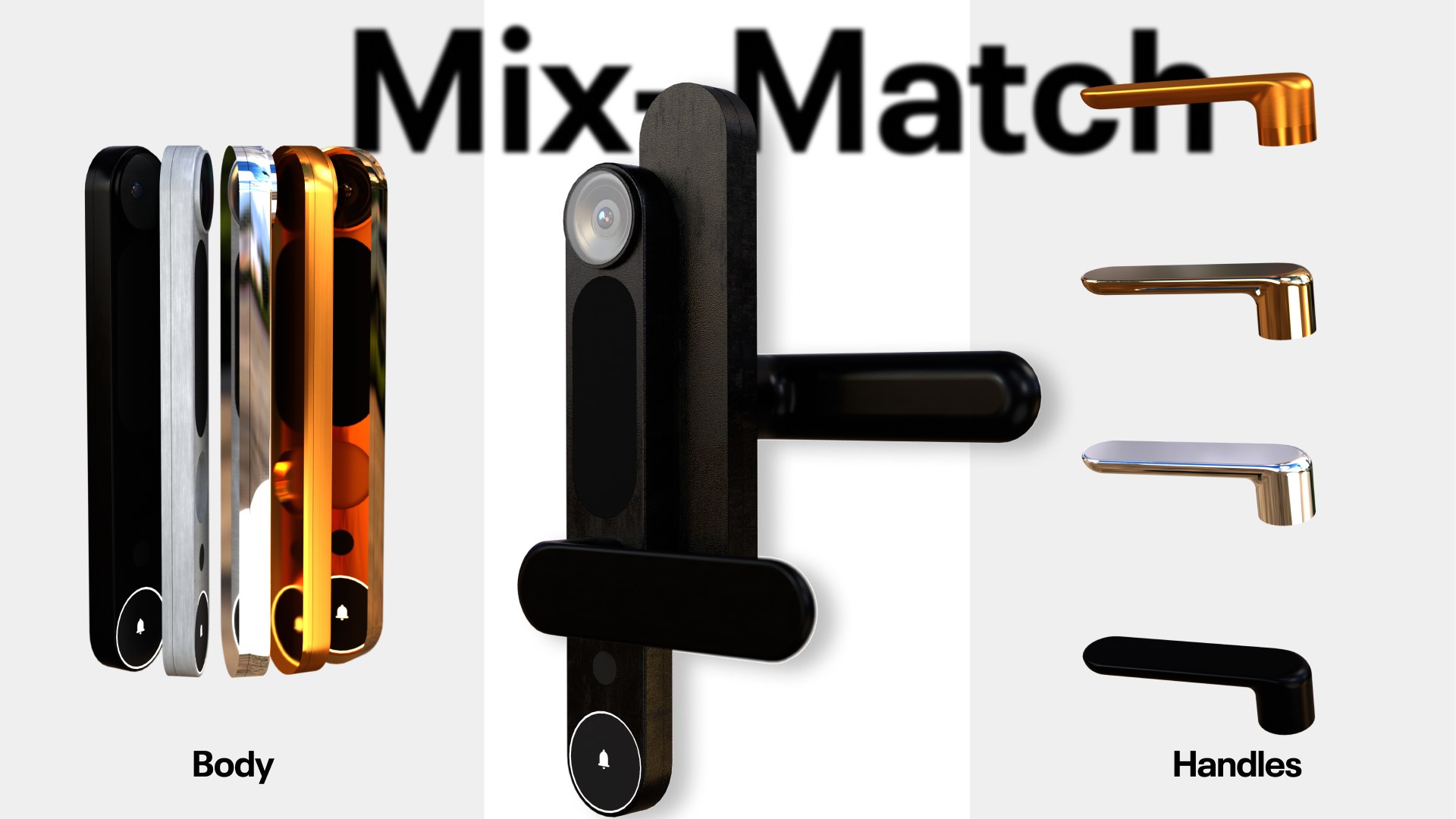
Body and handle combinations explore how the system could sit alongside different door materials. The final studies show the range and the assembled object.
Body and handle finish combinations.
The same family of parts is shown across the proposed color and material options.
Made to fit a real door.
Material and component choices describe the proposed construction of the concept.
What this project carries forward.
Bastion turns separate smart-home accessories into one understandable threshold. Further work would validate installation across more door standards and test shared household access.