Aurio
Hearing support with a visible identity.
An ear-worn concept explored through sketches, foam forms, prototype finishing, and on-body studies.
Explore the physical models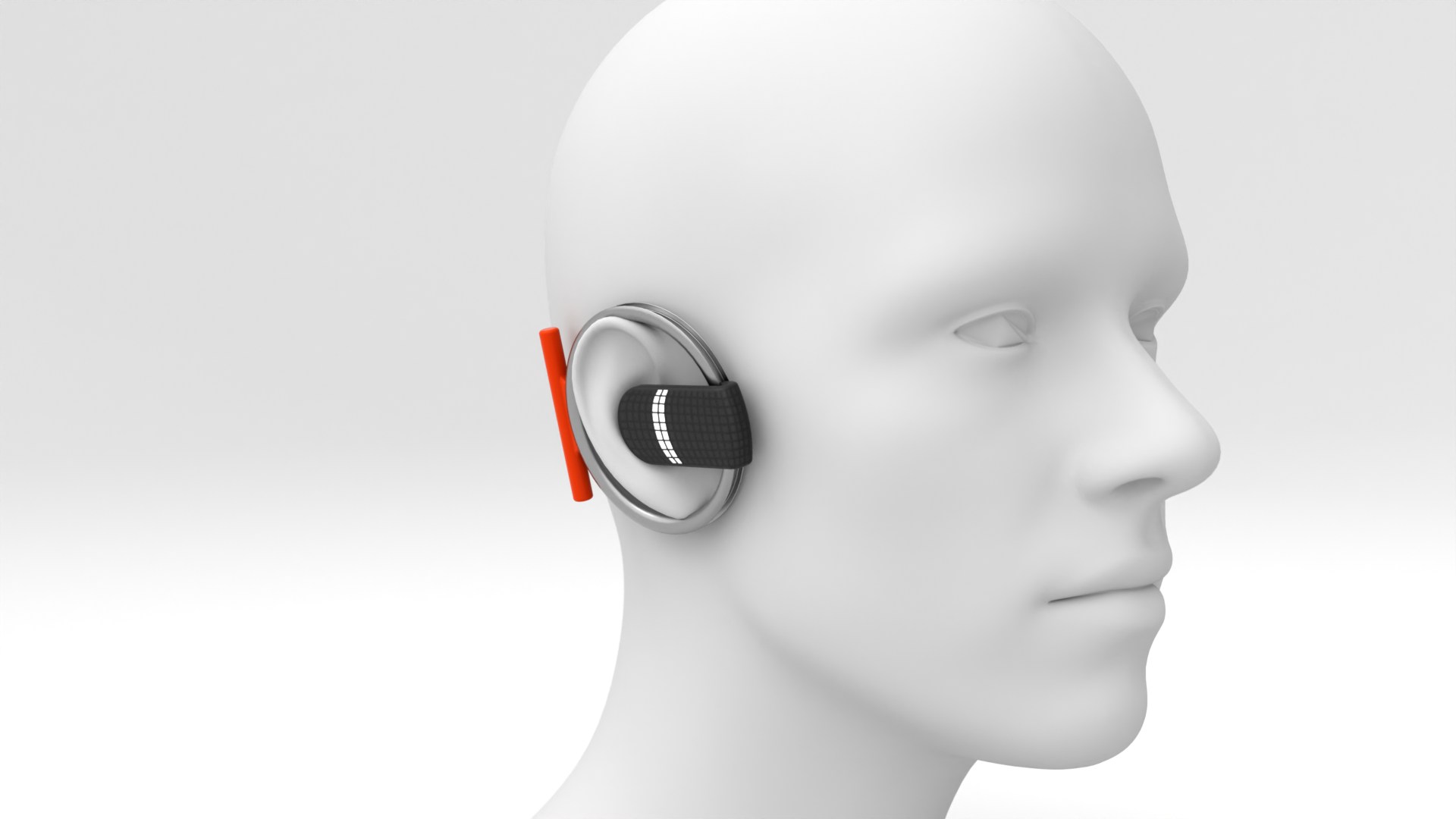
The starting point. My response.
The research brief was provided in class. My contribution is the interpretation and development shown here: sketches, physical models, interactions, CAD, and the final concept.
The brief
Young adults who struggle in noisy, outdoor, moving, or social environments and want support that fits their identity.
Young adults experience difficult listening situations but often reject hearing aids that feel clinical, hidden, or stigmatizing.
My design response
A lifestyle hearing-support wearable with direct controls, focus feedback, six colorways, and a charging case.
The ring form treats visibility as part of the product’s identity. Physical models explore its relationship with the ear.
 1.jpg)
Listening context and product references
The reference material frames everyday listening and the range of existing audio products.

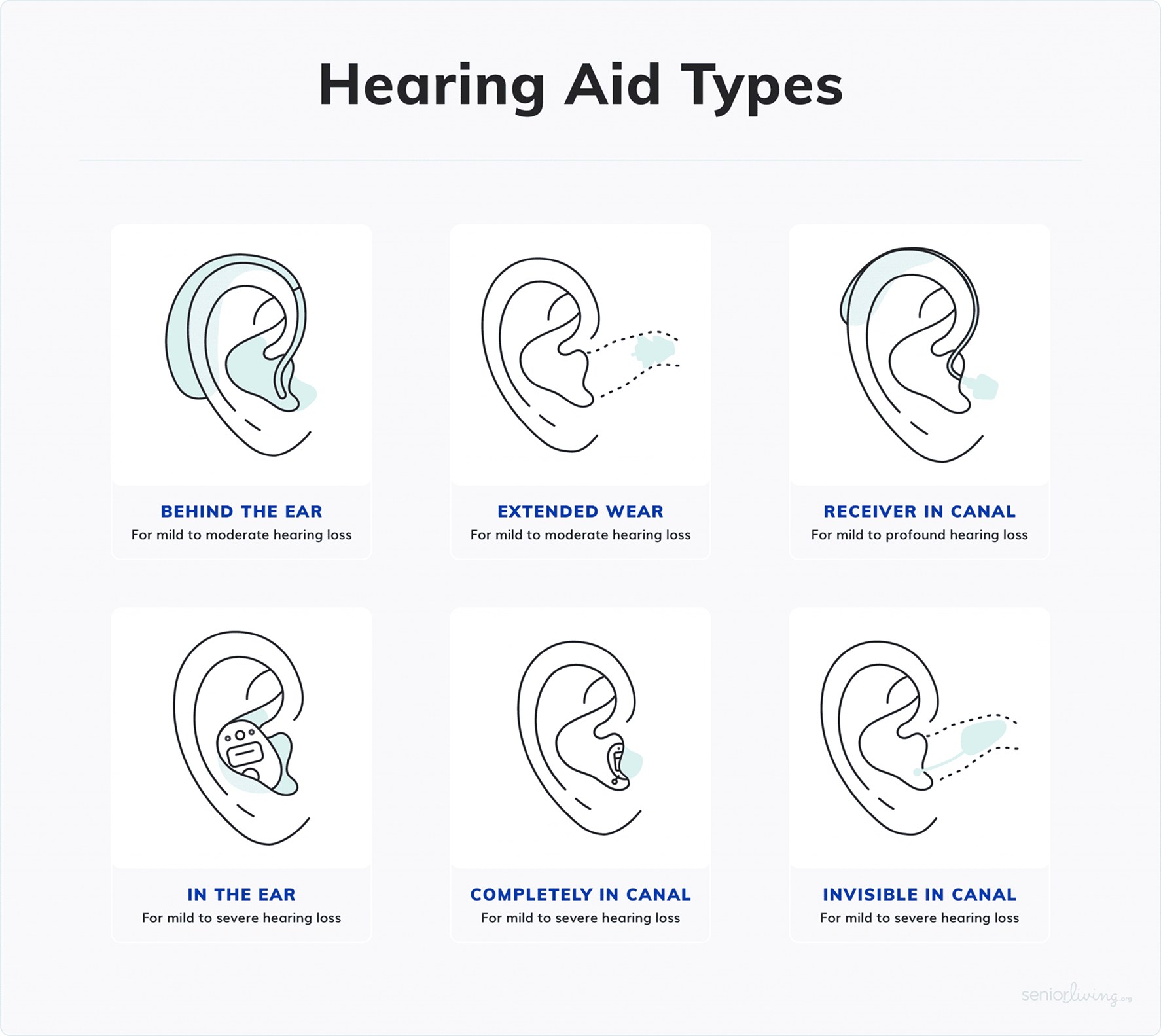
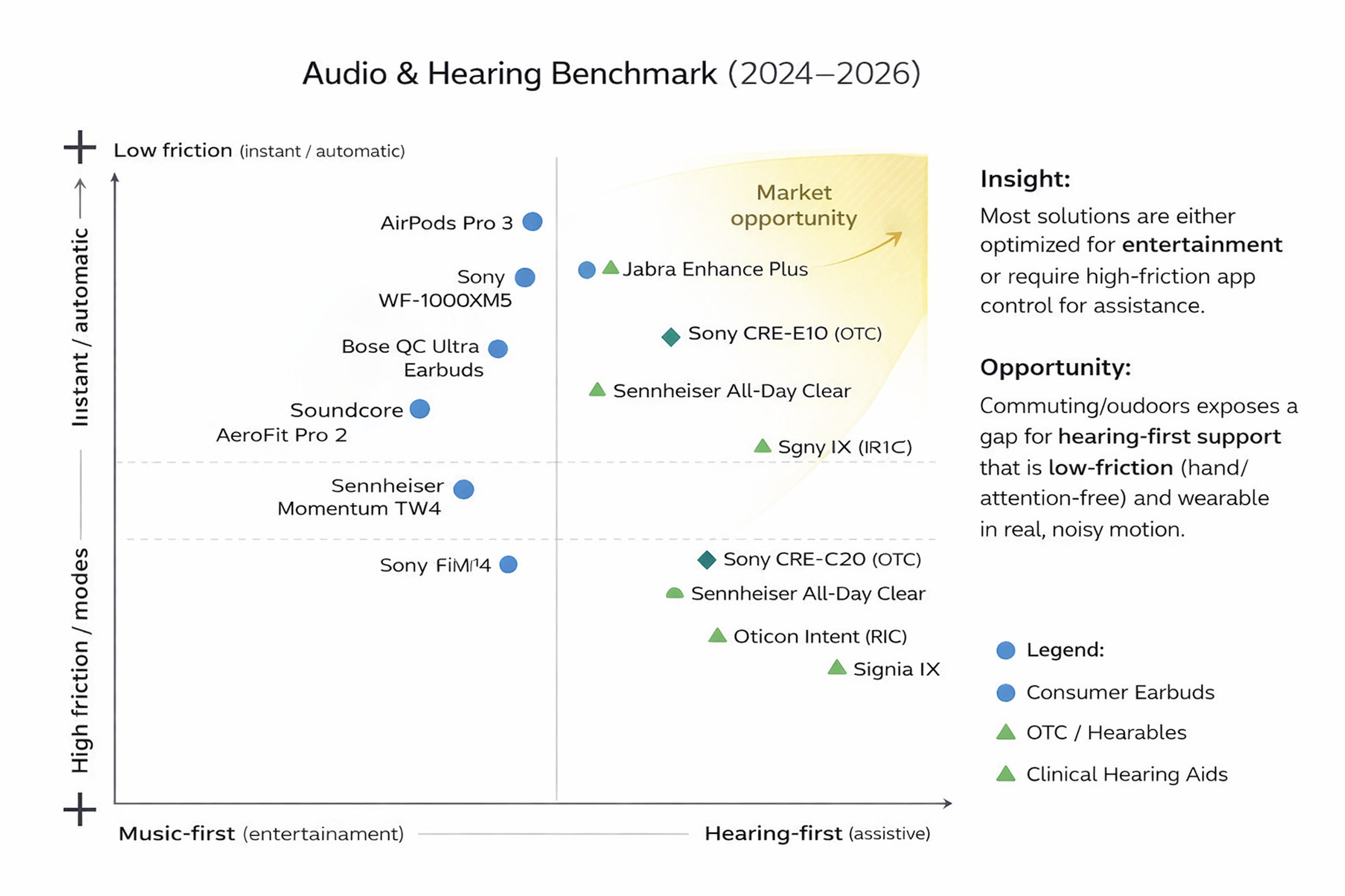
Making support visible.
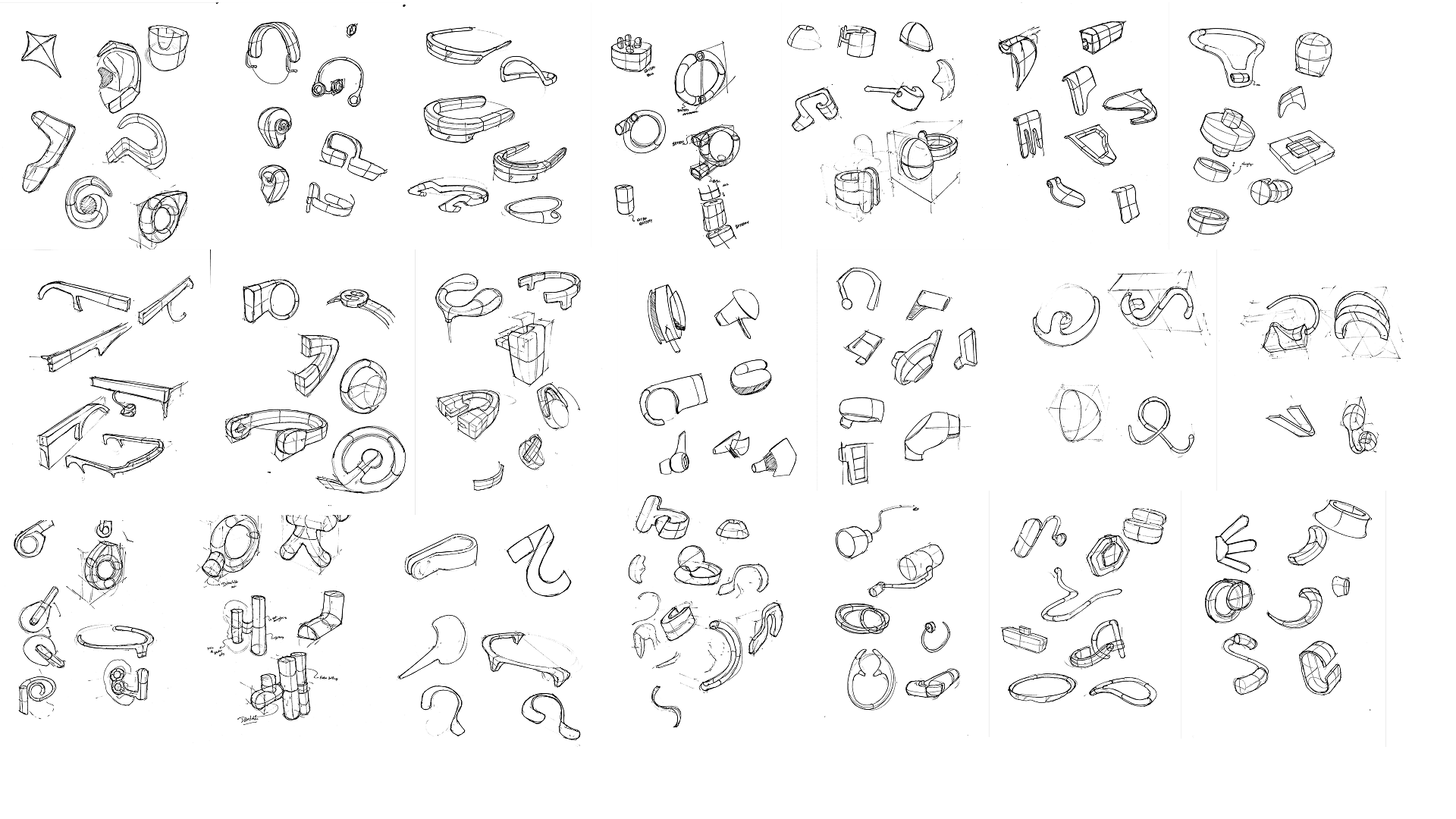
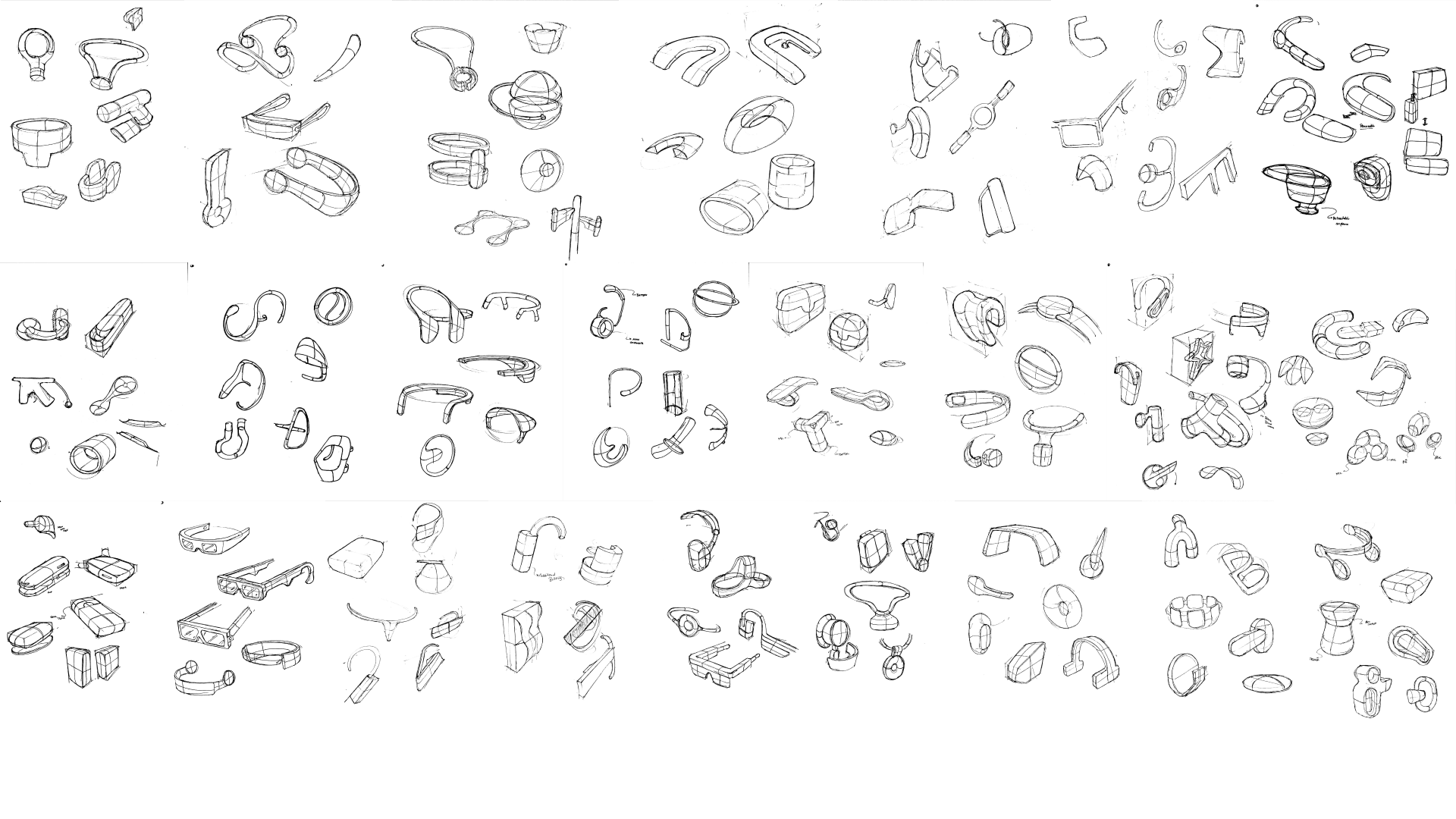
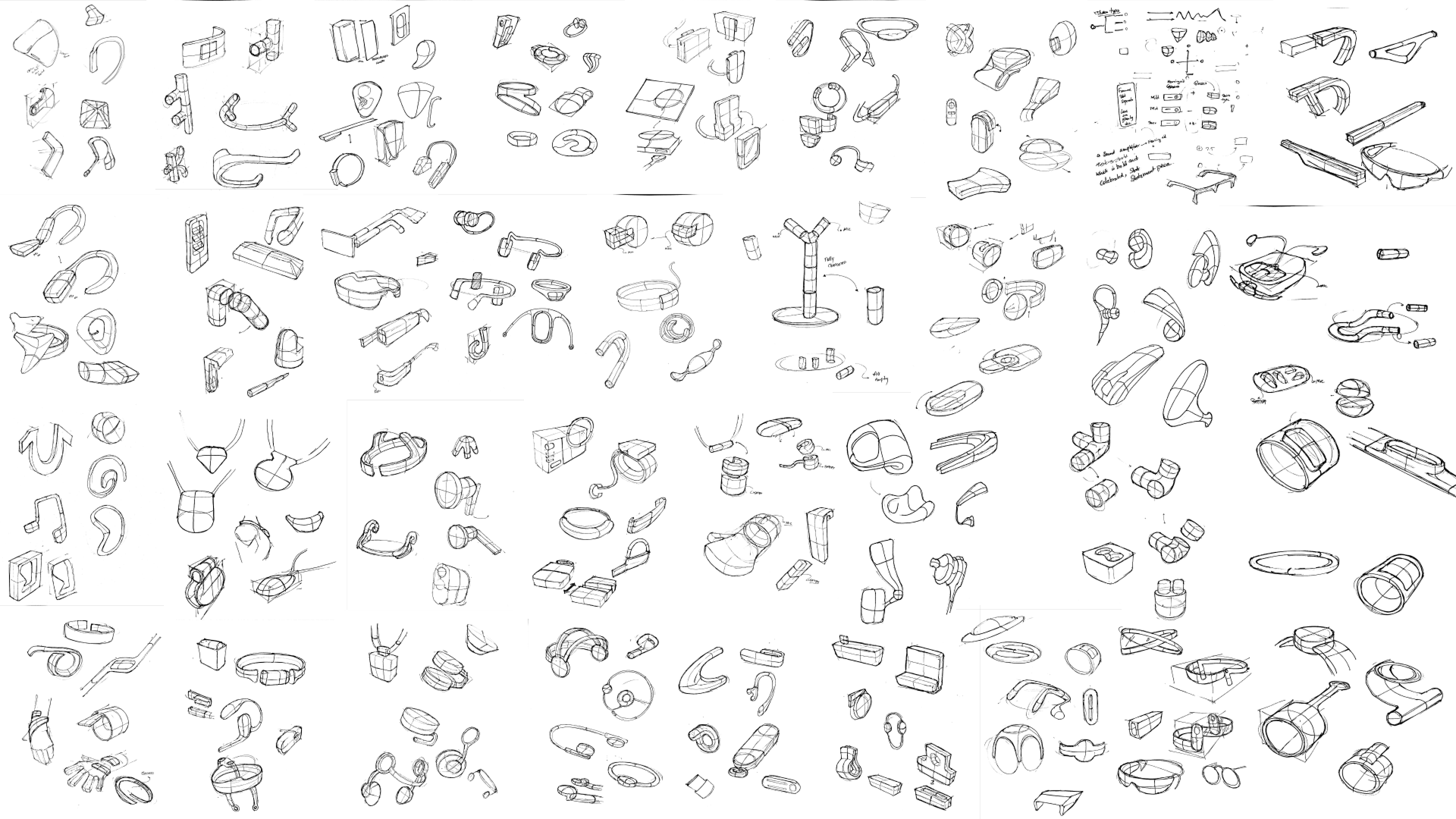
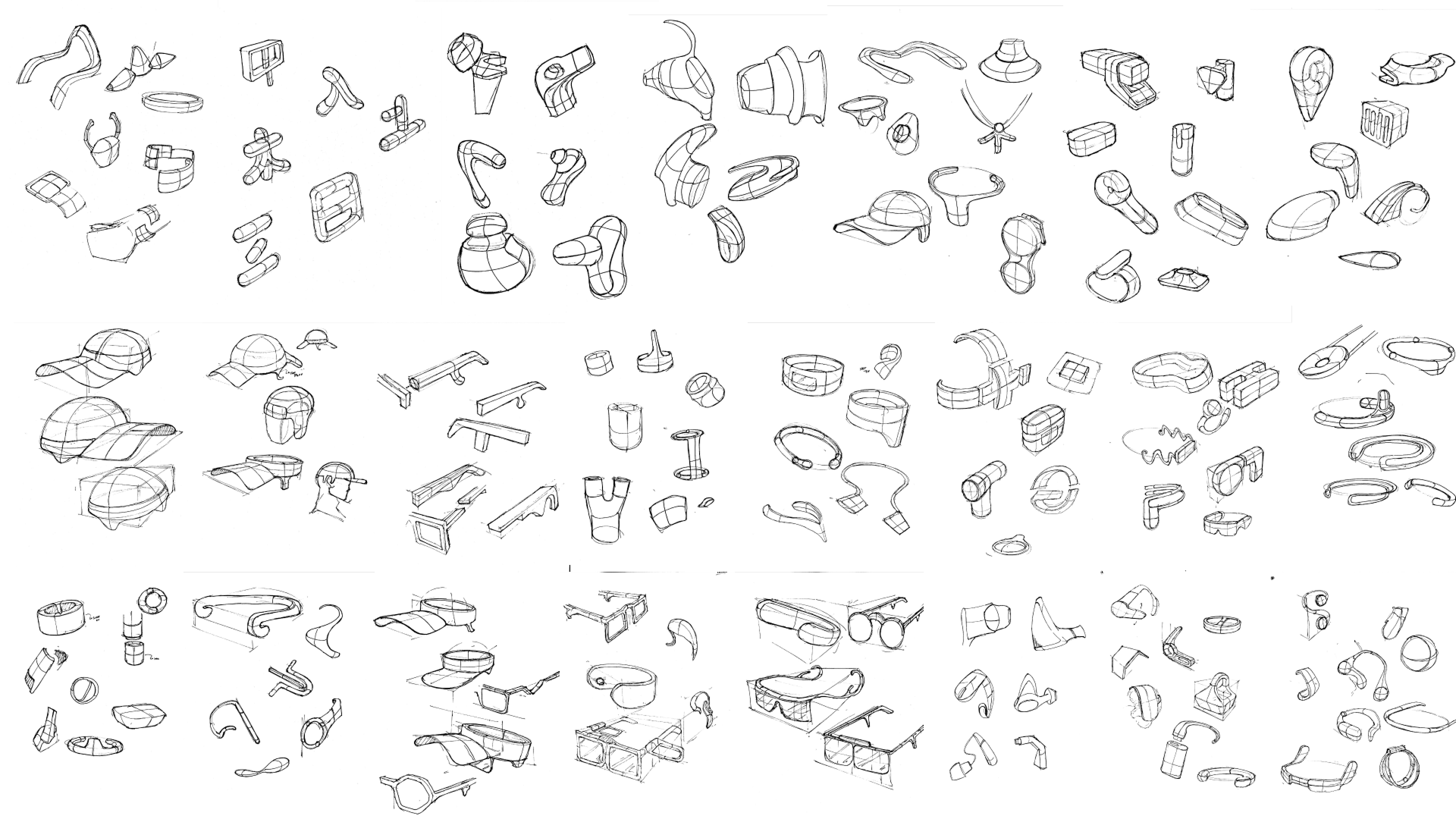
Ring, loop, clip, and behind-ear forms explore how the device attaches, where its weight sits, and how much of it is seen. These four sheets retain the full breadth of the exploration.
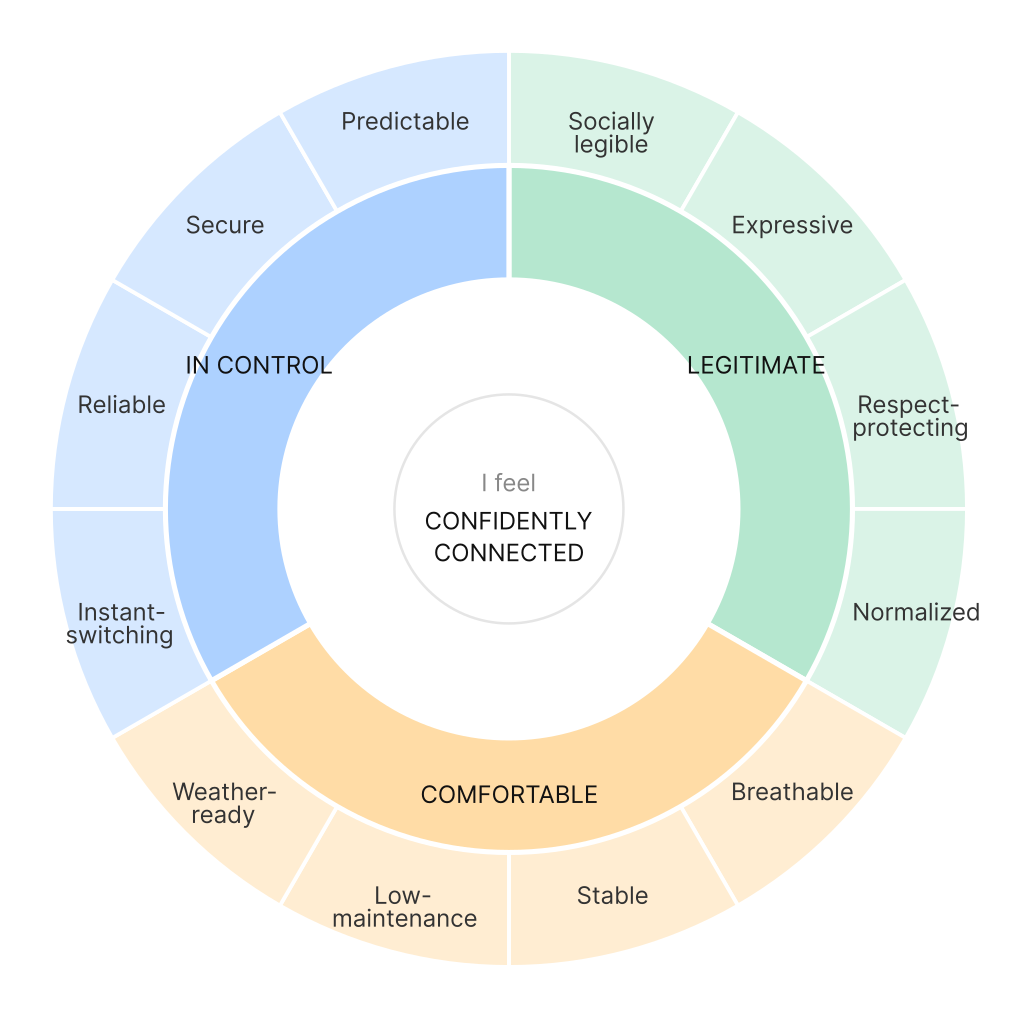
The criteria behind the form
Comfort, expression, control, and social visibility frame the design direction.
Exploring attachment, silhouette, and control
The form changes when it reaches the ear.
The early studies explore different attachment shapes. The next round develops the larger ring and its position around the ear. The models make the progression visible, while long-duration comfort still needs further validation.
Early forms · attachment and silhouette
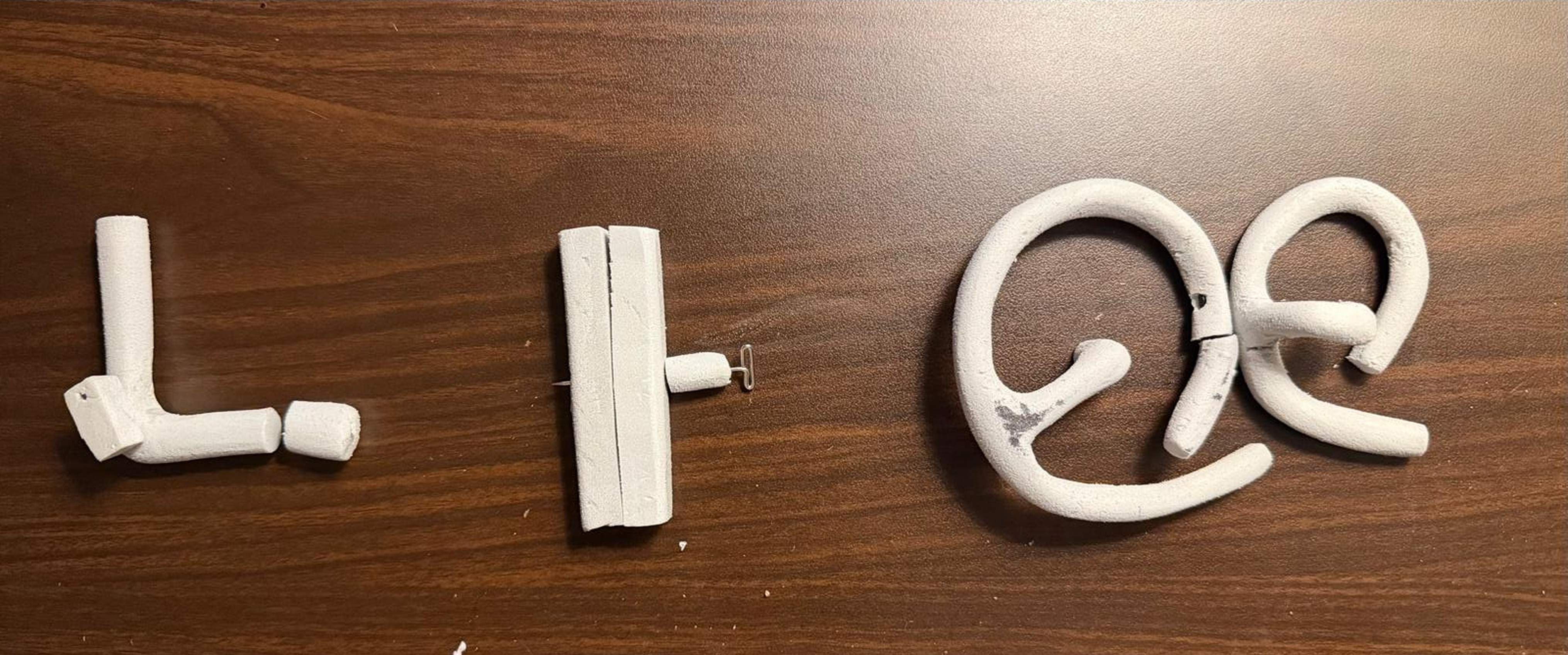
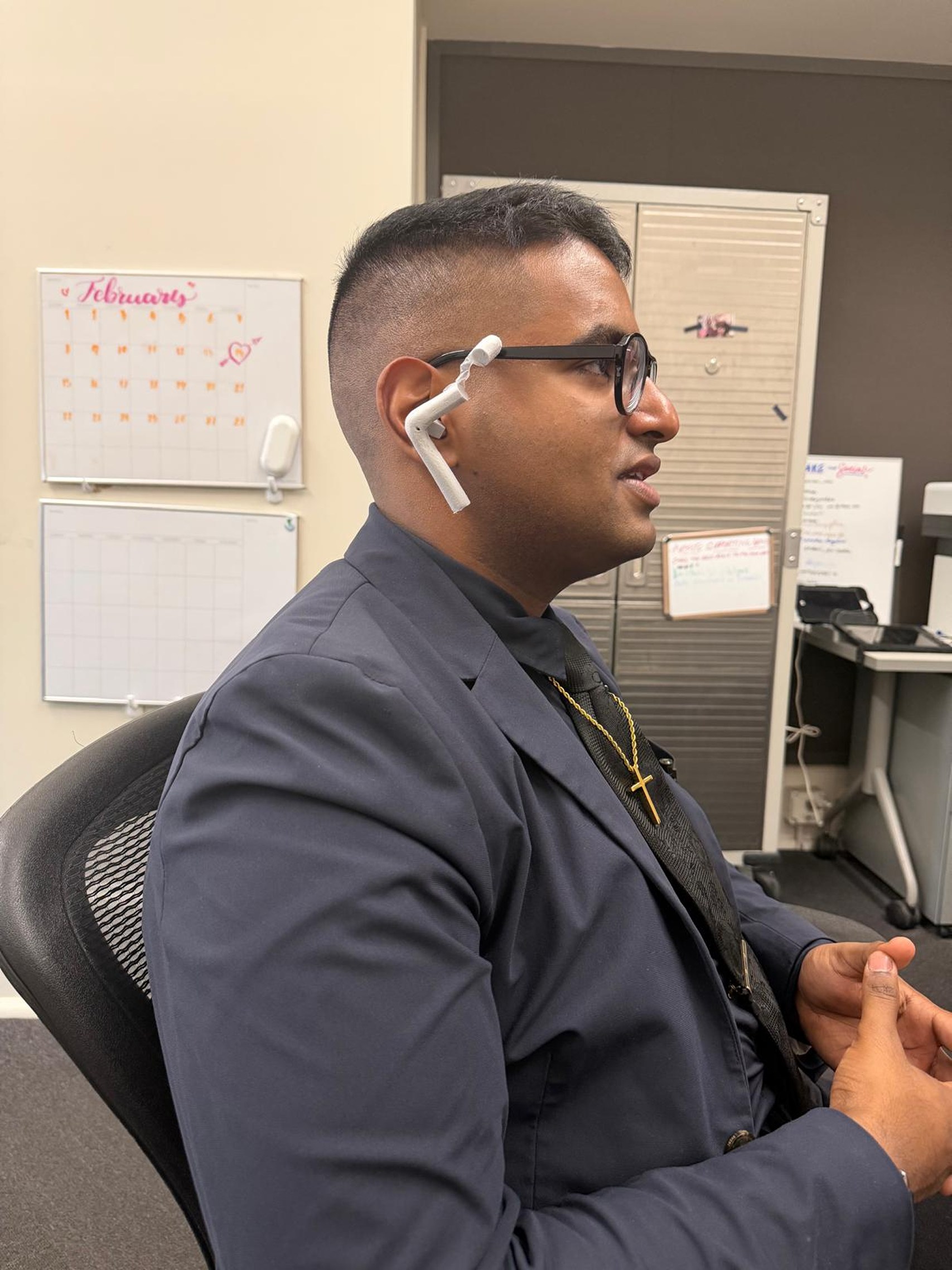
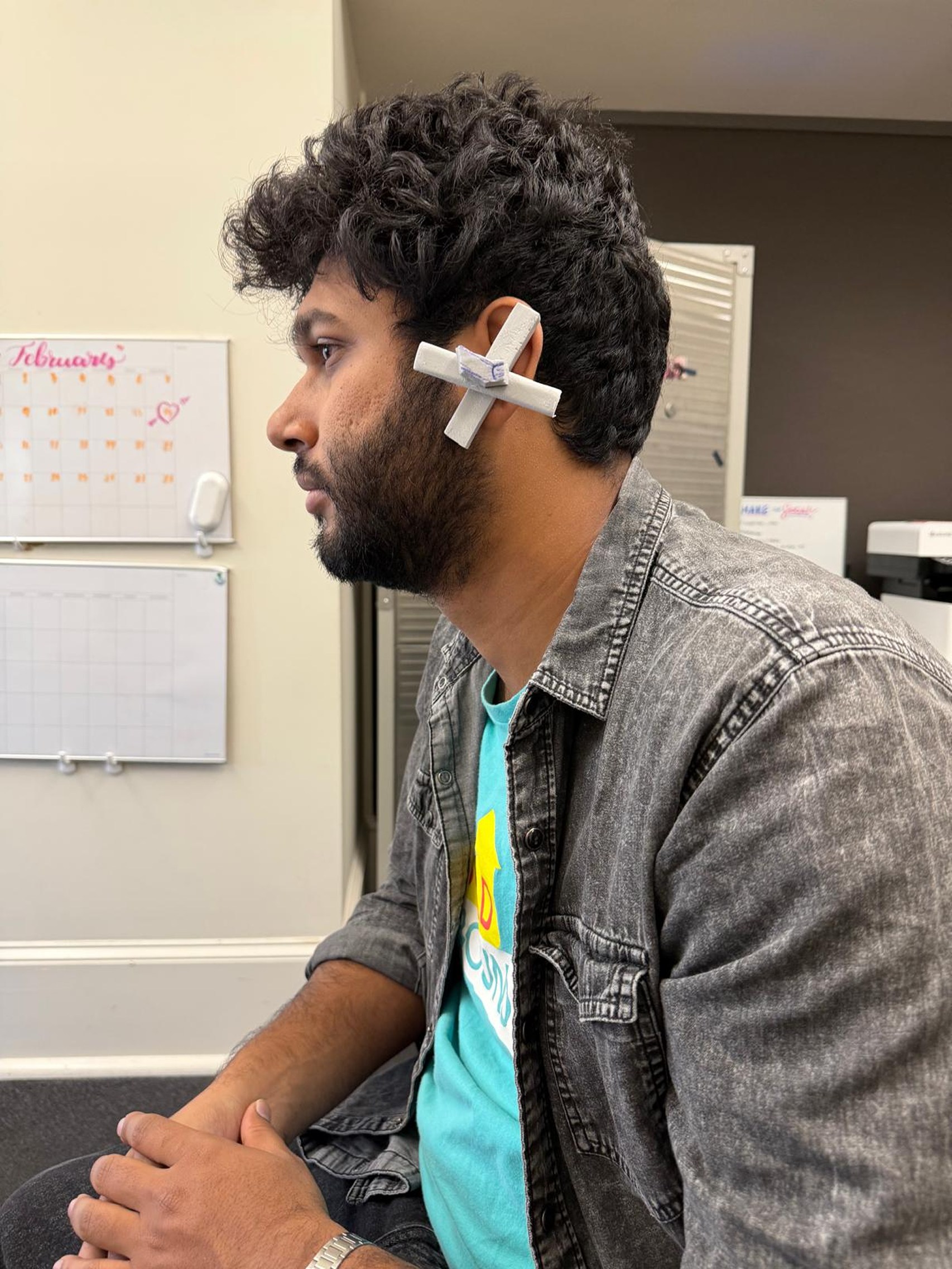
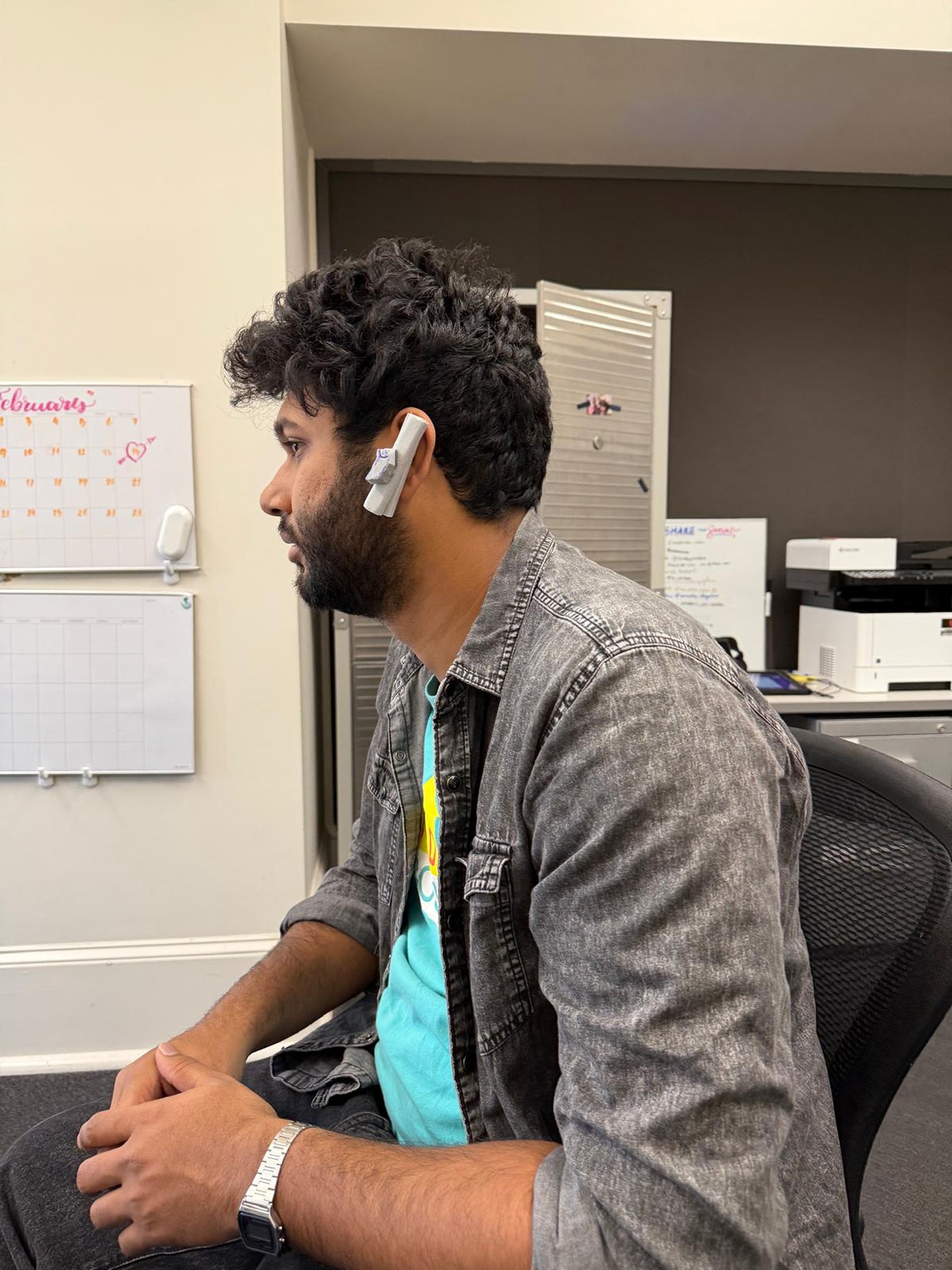
Foam alternatives and on-body studies explore the relationship between the device and the ear.
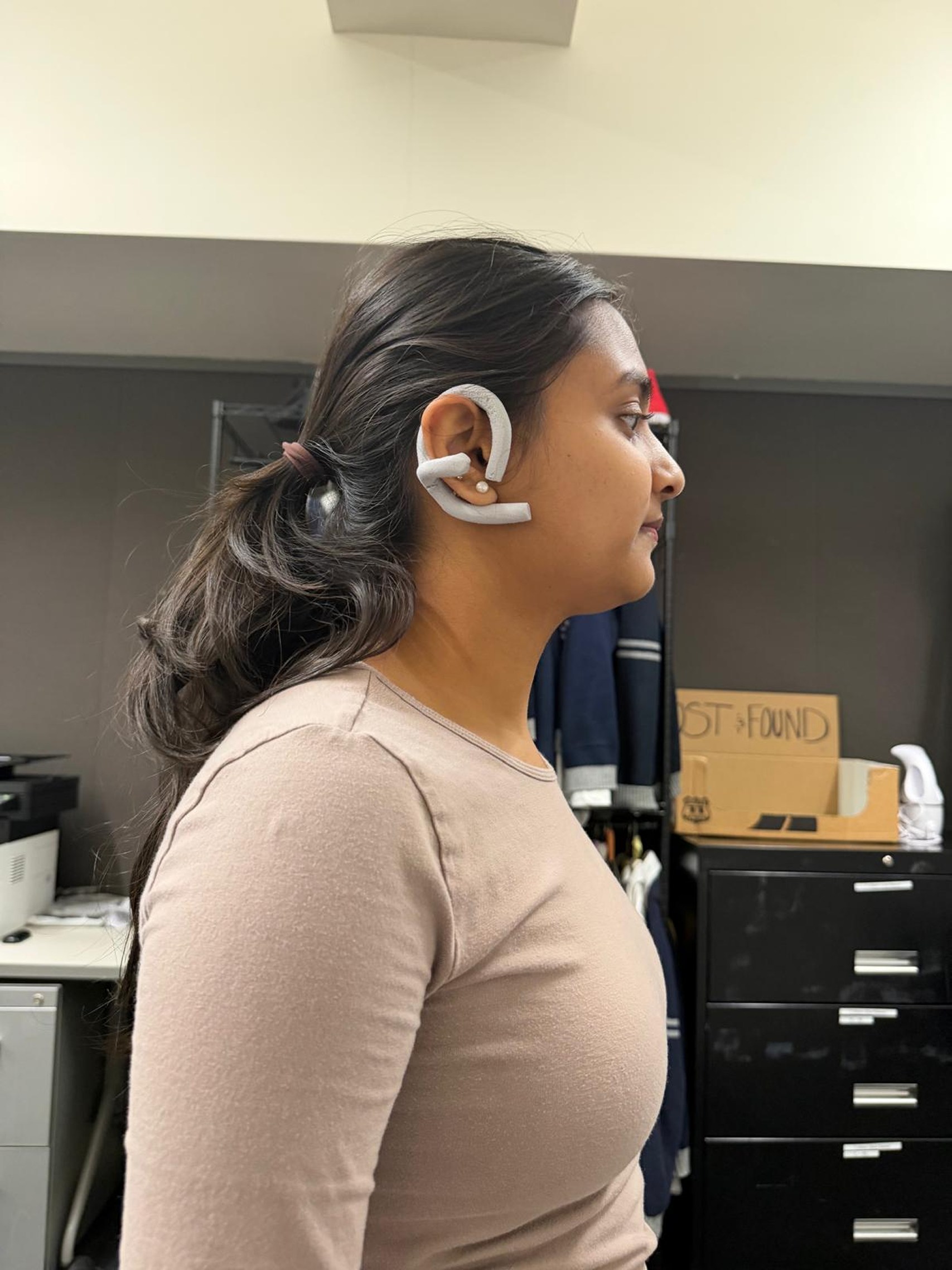
Ring refinement · placement and balance
Separate components and later wear studies show the ring direction at a larger scale.
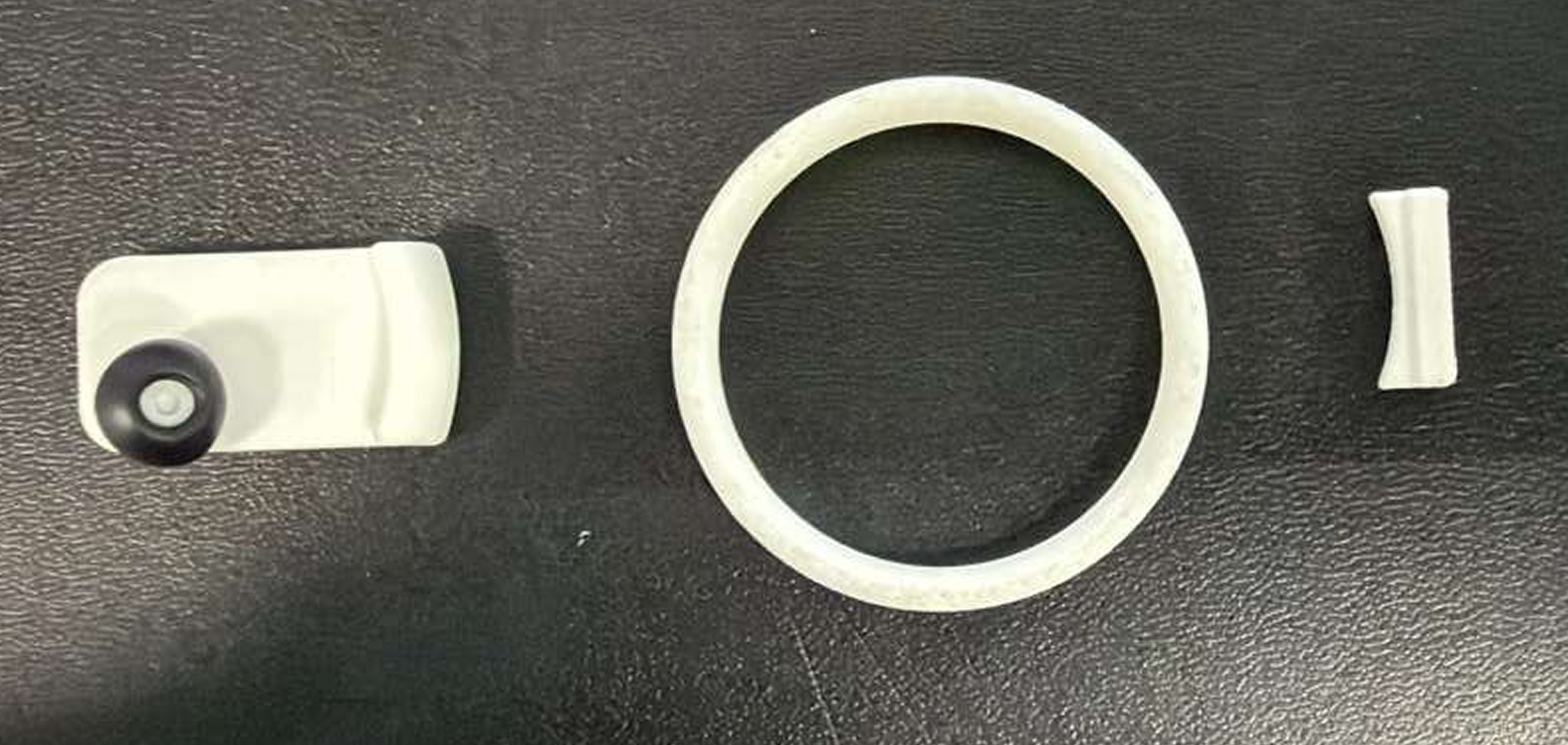
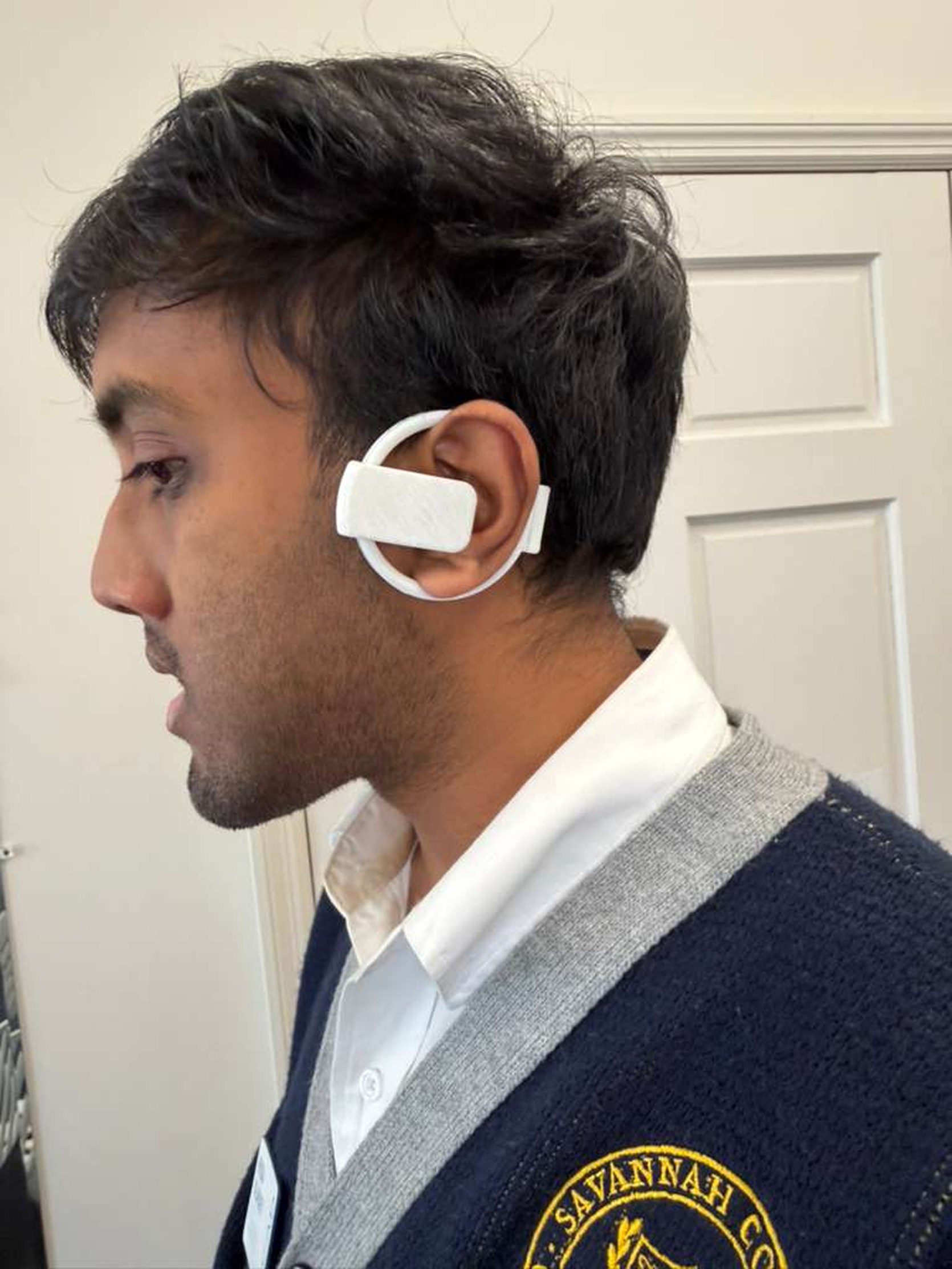
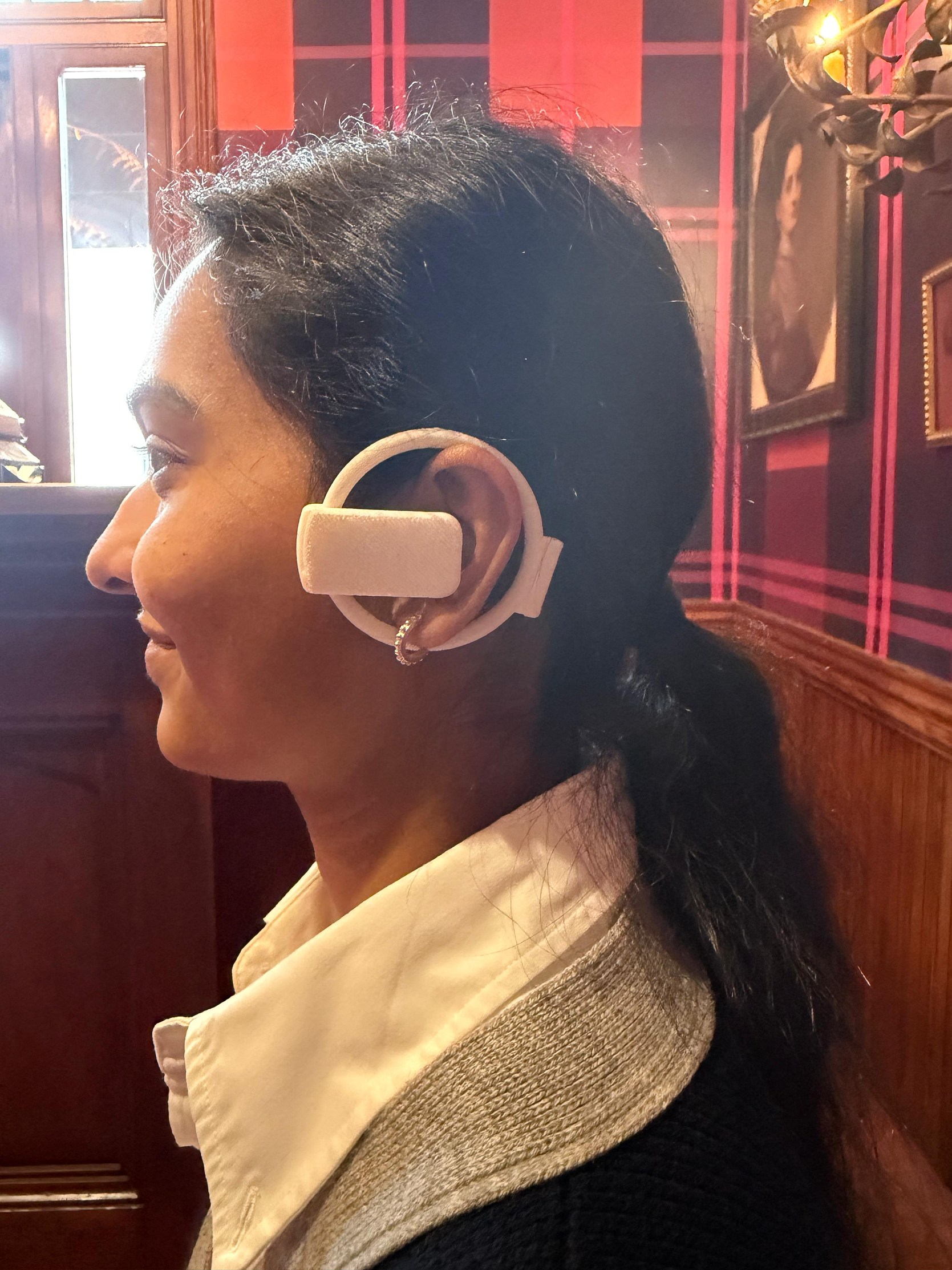
ContactThe earpiece becomes rounder in the later direction.
IdentityThe larger loop makes the silhouette more recognizable.
PlacementLater studies examine the ring’s position around the ear.
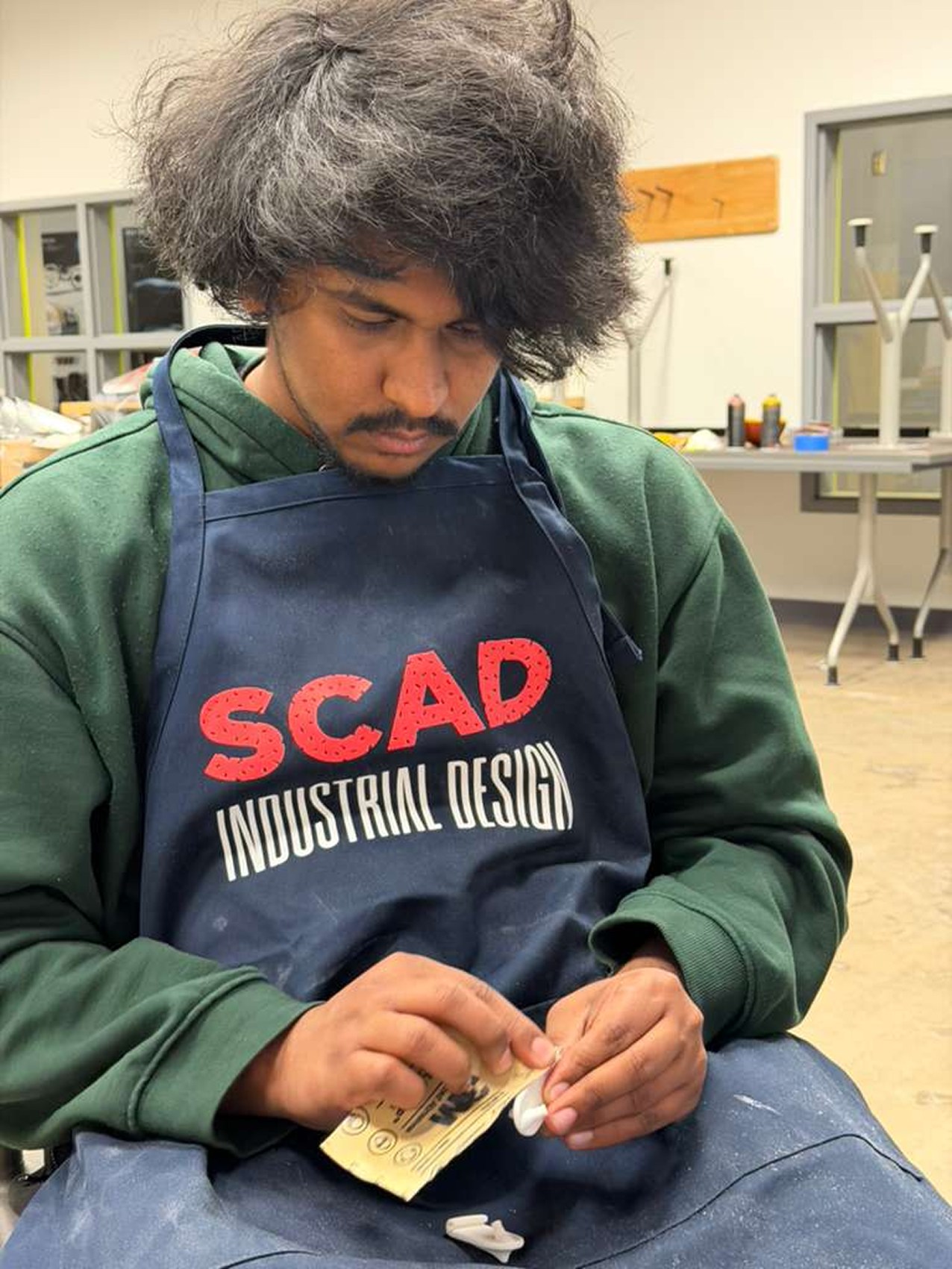
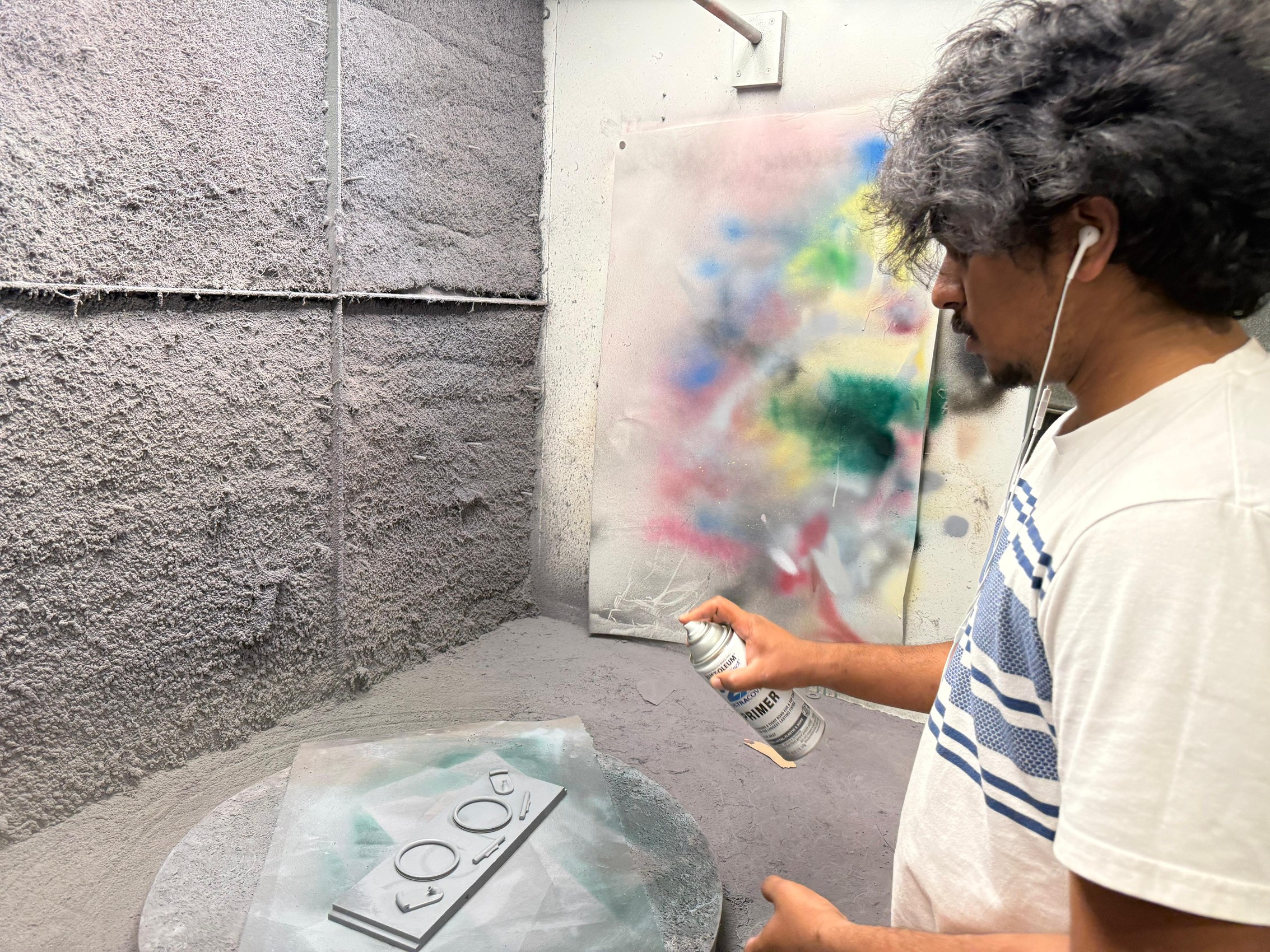
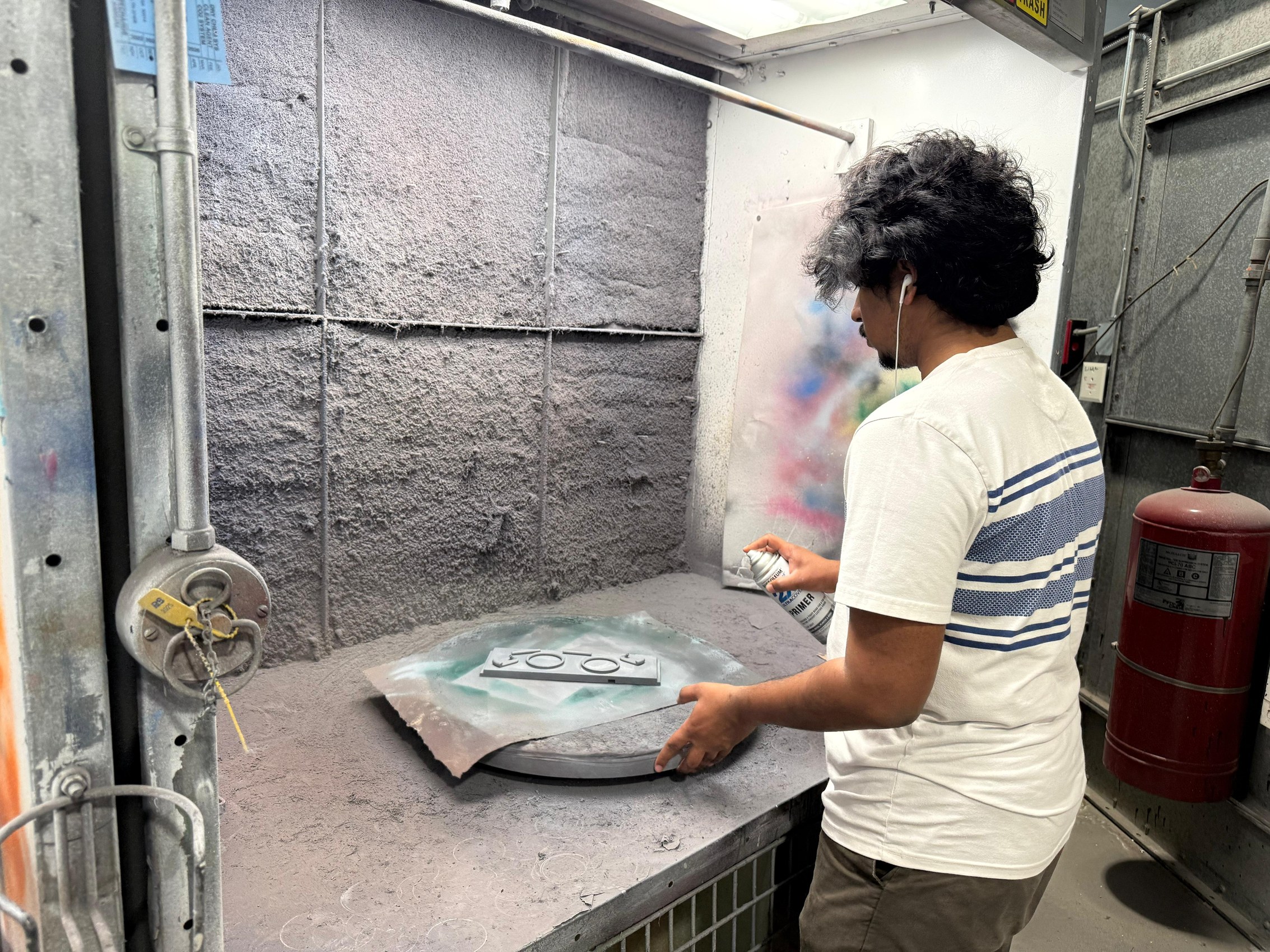
From workshop finish to worn object.
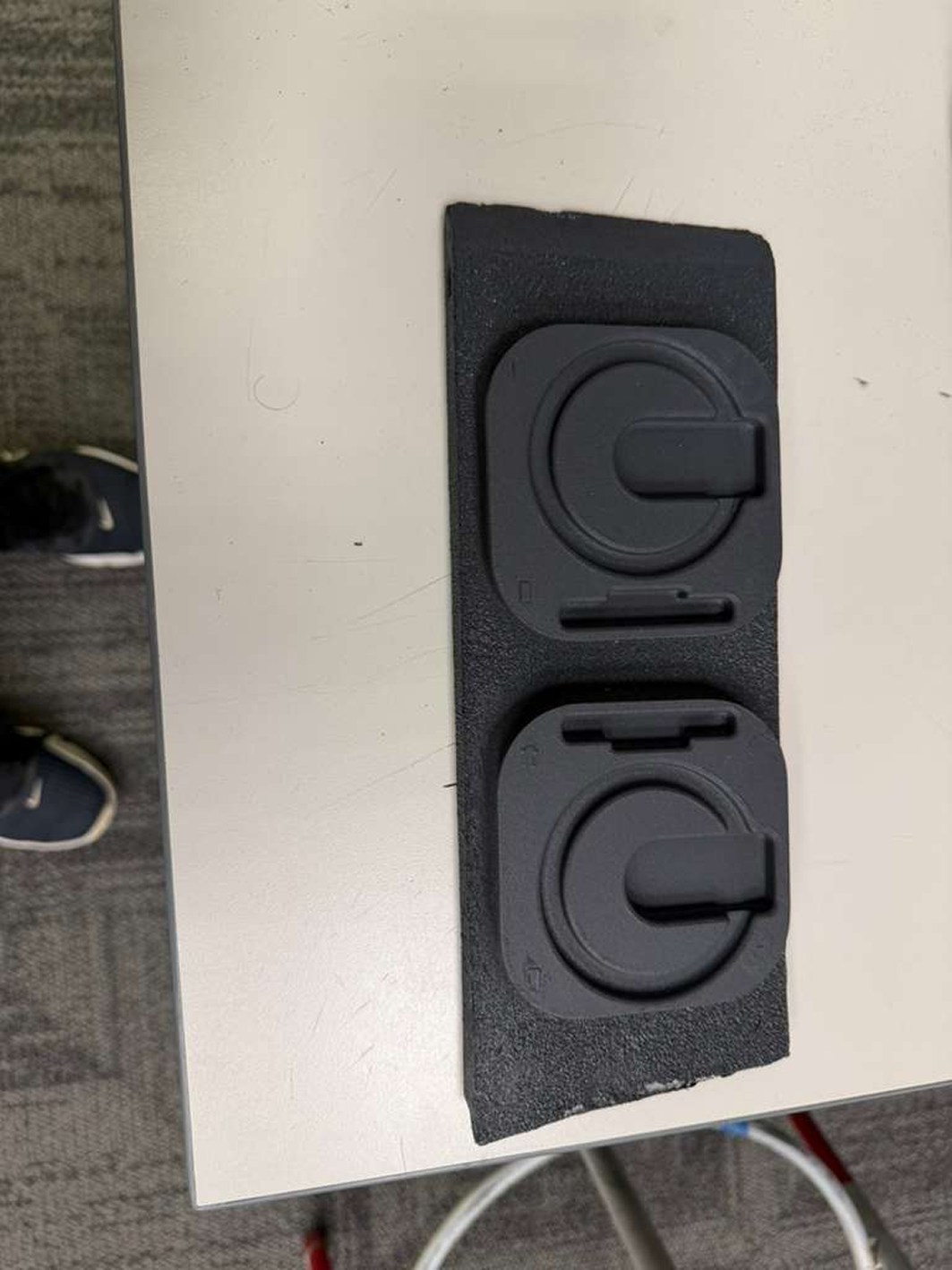
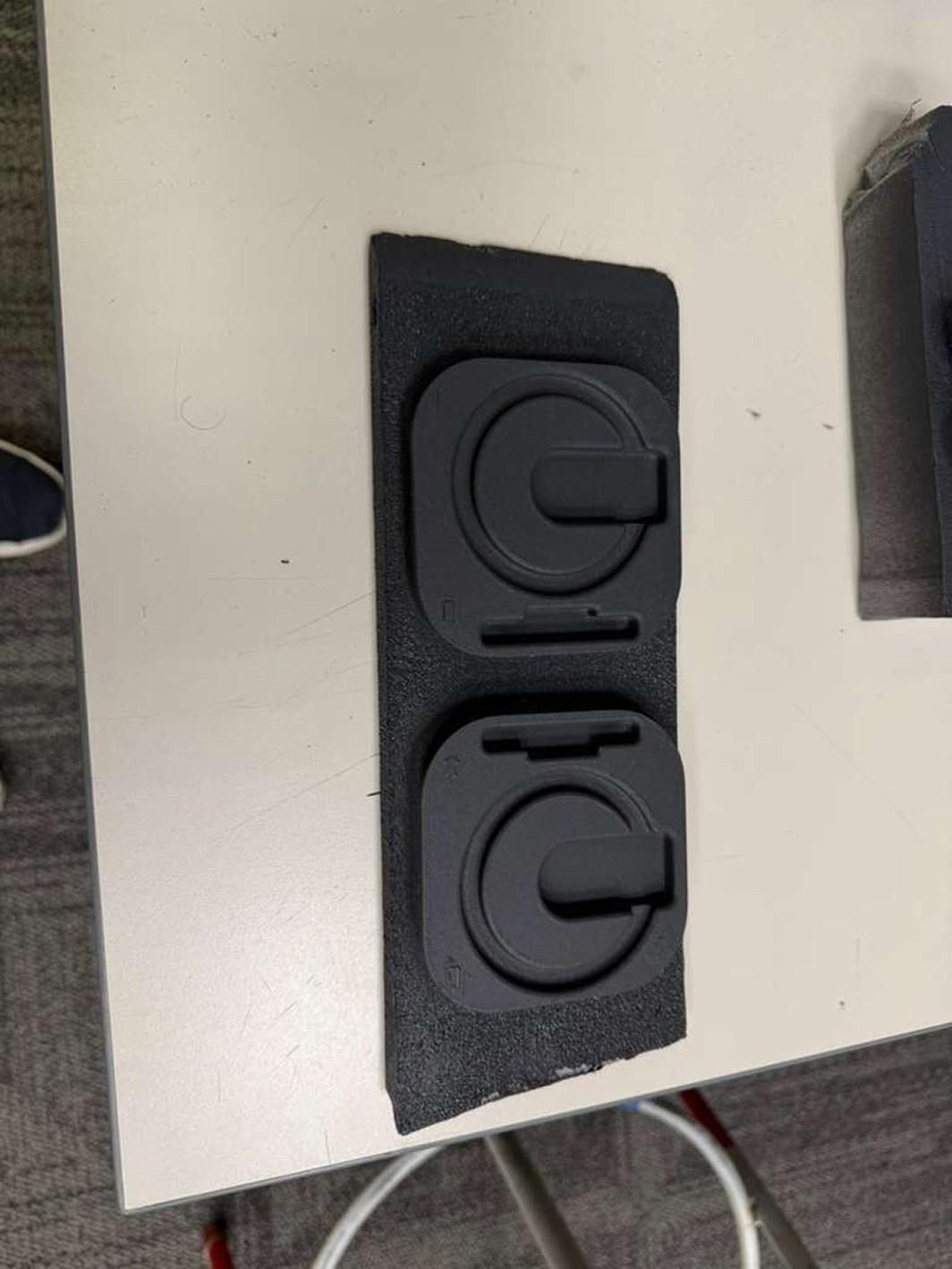
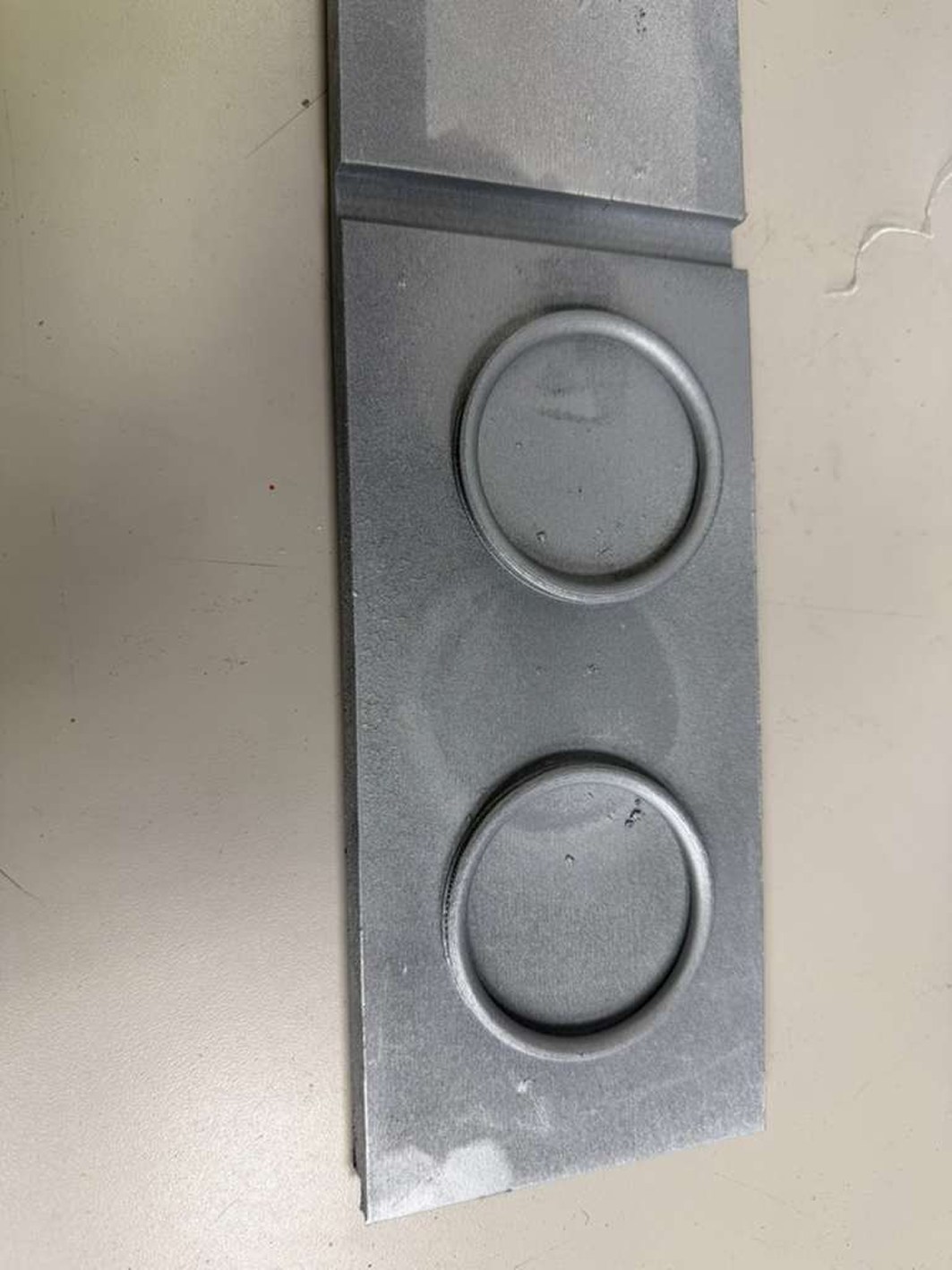
Hand finishing, painting, and surface studies document the physical making process. The control studies are shown as development artifacts; they are not evidence of working hearing-support electronics.
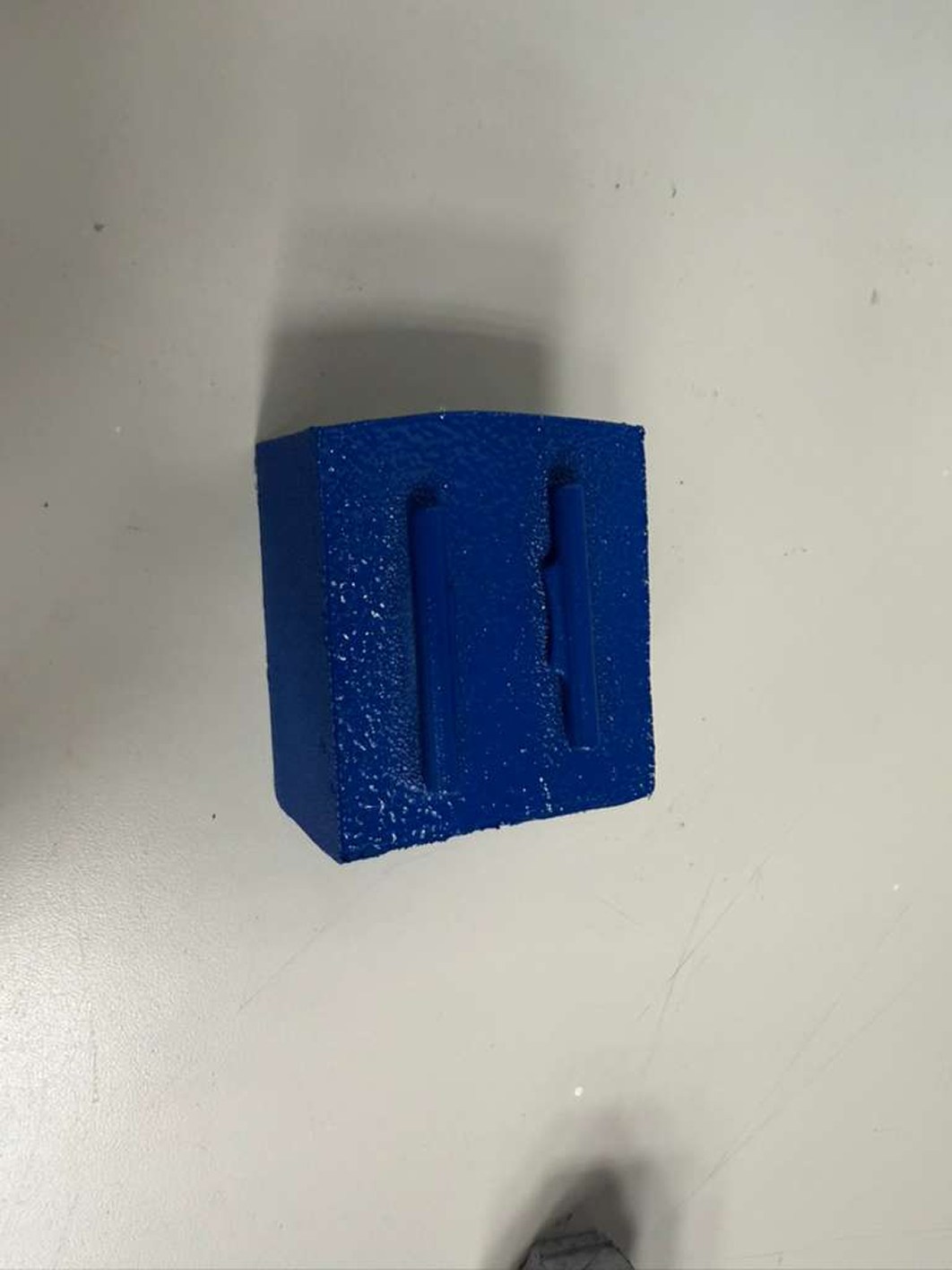
Control geometry before the final finish.
The first two studies show the recessed control features and their surrounding form.
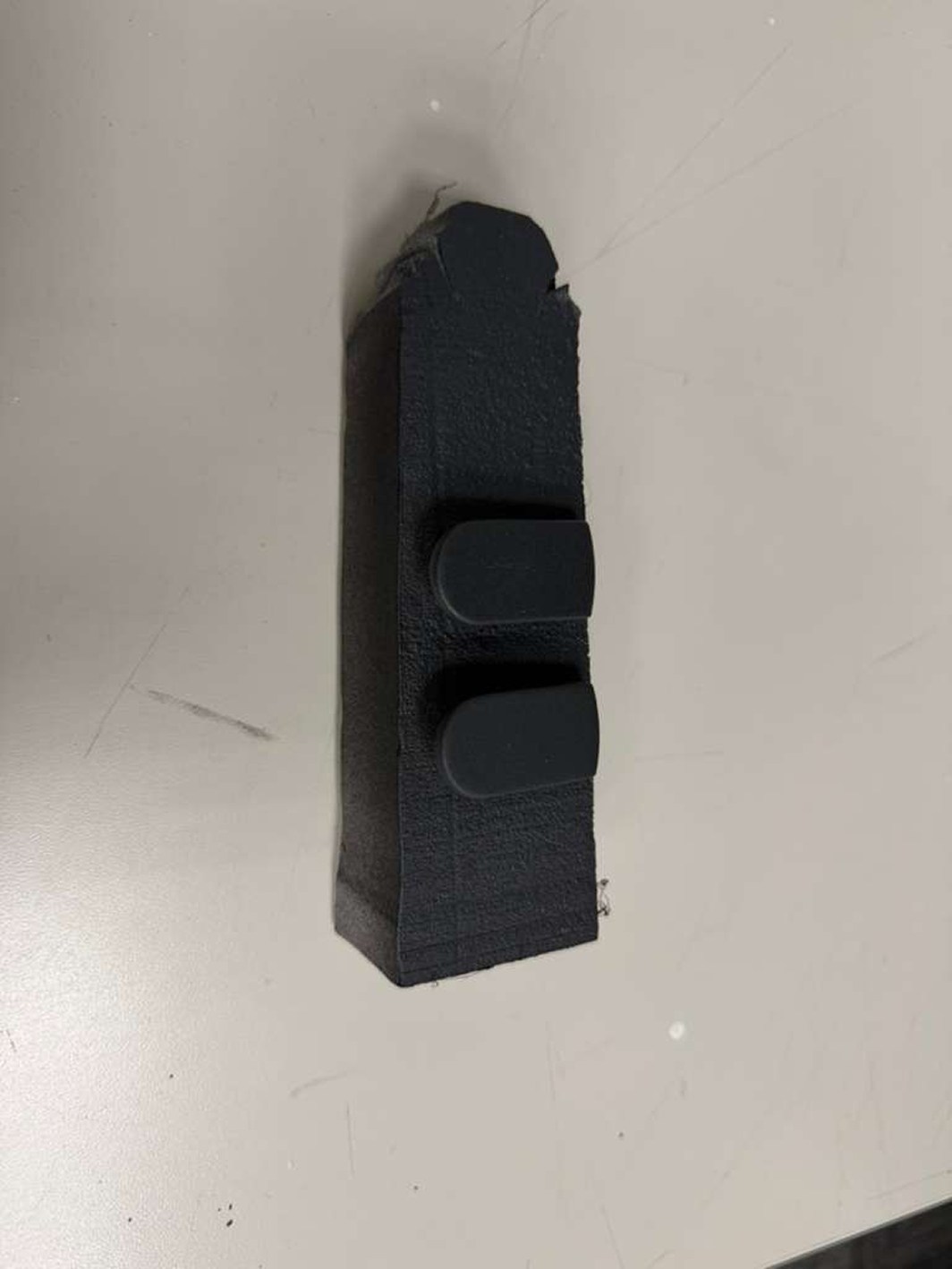
Preparing and finishing the surface.
The remaining workshop views keep the intermediate stages visible alongside the finished surface study.
A proposed wearable system.
The concept brings together a ring frame, body shell, and direct control. Light, haptic feedback, and hearing support are proposed functions; the physical studies establish appearance and placement.
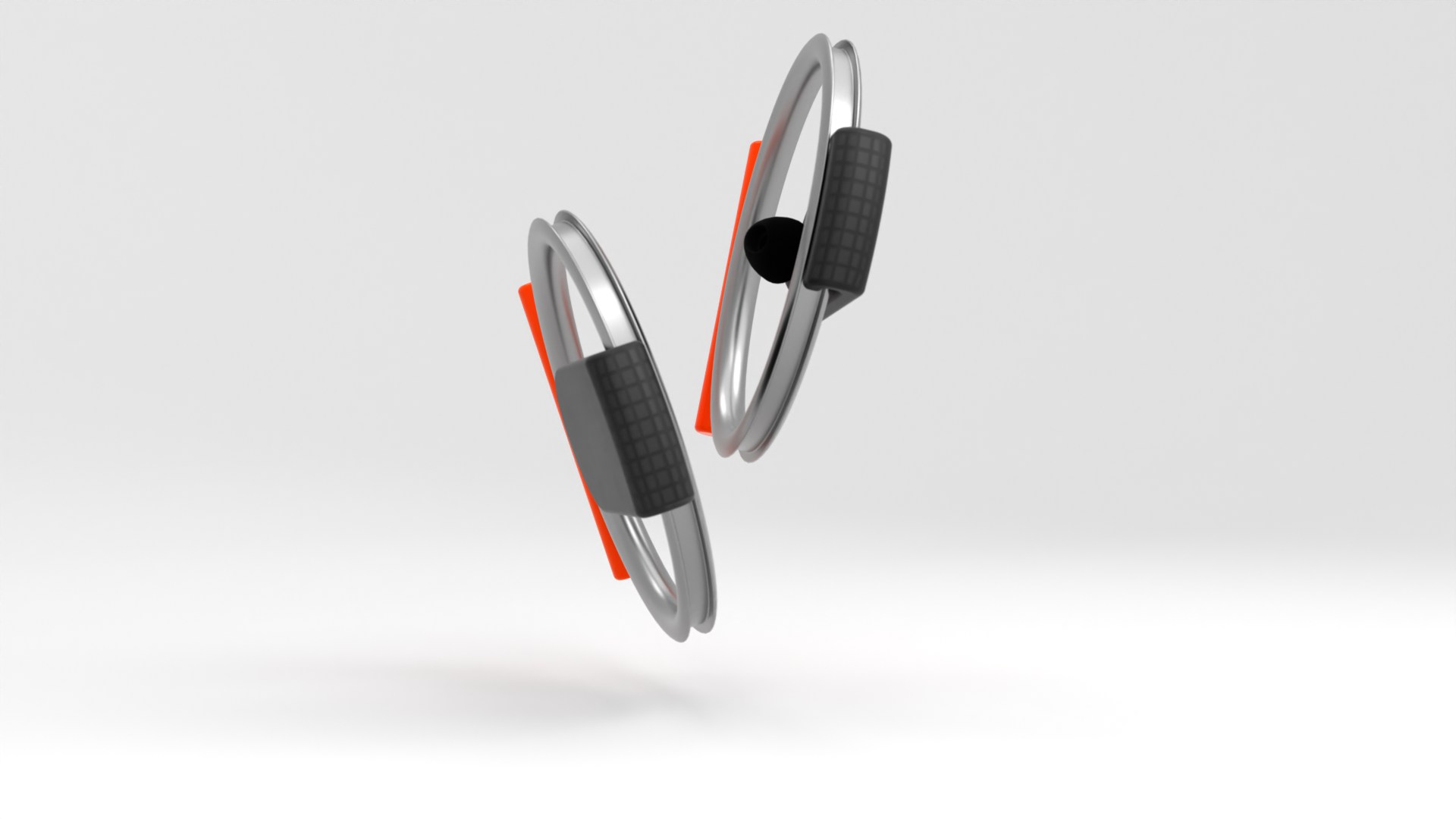
Ring frameThe loop gives the wearable its visible outline.
BodyThe side profile shows the shell in relation to the ring.
ControlThe orange accent identifies the proposed direct input.
The resolved product pair.
The studio view brings the separate forms together before the final on-body photographs.
 1.jpg)
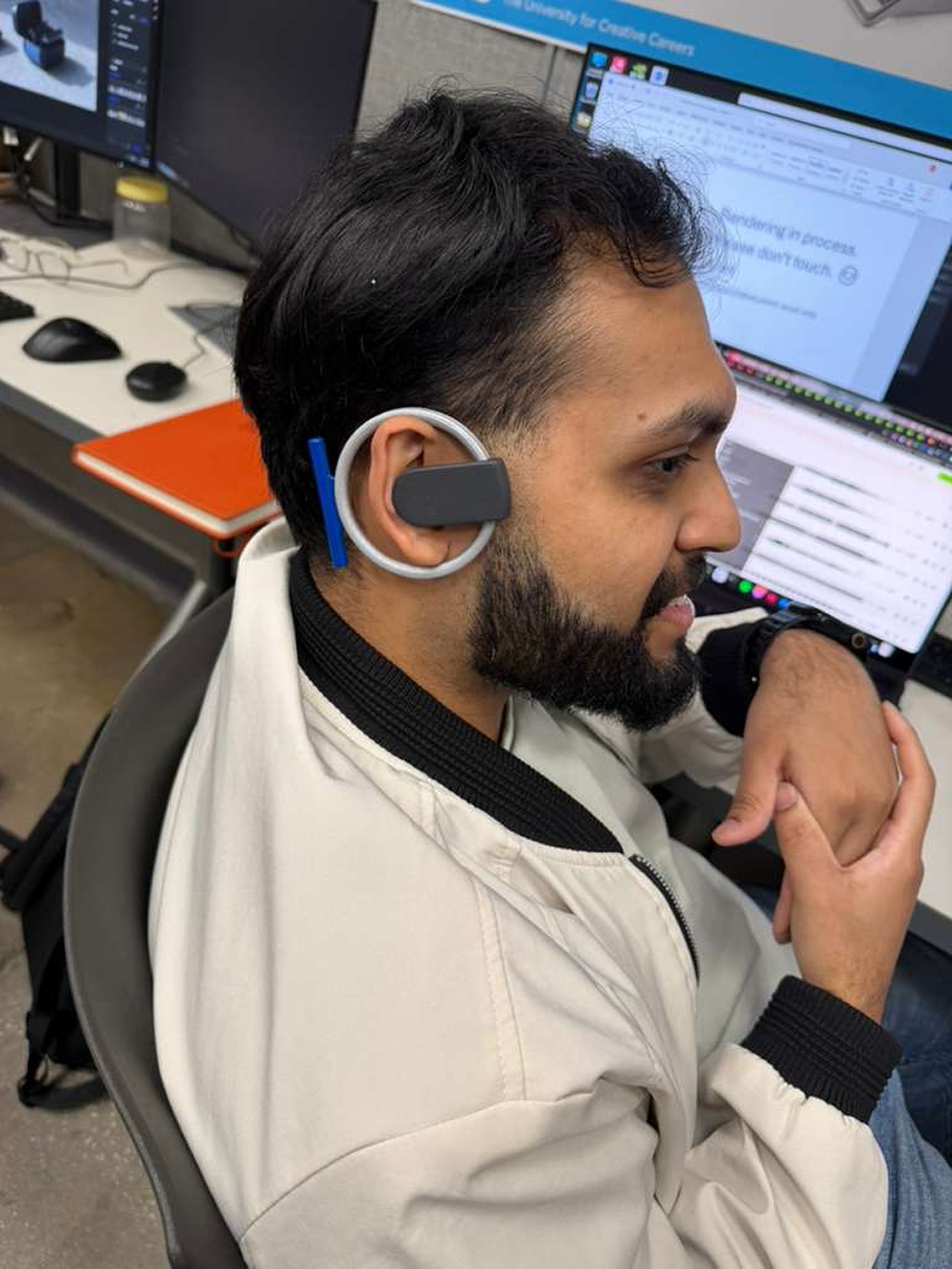
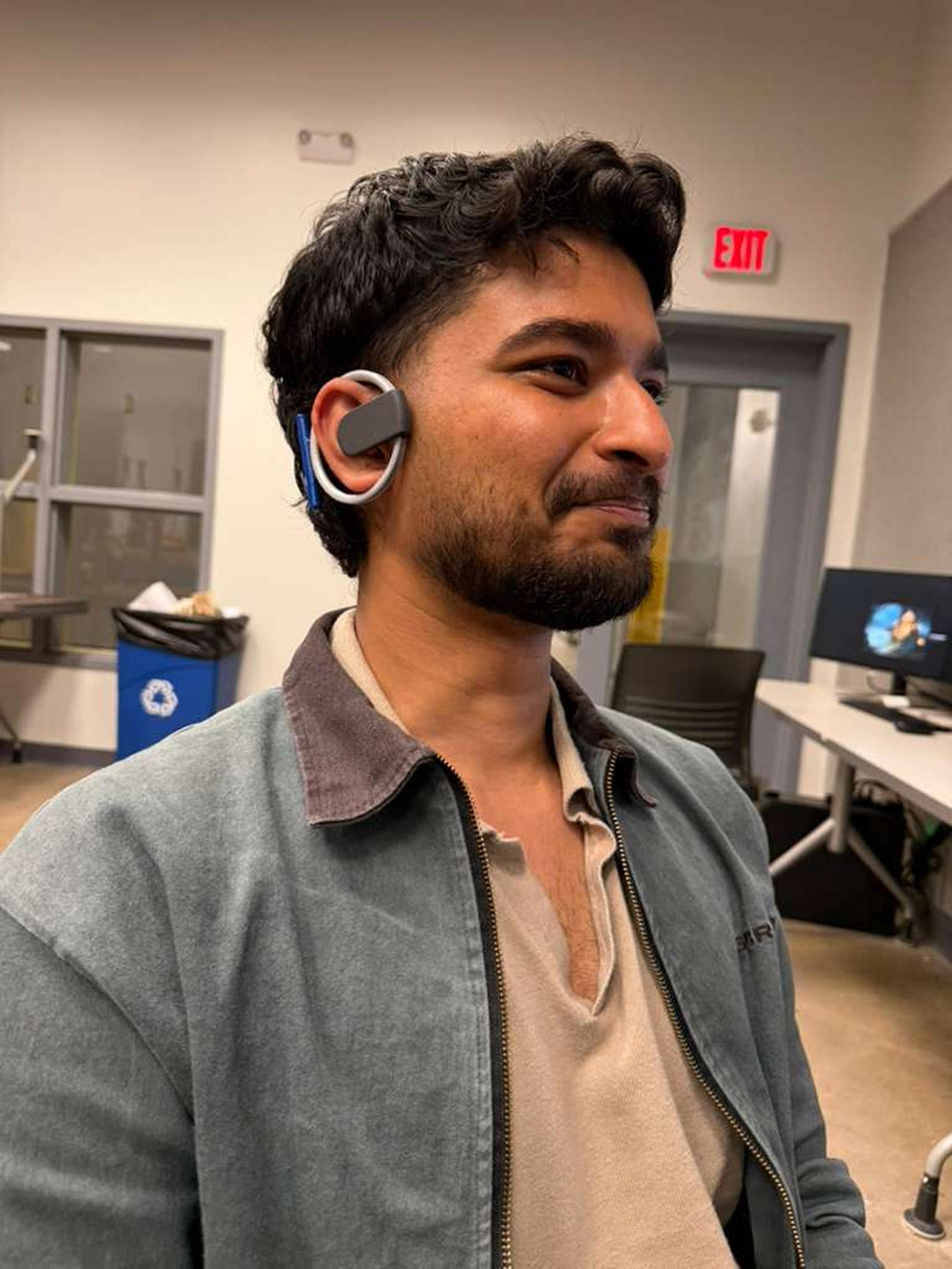
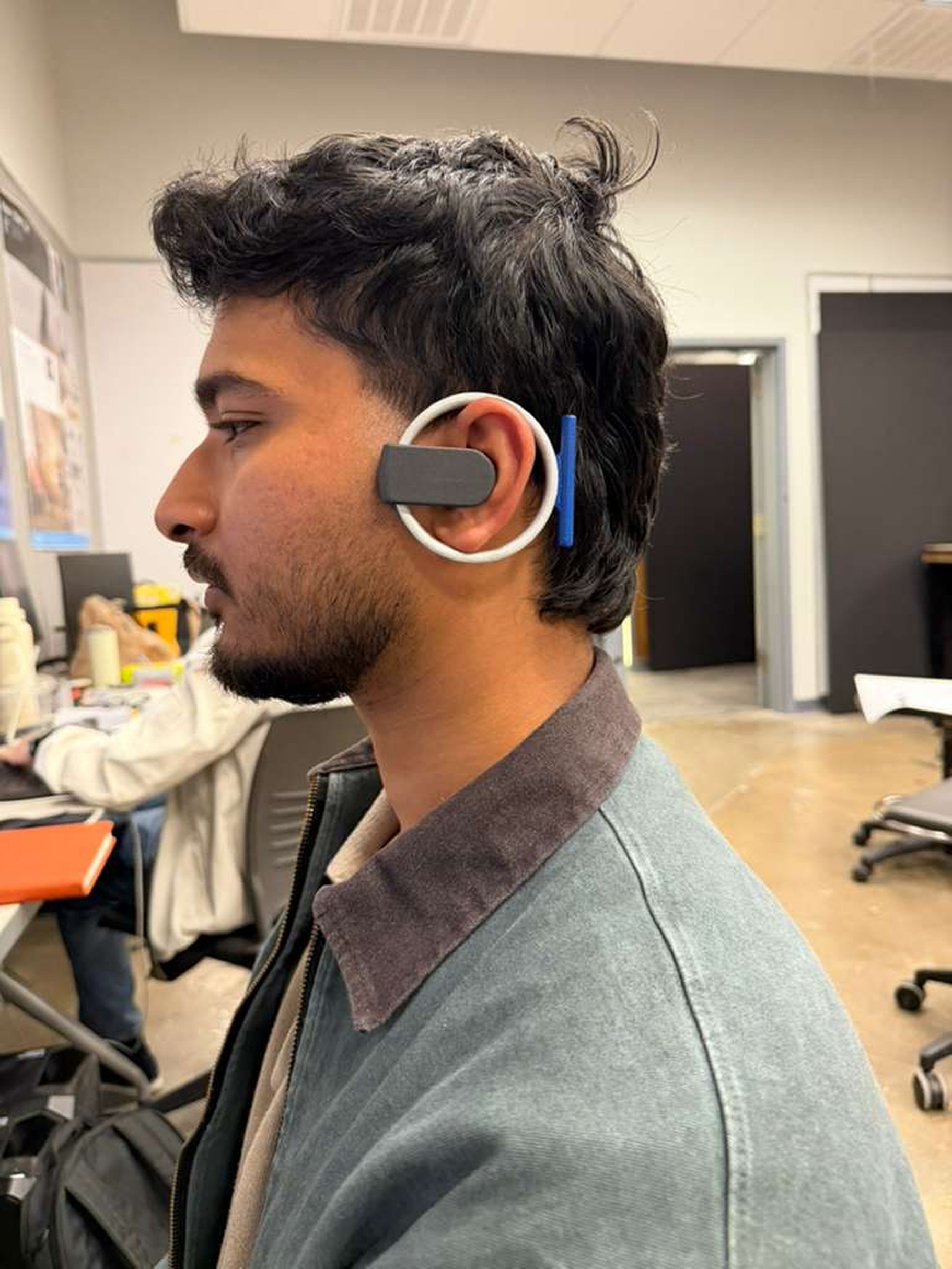
Seen on the person who wears it.
The final wear photographs return the design to human scale. They show the ring, the body behind the ear, and how the object reads from conversational distance.
Designed as a complete product system.
Material and component choices describe the proposed construction of the concept.
What this project carries forward.
Aurio reframes assistive hearing technology as confident lifestyle hardware. The next step is testing the acoustic package and long-duration comfort with more wearers.