Forkast
How can one allergy decision survive the trip from diner to kitchen?
A two-sided restaurant system that keeps evidence, questions, and safety decisions connected across four service roles.
- UX Research
- Information Architecture
- User Flows
- UI Design
- Prototyping
Diners can’t trust a menu claim without asking, waiters and kitchens lose that question in the handoff, and every dish gets forced into an unsafe yes-or-no, even when the kitchen truly can’t verify it.
Forkast replaces that guesswork with one shared safety record, connecting the customer-facing decision to the restaurant workflow required to verify and execute it.
Key data: findings from 11 customers
Time to find a suitable dish
All 11 participants succeeded in under 2 minutes.
Decision time vs. a traditional menu
The same group took twice as long on a traditional menu.
10 of 11: found full dish details unprompted.1 of 11 needed guidance to find the rest of the dish info.
Problem → solution overview
Three research conclusions shaped the service system and its interface states.
Unclear menu claims
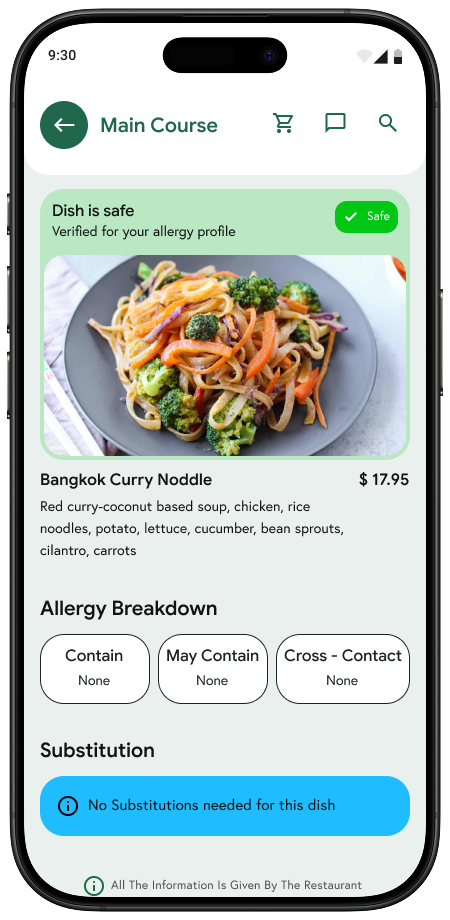
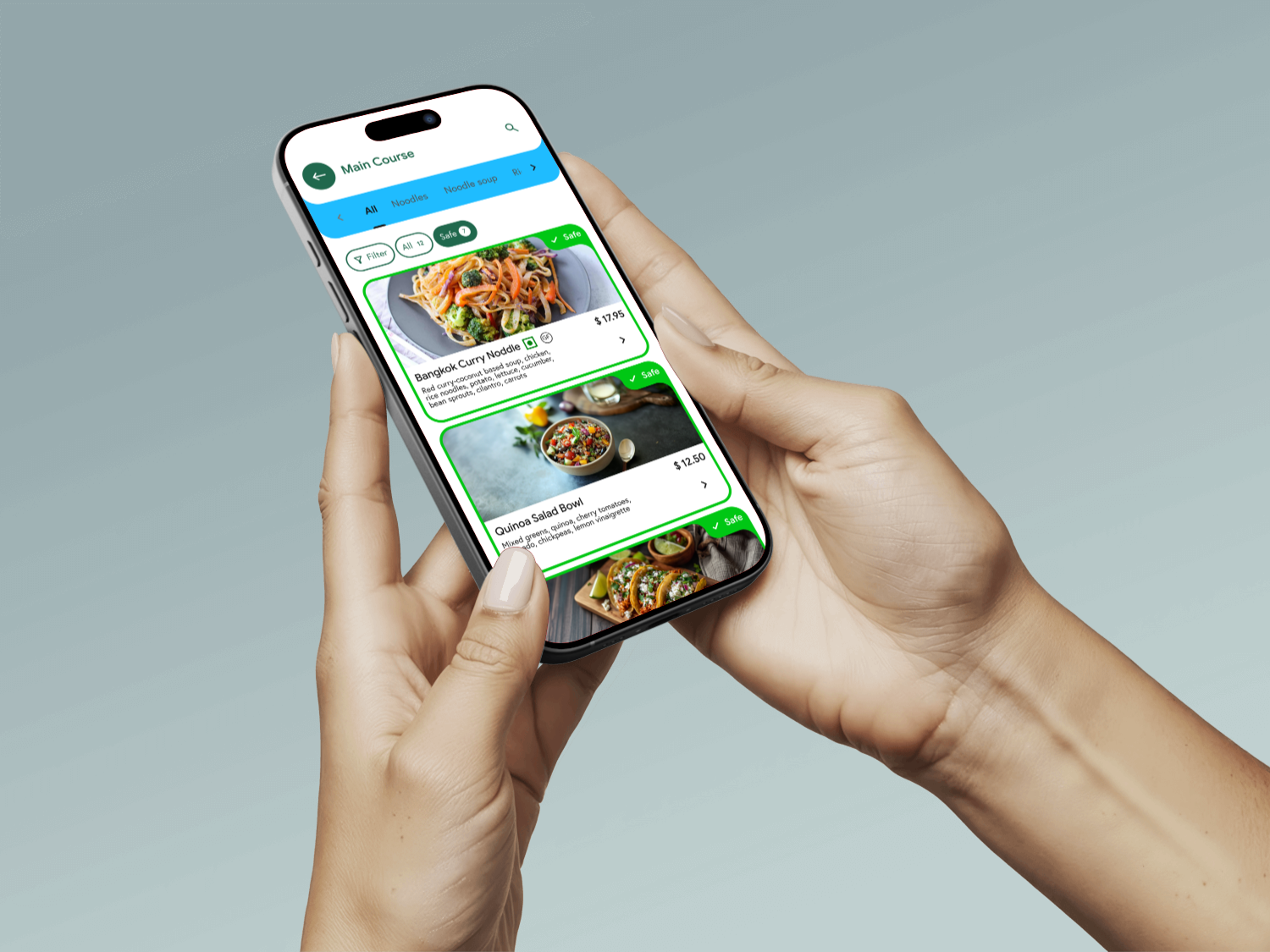
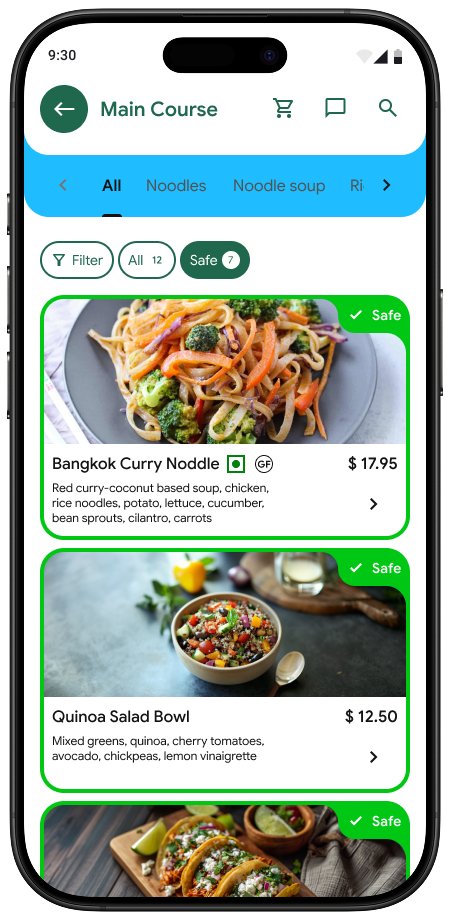
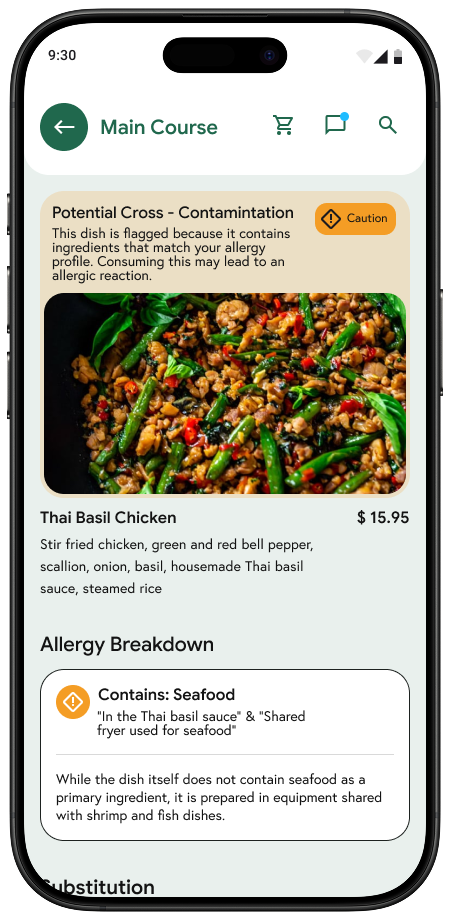
Show the evidence behind each safety state instead of asking diners to trust a label.
Broken staff handoffs
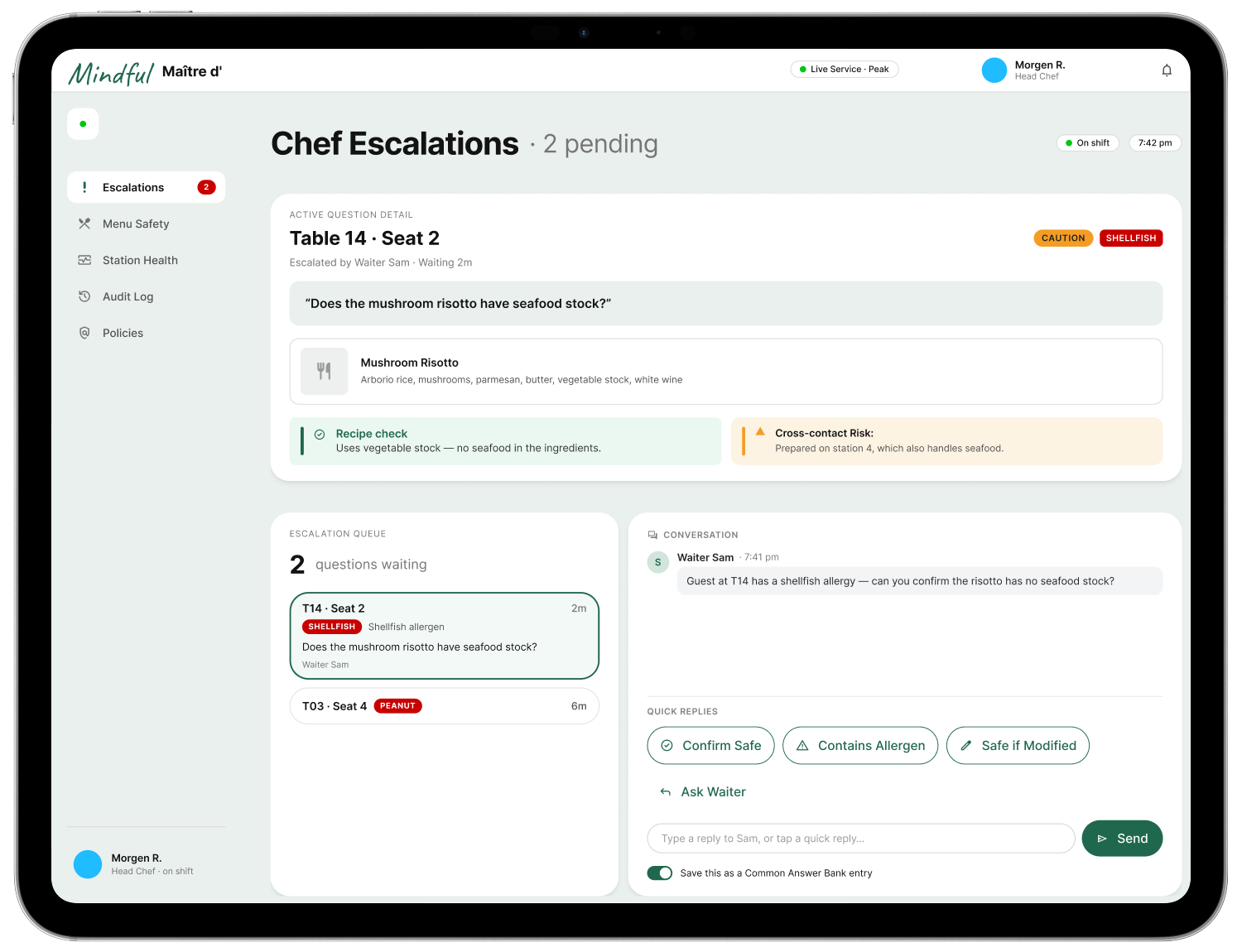
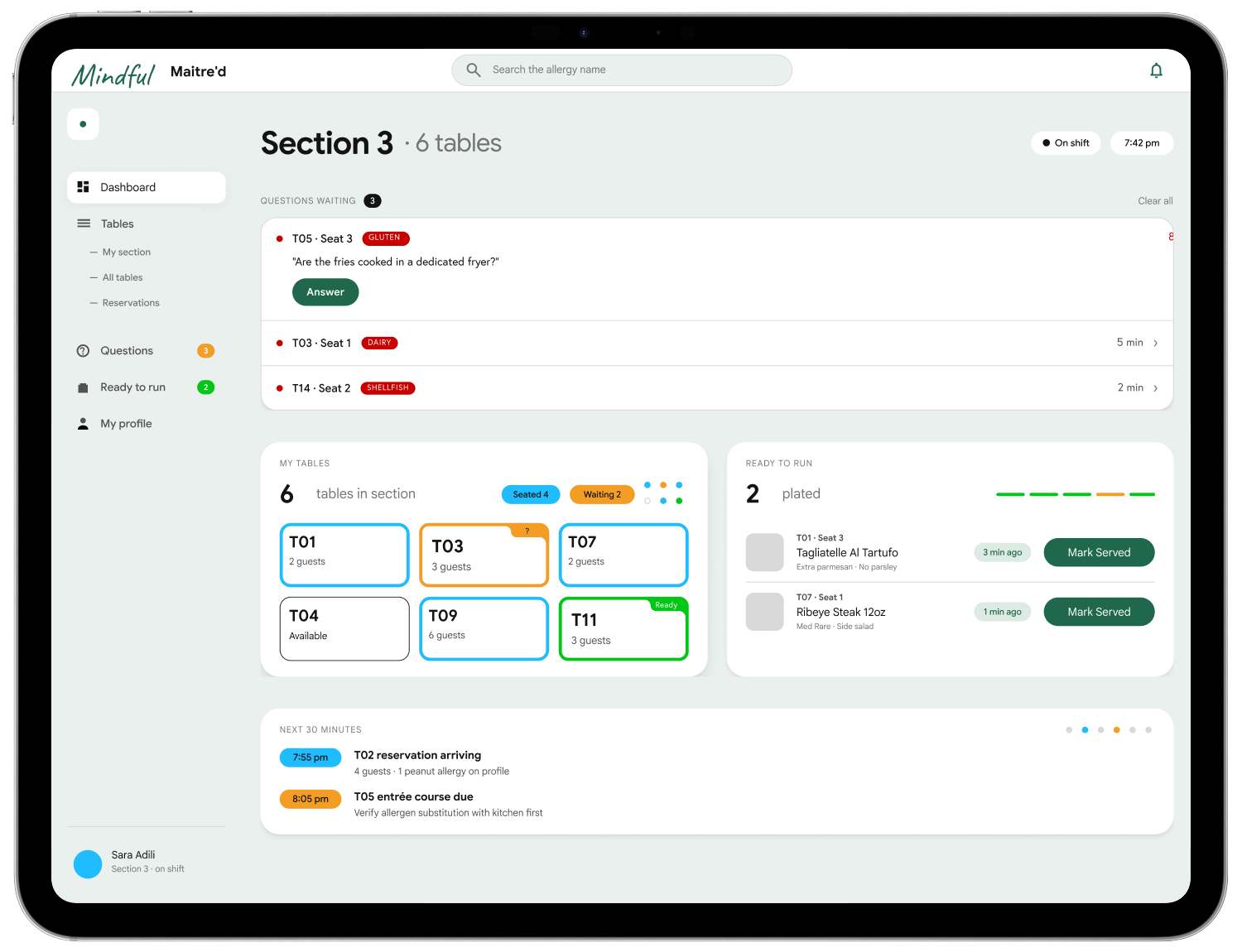
Carry one question and answer record from the diner to the waiter, chef, and line cook.
Unsafe certainty
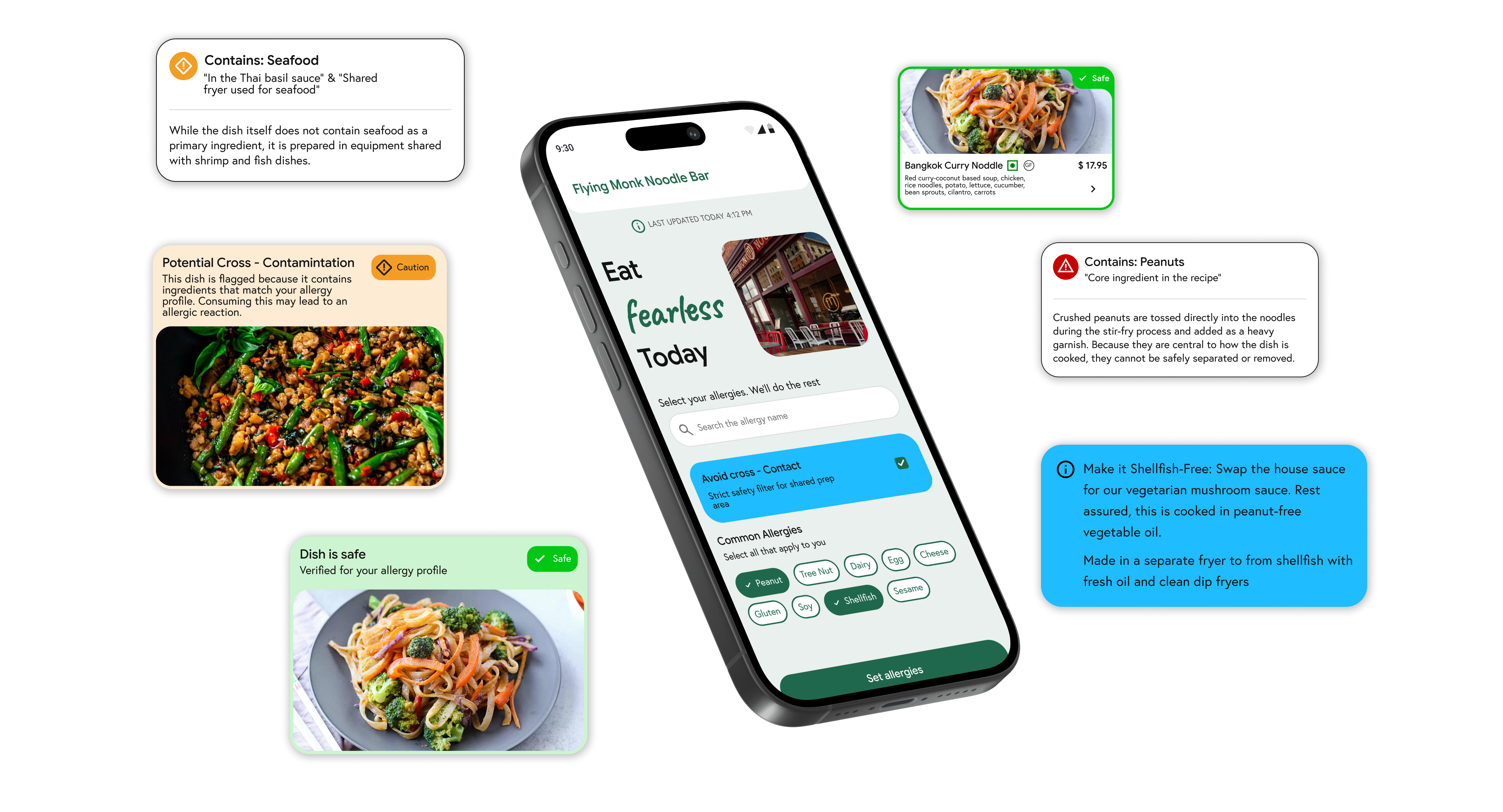
Use Safe, Caution, and Avoid states, including an honest stop when the kitchen cannot verify a dish.
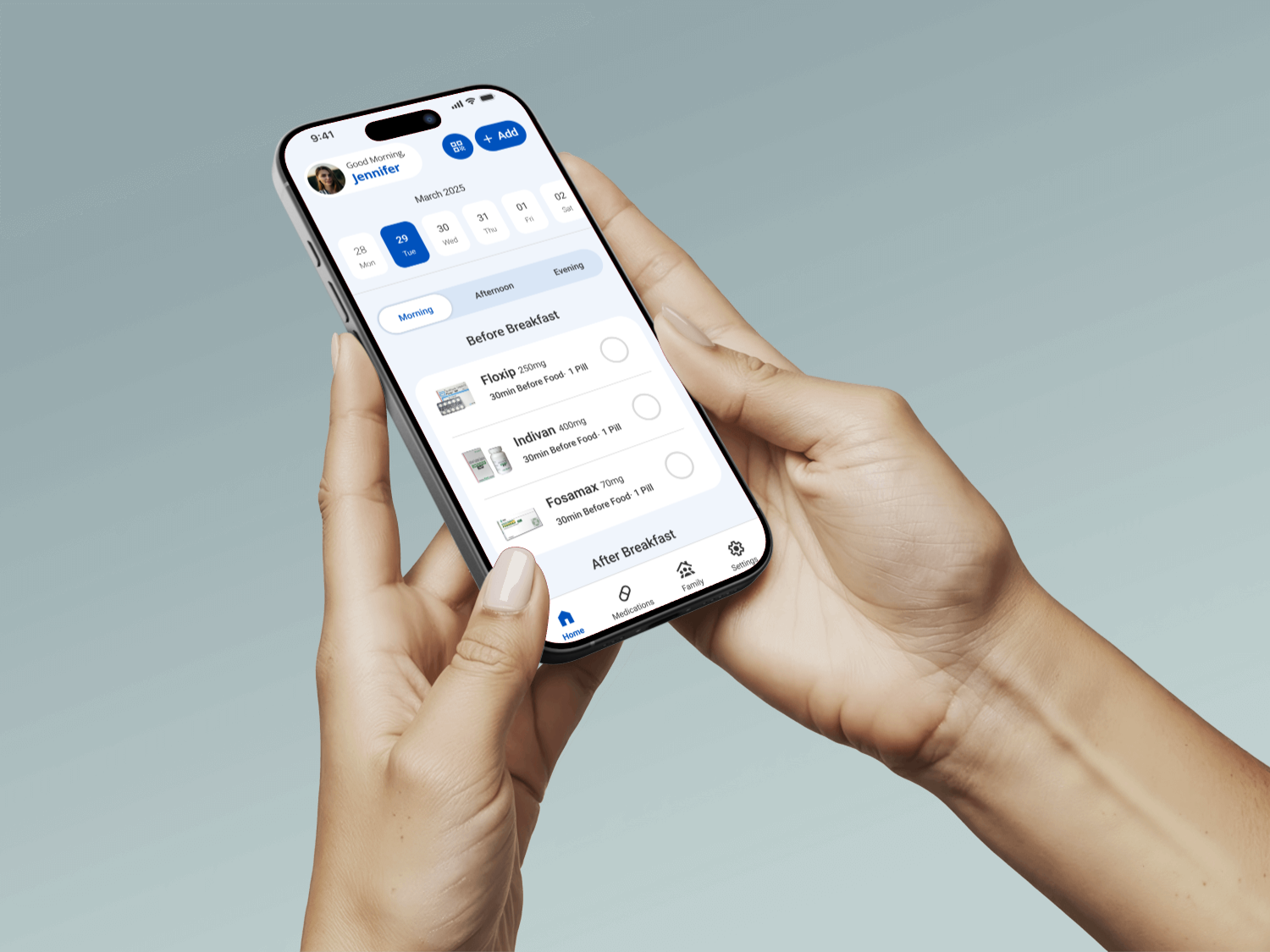
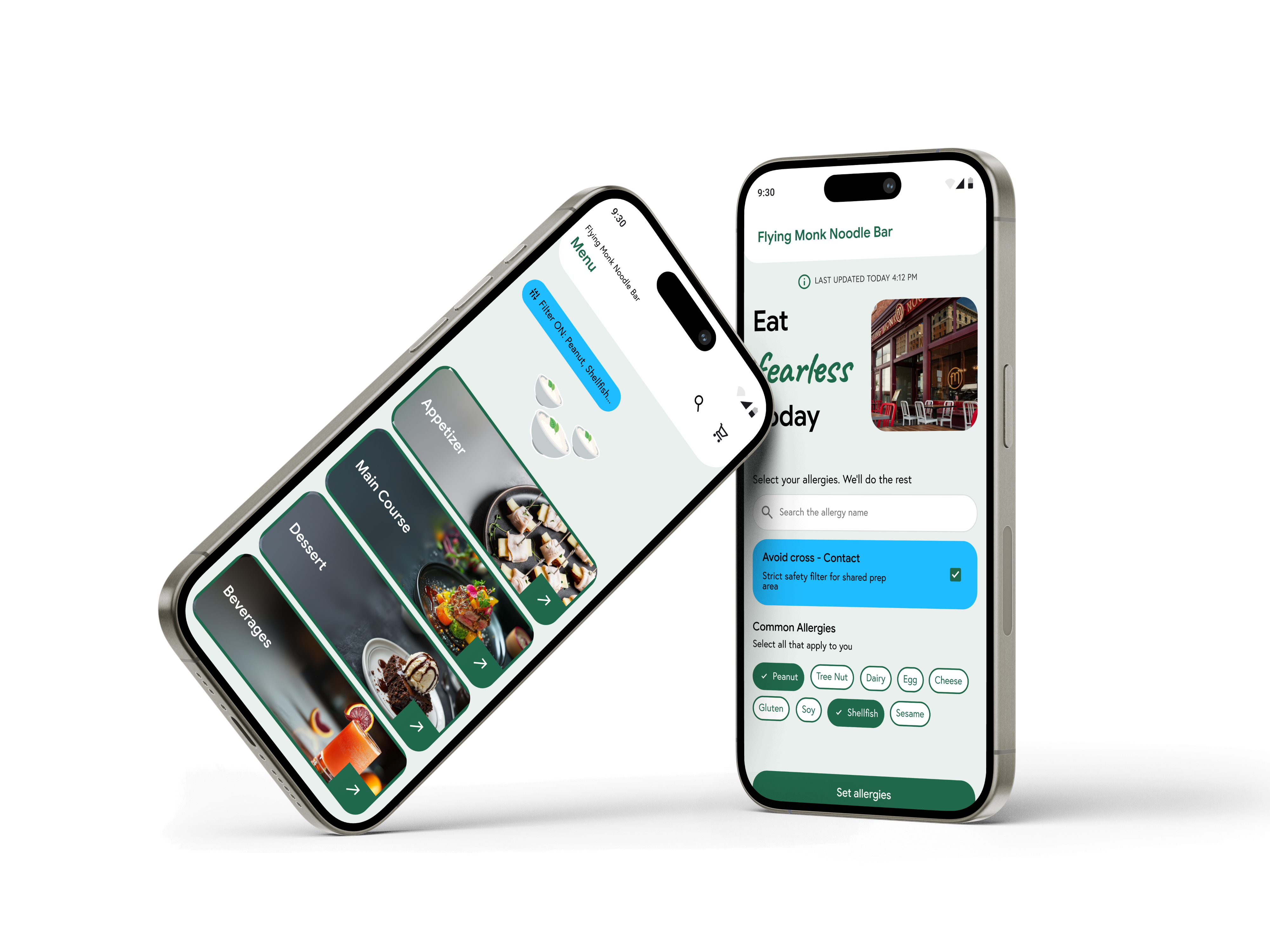
The final prototype.
One shared safety record, surfaced differently for the diner, the waiter, and the chef.
Contributions
The work combined service research, system definition, interaction design, and interface resolution.
Learnings
Three lessons changed how the final system was framed and designed.
Research and synthesis
Framed restaurant allergy safety as a connected service problem and translated the evidence into design criteria.
Safety is a service-system problem.
A diner-facing filter cannot create confidence if the restaurant workflow cannot verify and execute the same decision.
System and flows
Defined the customer, waiter, chef, and line-cook relationships, including escalation and stop states.
Uncertainty needs a designed state.
Showing Caution, Avoid, and no-safe-option states is more responsible than forcing every dish into a confident yes or no.
UX/UI and prototyping
Designed the role-specific interfaces, reusable states, wireframes, and interactive product direction.
One record can support different roles.
Customers, waiters, chefs, and line cooks need different levels of detail, but they should never work from different versions of the truth.
View more projects
Continue to another UX/UI case study or return to the complete project index.